
Contractors Equipment Replacement: Inland Marine Coverage
A single equipment loss can cost six figures. Inland marine insurance for contractors equipment replacement costs ensures your tools and machinery are protected on any Texas job site.

By Jeffrey Connors
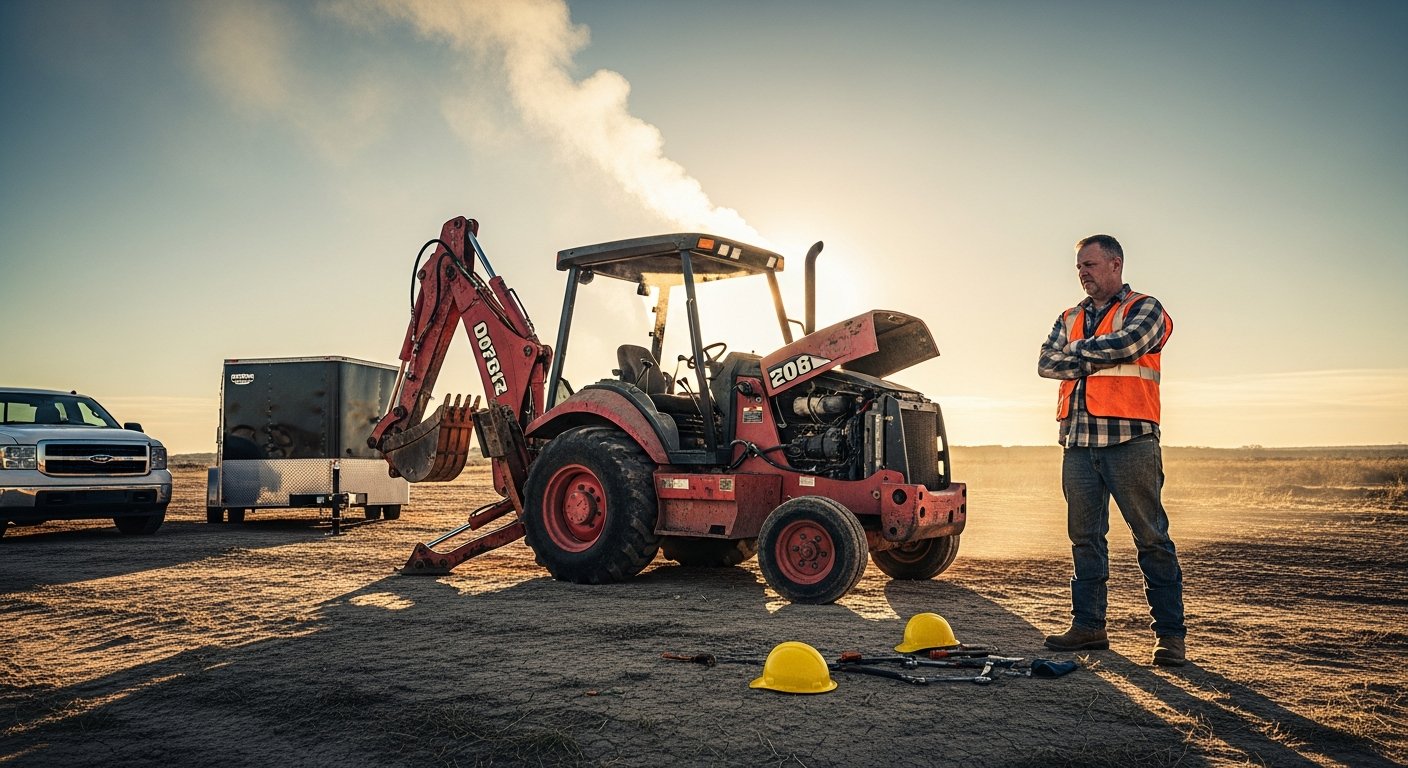
When a backhoe catches fire on a job site in Lubbock, or a pallet of new cordless tools vanishes from a locked trailer overnight in Houston, the financial hit can land far harder than the physical loss. Contractors routinely carry thousands of dollars worth of equipment, yet many discover too late that their standard commercial property policy offers little to no protection once that gear leaves a permanent business address. That gap is exactly where inland marine insurance for contractors equipment replacement costs becomes the difference between a minor operational hiccup and a six-figure out-of-pocket catastrophe.
This coverage, often labeled as contractors equipment or tools and equipment insurance, is designed to protect movable property. Unlike a building or permanent fixture, a skid steer, a generator, or even a specialized set of surveying instruments is constantly in transit or stationed at temporary projects. Texas Policies, an independent agency serving businesses across the state, frequently counsels contractors who assume their general liability policy covers their own tools. It does not. Liability covers damage to others; inland marine covers the assets that help you earn revenue.
The Real Cost of Replacing Contractor Equipment
Replacement cost is the central concept that separates a workable policy from a financial disaster. Actual cash value (ACV) pays what the item was worth at the time of loss, deducting depreciation. A five-year-old excavator might have a replacement price tag of $180,000, but its ACV could be just $95,000. If you carry an ACV policy, you face a $85,000 shortfall to get back to work with a comparable machine. Replacement cost coverage, often available as an endorsement or a core feature of a quality inland marine policy, pays to replace the item with a new one of like kind and quality, subject to your deductible.
For Texas contractors, the math is unforgiving. Equipment prices have risen steadily due to supply chain pressures and advanced emissions controls on heavy machinery. Consider the following typical replacement cost scenarios:
- A 1-ton pickup with a service body and crane: $75,000 to $95,000
- A compact track loader (CTL): $45,000 to $65,000
- A full set of concrete forming equipment: $30,000 to $50,000
- Scaffolding and shoring materials for a mid-rise project: $40,000 to $80,000
- Specialty tools for HVAC, electrical, or plumbing trades: $15,000 to $40,000
These numbers represent the cash outlay required to resume normal operations after a single covered loss. Without inland marine insurance for contractors equipment replacement costs, a contractor must either self-fund that expense, which strains credit lines and working capital, or face extended project delays that trigger penalty clauses and damaged client relationships.
Why Standard Commercial Property Policies Fall Short
A common misconception is that a business owners policy (BOP) or commercial property policy provides blanket coverage for business personal property. In reality, those policies are anchored to a named location, typically your office, shop, or storage yard. Equipment that is transported to a job site five miles away, left overnight at a remote site, or loaded onto a trailer for a highway trip is considered off-premises or in transit. Many property policies offer only a sub-limit, often $5,000 or $10,000, for such situations. That amount barely covers a single high-end drill set or a small generator.
Furthermore, property policies frequently exclude specific causes of loss that are common in the construction industry. Theft from a job site, mysterious disappearance (equipment simply not where you left it), and damage caused by loading or unloading are often excluded or heavily restricted. Inland marine coverage is specifically underwritten to handle these mobile risks. It is a distinct line of business that insurance carriers price based on your equipment schedule, the type of work you perform, and your loss history, not based on a fixed building location.
Contractors who rely solely on a commercial property policy also miss out on coverage for rented equipment. Many inland marine policies can be endorsed to cover equipment you rent or lease, protecting you from liability if that rented unit is damaged while in your care, custody, and control. This is a critical feature for Texas contractors who frequently rent specialized machinery for short-term projects, as the rental company will hold you financially responsible for any damage.
Key Coverage Features That Protect Your Bottom Line
When evaluating inland marine insurance for contractors equipment replacement costs, you should look beyond the basic policy declarations. A robust policy should include several critical features that directly impact your ability to recover and rebuild after a loss.
First, verify that the policy provides replacement cost valuation on all scheduled equipment. Some insurers will offer a blended approach, paying replacement cost for newer items and ACV for older ones. You want a blanket replacement cost provision wherever possible. Second, confirm that the policy includes coverage for equipment while it is in transit on public highways and waterways. This includes loading and unloading operations, which are a frequent source of damage claims. Third, look for a waiver of subrogation endorsement, which prevents the insurer from suing a third party, such as a general contractor or property owner, after paying your claim. Many project contracts require this endorsement, and having it pre-approved can keep your paperwork moving smoothly.
Another feature to consider is rental reimbursement coverage. If a covered loss disables your primary piece of equipment, this coverage pays for a rental unit so you can continue working while your machine is being repaired or replaced. The cost of this endorsement is typically modest compared to the daily rental rate for heavy equipment, which can run into the hundreds or thousands of dollars. Many contractors in Texas find this coverage essential during peak building seasons when project delays are especially costly.
Finally, pay close attention to the policy's territory and project limits. Some policies restrict coverage to a specific state or radius. If you take on work in Oklahoma or Louisiana, or if you ship equipment to a project in another state, you need a policy that travels with you. Also, check the per-project aggregate limit. If you have $500,000 worth of equipment but the policy only covers $250,000 per project, you could be underinsured on a large commercial build.
How to Determine the Right Coverage Amount
Setting your coverage limit requires a detailed inventory, not a rough guess. Start by creating a comprehensive schedule of all your equipment, including serial numbers, purchase dates, and current replacement values. For newer items, the purchase price plus sales tax and delivery fees is a good baseline. For older items, research current market prices for new equivalents, not what you paid five years ago. Do not forget smaller items like power tools, which can easily add up to tens of thousands of dollars when inventoried in aggregate.
Once you have your total replacement value figure, you have a choice. You can schedule each item individually, which gives you specific coverage limits per piece, or you can purchase a blanket limit that covers your entire equipment fleet up to a maximum amount. Blanket coverage is often simpler to manage, as you do not need to update the schedule every time you buy a new drill or sell an old compressor. However, blanket policies may have sub-limits for certain categories, such as tools carried on a person or small items left in a vehicle overnight. Review these sub-limits carefully to ensure they align with your actual exposure.
Your deductible also plays a major role in your premium. A higher deductible, such as $2,500 or $5,000, will lower your annual cost, but it means you will shoulder more of the burden after a loss. For contractors with a solid safety record and secure overnight storage, a higher deductible is often a smart financial move. For those who work in high-theft urban areas or leave equipment on unsecured sites, a lower deductible may be worth the extra premium to avoid surprise out-of-pocket expenses.
Common Claims and How to Avoid Them
Understanding the most frequent causes of inland marine losses can help you implement loss prevention measures that keep your insurance costs stable. Theft from job sites is the leading claim category, particularly for portable tools and small equipment. Thieves often target copper wiring, generators, and battery-powered tools because they are easy to resell. Using equipment tracking devices, locking boxes, and job site lighting can deter theft. Many insurers offer premium discounts for installing GPS tracking on high-value mobile equipment.
Accidental damage from operator error is another significant source of claims. A skilled operator can still strike a buried utility line, roll a machine on uneven terrain, or drop a load on a piece of equipment. Regular training, daily pre-operation inspections, and adherence to manufacturer guidelines reduce these risks. Also, be mindful of weather-related losses. High winds can topple scaffolding, and lightning can fry electrical components on pumps and compressors. Securing equipment and covering sensitive electronics during storms is essential.
Fire and collision damage to equipment, while less frequent than theft, often produces the highest claim amounts. An engine fire in a dozer or a rollover accident on a highway can total a machine worth six figures. Maintaining clean engine compartments, checking fuel lines, and ensuring operators are qualified to drive heavy equipment on public roads are all critical steps. Your inland marine policy is your safety net, but a proactive safety program keeps your claims history clean and your premiums affordable.
Why an Independent Agency Makes a Difference
Securing the right inland marine insurance for contractors equipment replacement costs is not a one-size-fits-all transaction. Contractors in Texas face diverse risks depending on their trade, their project locations, and the size of their fleet. A plumber with a service van and $20,000 in tools has very different needs than a heavy civil contractor with a fleet of excavators and bulldozers. An independent agency like Texas Policies works with multiple carriers to compare coverage options and pricing, ensuring you get a policy that fits your specific operation rather than a generic package.
An independent agent also helps you navigate the nuances of policy language, such as the difference between a named peril and an open peril policy. Open peril policies cover all causes of loss except those specifically excluded, offering broader protection. Named peril policies only cover the perils listed, such as fire, theft, and windstorm. For contractors, an open peril policy is generally preferable, as it covers unforeseen events like a forklift accidentally punching a hole in a generator housing. Your agent can explain these distinctions and help you choose the broadest coverage your budget allows.
Additionally, an agent assists with certificate of insurance requests, which are a constant requirement on commercial construction projects. General contractors and project owners routinely demand proof of inland marine coverage, and they often require specific endorsements like additional insured status or waiver of subrogation. Having an agent who can issue certificates promptly and accurately keeps your projects on schedule and prevents contract disputes.
Securing Your Equipment Financial Future
Your equipment is the engine of your business. When it is damaged, stolen, or destroyed, your ability to generate revenue stops until it is replaced. Inland marine insurance for contractors equipment replacement costs is not an optional add-on; it is a fundamental protection for any contractor who relies on movable tools and machinery. Without it, a single loss can wipe out your profit margin for the year or even force a small firm into bankruptcy.
Take the time to schedule a coverage review with a licensed agent who understands the Texas construction market. Bring your equipment list, your current policies, and a few recent project contracts that show the insurance requirements you must meet. Ask pointed questions about replacement cost valuation, transit coverage, rental reimbursement, and sub-limits for small tools. The goal is to build a policy that allows you to recover quickly after a loss, without surprise bills or coverage gaps.
Contractors who invest in comprehensive inland marine coverage gain more than financial protection. They gain peace of mind, knowing that a sudden equipment failure does not have to derail their entire operation. They can bid on projects with confidence, meet contract requirements with ease, and protect the value of their business assets. Request a free quote from Texas Policies today to compare options from top carriers and build a coverage plan that keeps your equipment and your bottom line safe.