
FMCSA Insurance Rules for Texas USDOT Businesses
FMCSA insurance requirements for Texas businesses with a USDOT number include federal minimums, BMC-91X filings, and Texas rules. Free quotes available.

By Ignacio Mendez
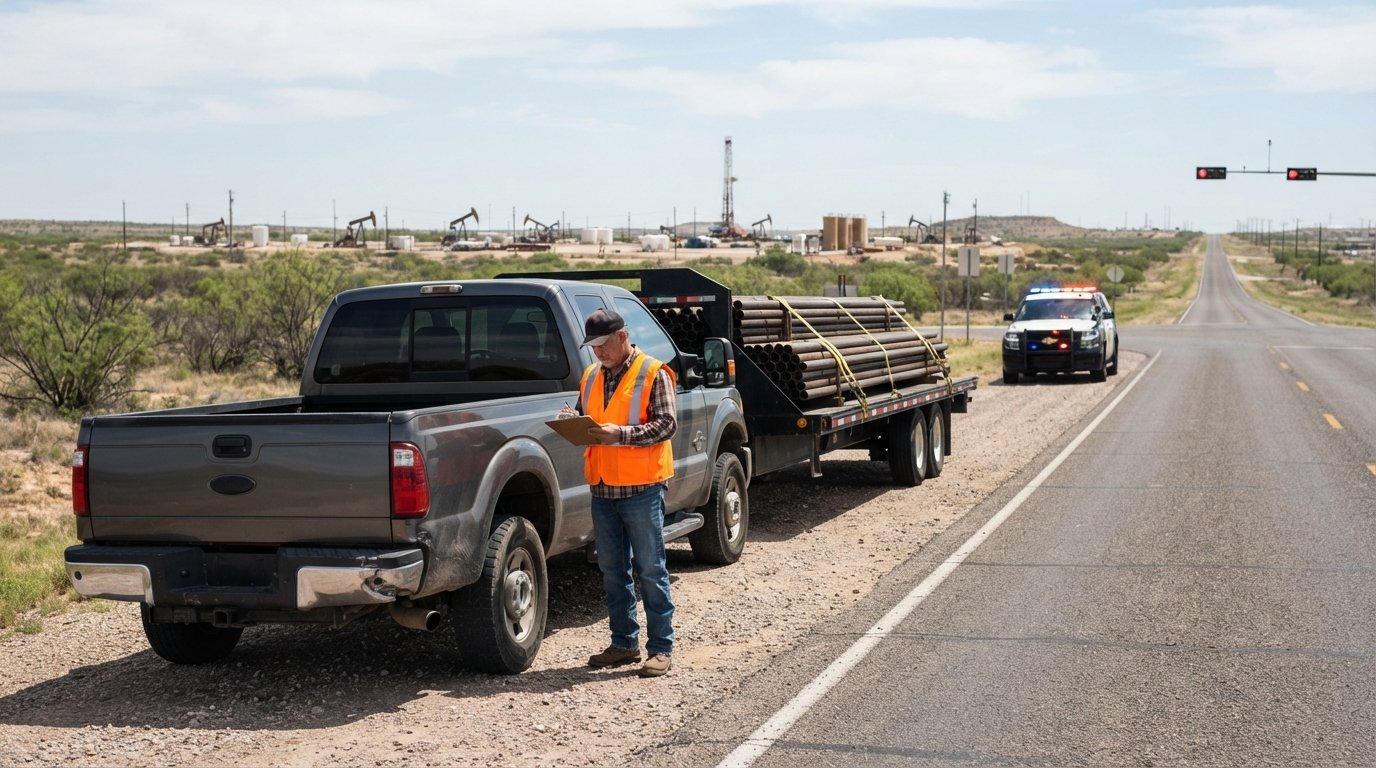
A Texas hotshot operator hauls a load of pipe from Midland to Odessa and gets rear-ended at a red light. The other driver walks away, but the cargo claim, the truck damage, and the injury lawsuit land on the operator's desk within a week. If that carrier registered with the FMCSA, the financial responsibility rules decide who pays, and how much coverage had to be in place before the wheels ever turned. For any Texas business with a USDOT number, from a one-truck courier service in El Paso to a 40-truck fleet in Houston, those rules are not optional paperwork. They are the legal floor that keeps operating authority alive and keeps personal assets off the table when a claim goes sideways.
The Federal Motor Carrier Safety Administration sets minimum insurance levels for commercial motor vehicles operating in interstate commerce, and Texas layers its own registration and filing rules on top. The result is a system where a single missed form, an underfunded policy, or a lapsed certificate can trigger a shutdown order, fines, or the loss of the very authority that lets you invoice customers. This guide walks through the actual dollar thresholds, the filing mechanics, the Texas-specific pieces, and the practical moves that keep a USDOT-numbered business compliant and insurable.
What Having a USDOT Number Actually Triggers
A USDOT number is an identifier, not a license. The FMCSA assigns it so the agency can track safety data, crash history, and compliance reviews for a carrier or a company that operates commercial vehicles. But once that number is active and the business operates across state lines (or hauls certain types of cargo), the financial responsibility requirements of 49 CFR Part 387 attach to the operation. That means the carrier must carry liability insurance at or above the federal minimum and must prove it through a formal filing with the FMCSA.
The proof mechanism is the MCS-90 endorsement and the BMC-91 or BMC-91X filing submitted by the insurance carrier. The MCS-90 is an endorsement attached to the liability policy that guarantees the insurer will pay public liability claims up to the federal minimum even if the underlying policy has exclusions that would otherwise apply. The BMC-91X is the electronic filing that puts the coverage on record with the FMCSA so the public and enforcement officers can verify it. A paper certificate in a glovebox is not the same thing. If the filing is not active in the FMCSA system, the operating authority is exposed.
Texas adds its own layer. The Texas Department of Motor Vehicles (TxDMV) requires motor carriers to register and, depending on the operation, to demonstrate insurance through the TxDMV insurance filing system. Intrastate carriers that never cross a state line generally answer to the state rules rather than the federal ones, but many Texas businesses hold a USDOT number because customers, brokers, or contracts demand it, and that choice can pull them into the federal framework. Understanding which regime applies is the first step, and it is exactly the kind of question a licensed Texas commercial insurance agency sorts out before quoting. For a broader look at how coverage types fit together for different Texas operations, our guide on Texas small business insurance requirements by industry lays out the building blocks.
The Federal Minimum Coverage Amounts
The FMCSA minimums are tiered by what the vehicle weighs and what it hauls. These are the liability floors, not recommendations, and carrying less than the applicable figure is a violation even if no crash ever happens. The core thresholds are:
- $300,000 for for-hire and private carriers operating vehicles with a gross vehicle weight rating (GVWR) of 10,001 pounds or more, and for vehicles of any size hauling certain hazardous materials in quantities that require placarding.
- $750,000 for for-hire carriers operating vehicles with a GVWR of 10,001 pounds or more while carrying non-hazardous cargo, and for carriers hauling hazardous materials in placardable quantities that are not the highest-risk categories.
- $1,000,000 for carriers transporting the most dangerous hazardous materials, including certain explosives, toxic gases, and radioactive substances, or hauling more than 15 passengers.
- $5,000,000 for carriers hauling the highest-risk hazardous materials such as certain explosives, poisons, and radioactive materials in specified quantities.
Notice what is not in that list: cargo. The federal minimums cover public liability (bodily injury and property damage to others) and, in some cases, environmental restoration. They do not pay to replace the freight you were hauling or repair your own truck. That is why a compliant carrier almost always carries more than the floor. Cargo insurance, physical damage coverage, and higher liability limits are commercial decisions, and for most Texas operations the minimum is simply the entry ticket, not a risk strategy.
There is also an important distinction between the federal minimum and what brokers and shippers require. A freight broker may demand $1 million in auto liability and $100,000 in cargo coverage before tendering a load. A general contractor may require a Texas carrier to show $1 million combined single limit before allowing it on a job site. These contractual requirements are not FMCSA rules, but they function like them in practice because without the certificate, the work disappears.
How the Filing and Proof System Works
Compliance is not just about buying a policy. It is about keeping the proof current in the systems that regulators, brokers, and law enforcement actually check. The process runs through the insurance carrier, which submits electronic filings to the FMCSA and, where applicable, to the TxDMV. When a policy is cancelled, non-renewed, or replaced, the carrier files a notice of cancellation, and the coverage drops off the public record on a set timeline. A carrier that switches insurers and does not confirm the new filing is active can find itself showing no insurance even though a paid policy exists.
The practical sequence for a Texas business that needs to establish or maintain compliance looks like this:
- Confirm the operating authority and the applicable minimum based on vehicle weight and cargo type.
- Obtain a commercial auto liability policy that meets or exceeds the federal minimum and includes the MCS-90 endorsement.
- Have the insurance carrier submit the BMC-91 or BMC-91X filing to the FMCSA, and any required Texas filing to the TxDMV.
- Verify within a few business days that the filing shows active in the FMCSA and TxDMV systems.
- Set a calendar reminder for renewal and for any policy change that could interrupt the filing.
That last step matters more than most owners expect. A lapse of even a few days can trigger a negative safety rating and, in some cases, an out-of-service order. The fix is usually simple (a corrected filing and a reinstatement), but the disruption to dispatch and customer relationships is not. Working with an agency that monitors filings and flags renewal dates removes most of that risk.
Texas-Specific Rules Beyond the Federal Floor
Texas does not require every business vehicle to carry commercial auto insurance, but it does require drivers to carry at least the state minimum liability coverage (currently 30/60/25 in the standard split format), and it requires motor carriers registered with the TxDMV to demonstrate financial responsibility. For intrastate carriers, the TxDMV sets its own minimums that track the federal tiers in many cases, and the registration process includes an insurance filing requirement. A Texas carrier that operates only within the state but holds a USDOT number for customer reasons may need to satisfy both systems.
Workers compensation is a separate matter, and Texas is the only state where most private employers are not legally required to carry it. That does not mean skipping it is safe. General contractors routinely require subcontractors to carry workers compensation or to provide a valid non-subscriber filing, and a business with employees faces real exposure if an injury occurs without coverage. The compliance question is less about the statute and more about contracts, job site rules, and the financial reality of an uninsured injury. Our article on insurance requirements for Texas professional services firms explains how those contractual insurance demands work for service businesses, and the same logic applies to carriers and contractors.
Texas also maintains a data breach notification law with a 60-day deadline for notifying affected individuals, and businesses that handle customer data need cyber liability coverage to respond. That is not an FMCSA rule, but it is part of the modern compliance picture for any Texas business with a USDOT number that also runs a back office, a website, and a customer database.
Common Compliance Mistakes That Cost Texas Carriers
The most expensive mistakes are rarely about buying the wrong policy. They are about letting the administrative side slip. A filing that lapses because the carrier changed banks, a policy that gets cancelled for a missed payment, a new truck added to the fleet but not to the policy, a driver added without updating the insurer: each of these can create a gap that shows up on the public record and triggers enforcement.
Another frequent problem is underinsuring relative to contracts. A carrier buys the federal minimum of $750,000, wins a contract that requires $1 million, and then has to scramble for a certificate that does not exist. The fix is to quote limits based on the work being pursued, not just the legal floor. Excess or umbrella liability is often the most efficient way to close that gap, and it can sit above auto liability, general liability, and employer's liability in one policy.
A third issue is misunderstanding what the MCS-90 actually does. It is not a standalone policy and it does not cover cargo or the carrier's own equipment. It is a guarantee that public liability claims get paid up to the federal minimum, and the insurer can seek reimbursement from the carrier for amounts it pays that the underlying policy would not have covered. Treating it as a substitute for adequate limits is a mistake that surfaces only after a serious crash.
Coverage That Sits Alongside the FMCSA Minimums
Federal financial responsibility is a starting point. A well-built program for a Texas carrier or a business with a USDOT number usually includes several layers working together. The right mix depends on the operation, the contracts, and the risk tolerance, but the common components are:
- Commercial auto liability at or above the applicable FMCSA minimum, with the MCS-90 endorsement and the BMC-91X filing in place.
- Cargo insurance to cover the freight being hauled, often required by brokers at $100,000 or more.
- Physical damage coverage for the trucks and trailers themselves, especially when equipment is financed.
- General liability for premises and operations exposures that auto liability does not touch.
- Workers compensation or a compliant non-subscriber program for employees, plus employer's liability.
- Excess or umbrella liability to raise limits above the primary policies and satisfy contract requirements.
For contractors and trades that also run commercial vehicles, inland marine coverage for tools and equipment fills another gap, since those items move between job sites and are not always covered under a standard auto or property policy. A Business Owners Policy (BOP) can bundle general liability and commercial property for smaller operations, and professional liability (errors and omissions) matters for firms that provide advice, design, or consulting services. The point is that the FMCSA minimum is one piece of a larger risk program, and the pieces should be coordinated so there are no seams.
How to Verify and Maintain Compliance
Verification is straightforward and should be part of a regular routine. The FMCSA maintains a public insurance filing record tied to the USDOT number, and the TxDMV maintains its own record for intrastate authority. A carrier can confirm active status, check the effective dates, and confirm the limits on file. Brokers and shippers do the same thing before tendering loads, so a clean record is a commercial asset, not just a regulatory checkbox.
Maintenance is mostly about communication. The insurance carrier needs to know about new vehicles, new drivers, changes in cargo, and changes in operating radius. The agency needs to know about contract requirements so the certificate issued matches what the customer demands. And the business owner needs to know the renewal date and the cancellation notice timeline so nothing lapses by accident. A simple quarterly review of the policy, the filings, and the contract requirements catches most problems before they become violations.
For Texas businesses that want the process handled without the runaround, working with an independent agency that specializes in commercial coverage makes the difference. Texas Policies helps carriers, contractors, shop owners, and professional services firms compare options from multiple carriers, secure the filings, and keep certificates current. The agency offers free quotes, fast quoting, and claims advocacy, and it can package auto liability, cargo, general liability, workers compensation, and excess coverage into a program that meets both the FMCSA floor and the contract requirements that come with the work. Getting a quote costs nothing and takes only a few minutes, and it is the most reliable way to confirm that the coverage behind a USDOT number is actually doing its job.
Compliance with FMCSA insurance requirements is ultimately about protecting the business, the drivers, and the customers who depend on the operation. The rules are specific, the filings are unforgiving of gaps, and the Texas layer adds its own requirements. But the path is clear: know the minimum that applies, carry coverage that meets it and the contracts, keep the filings active, and review the program as the business grows. A Texas business with a USDOT number that handles those four things is in a strong position to keep moving freight, keep winning work, and keep claims from turning into catastrophes.