
Hired and Non-Owned Auto Coverage for Texas Businesses
Hired and non-owned auto coverage for Texas businesses protects you when employees use personal cars or rented vehicles. Avoid surprise liability claims.

By Jeffrey Connors
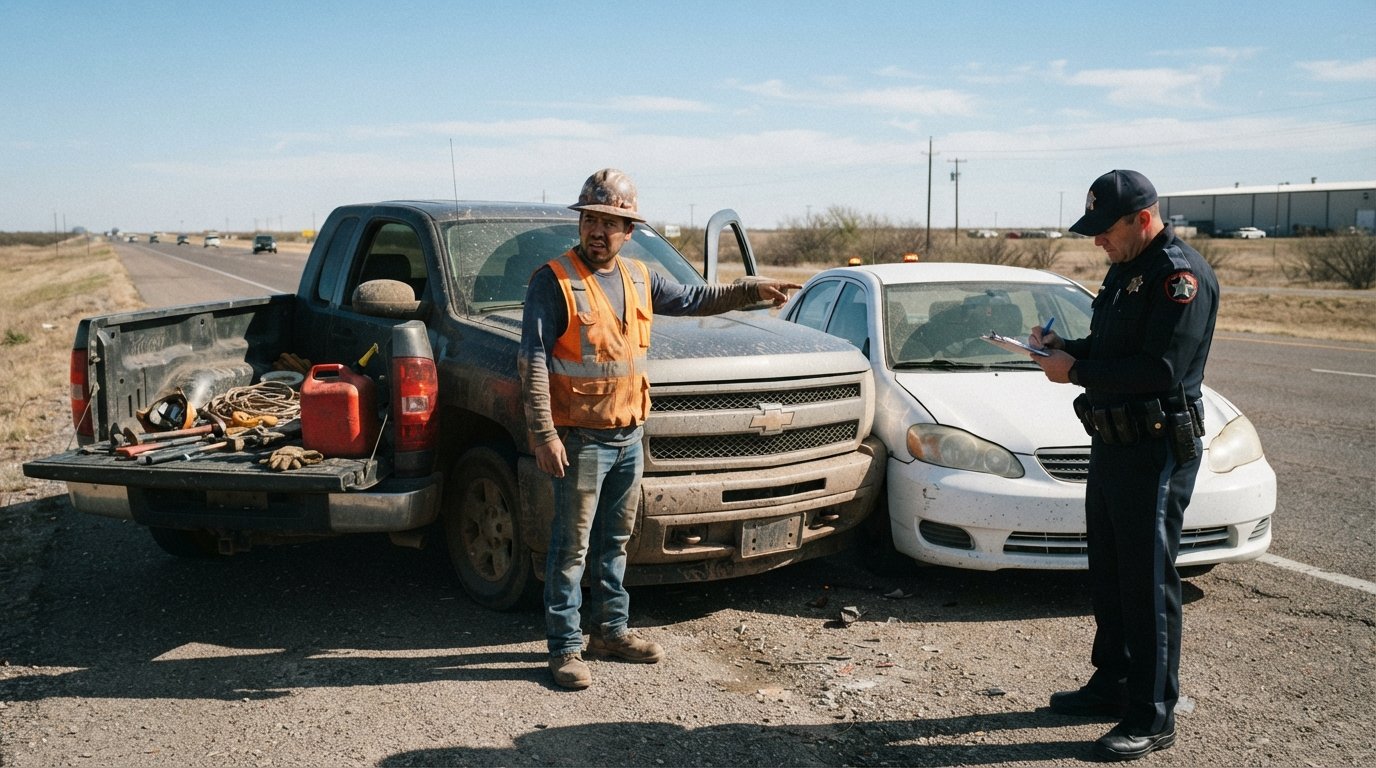
Imagine your best employee is running late for a job site. They decide to use their personal truck to pick up a critical part. On the way back, they run a red light and cause a serious accident. The injured driver sues your company. Your commercial auto policy might not cover this because the vehicle was not owned, leased, or hired by you. This is the exact scenario where hired and non-owned auto coverage for Texas businesses becomes your financial shield.
What Is Hired and Non-Owned Auto Coverage?
Hired and non-owned auto coverage, often abbreviated as HNOA, is a specialized endorsement added to a commercial auto or business owners policy. It fills a critical gap in liability protection. The coverage has two distinct parts:
- Hired auto coverage: Applies when you rent, lease, or borrow a vehicle for business use. This includes renting a U-Haul for a delivery, leasing a car for a sales trip, or using a rental van to move equipment.
- Non-owned auto coverage: Applies when an employee uses their personal vehicle for business tasks. This includes running errands, going to the bank, meeting a client, or picking up supplies. It does not cover the employee's personal vehicle damage, only the liability arising from business use.
For Texas businesses, this coverage is not mandatory by law, but it is often required by contracts. Many commercial leases, client agreements, and vendor contracts will demand that your business carries this protection. Without it, you could be personally responsible for damages that exceed your general liability limits or that are entirely excluded from your current policy.
It is important to understand that this coverage is liability-only. It does not pay for repairs to the rented vehicle or the employee's personal car. Its purpose is to protect your business when your employee or a rented vehicle causes damage or injury to a third party. For physical damage to rented vehicles, you would need to add hired auto physical damage coverage.
Why Texas Businesses Need This Coverage
Texas has one of the highest rates of uninsured and underinsured drivers in the nation. This increases the likelihood of claims and lawsuits. When an employee uses their personal vehicle for work, the lines between personal and business liability blur. Without proper coverage, a single accident can threaten the financial stability of your entire operation.
Consider a common scenario for a Texas contractor. An employee drives their personal pickup to a supplier to grab a batch of materials. On the way, they are involved in a multi-vehicle accident. The employee's personal auto insurance may deny the claim, arguing that the vehicle was being used for business purposes. The other parties involved will then look to your business for compensation. General liability policies typically exclude auto-related incidents. This is where hired and non-owned auto coverage for Texas businesses steps in to provide the necessary liability protection.
Another frequent situation involves rental vehicles. If you rent a car for a business trip and cause an accident, the rental company's insurance may not cover the damages if the vehicle is used for commercial purposes. Your business could be held liable for the full cost of the accident, the rental company's loss of use, and legal fees. HNOC coverage provides a layer of protection that responds to these gaps.
Coverage Limits and How They Work
When you add hired and non-owned auto coverage to your policy, you select liability limits. These limits are typically the same as those on your commercial auto policy, such as $500,000 or $1 million per occurrence. The coverage is considered excess over any other applicable insurance. This means that the employee's personal auto policy pays first up to its limits, and then your HNOC coverage kicks in to cover the remaining costs up to your selected limits.
This structure is particularly important in Texas because of the state's comparative fault rules. If your employee is found to be 50% at fault, your business could be responsible for 50% of the damages. If the total damages are $1 million and the employee's personal policy has a $100,000 limit, your HNOC coverage would respond to the remaining $400,000 that your business owes.
There is also a distinction between hired and non-owned auto coverage and a commercial auto policy that lists specific vehicles. A commercial auto policy covers vehicles your business owns or leases long-term. HNOC is designed for the occasional use of vehicles you do not own. If you regularly rent vehicles or have employees constantly driving their personal cars for work, you may need a more comprehensive solution, such as a business auto policy that includes all hired and non-owned autos.
For a deeper look at how this interacts with leased vehicles, see our guide on Texas Commercial Auto Coverage for Leased and Rented Vehicles. It explains how to structure coverage when leasing is a regular part of your operations.
Who Should Carry HNOC Coverage
Any Texas business that does not exclusively use owned commercial vehicles should consider this coverage. This includes a wide range of industries, not just contractors. The list below highlights common business types that benefit significantly:
- Construction and trade contractors with employees who drive to job sites
- Real estate agents and property managers who show properties in personal vehicles
- Home health care providers who visit patients
- IT professionals and consultants who travel to client offices
- Restaurant owners who have managers run bank deposits or pick up supplies
Even if your business owns a fleet of vehicles, there will be times when an employee uses their own car for a work-related errand. If that employee is not listed as a covered driver on your commercial auto policy, you have a coverage gap. HNOC closes that gap for the liability portion.
It is also a common misconception that workers' compensation covers auto accidents. It does not. Workers' comp covers medical expenses and lost wages for injured employees, not liability to third parties. If your employee injures someone else while driving for work, the injured party can sue your business directly. HNOC is the protection you need.
The Cost of HNOC Coverage in Texas
The cost of adding hired and non-owned auto coverage to your policy is surprisingly low. For many small businesses, the premium can be as little as a few hundred dollars per year. This is significantly less than the cost of adding a single vehicle to your commercial auto policy. The price depends on several factors, including your business type, the number of employees, the distance they drive, and your claims history.
Insurance carriers view HNOC as a lower risk because the vehicles are not owned by the business. There is no physical damage exposure for the business, and the liability is often shared with the employee's personal policy. This makes it an affordable addition that provides substantial protection.
To get an accurate quote, you will need to provide information about your business operations. The insurance agent will ask about the number of employees who use their personal vehicles, the frequency of rentals, and the types of tasks performed. At Texas Policies, we can help you evaluate your risks and determine the appropriate limits for your specific situation.
How to Add HNOC to Your Policy
Adding this coverage is a straightforward process. You can usually add it as an endorsement to an existing commercial auto policy, a business owners policy, or even a general liability policy in some cases. The steps are simple:
- Review your current policy to see if it already includes HNOC. Many BOP policies include a limited amount of non-owned liability coverage, but it may be insufficient for your needs.
- Contact your insurance agent and ask about adding hired and non-owned auto coverage. Provide details about your fleet size, employee usage, and rental frequency.
- Decide on your coverage limits. It is often wise to match the limits of your general liability policy to ensure consistent protection.
- Review the endorsement carefully to understand any exclusions or conditions. For example, HNOC may not cover employees who use their vehicles for regular deliveries or if they are required to have their own insurance.
Once the endorsement is added, you should receive a certificate of insurance to provide to your clients or contract partners. This certificate proves that your business carries the required coverage. Many Texas businesses find that having HNOC in place makes them more competitive when bidding on contracts, as it shows they are professionally managed and adequately insured.
Common Exclusions and Limitations
While HNOC is valuable, it is not a catch-all. There are several important exclusions and limitations you need to know about:
- It does not cover the employee's personal vehicle damage or injuries to the employee themselves.
- It does not cover vehicles owned by the business or any vehicle that is regularly used by the business, even if it is not titled in the business name.
- It may not cover vehicles rented from employees or their family members.
- It typically does not cover long-term rentals (usually defined as more than 30 days). For long-term leases, you need to add the vehicle to your commercial auto policy.
- It does not cover liability assumed under a contract or agreement unless the contract is specifically listed in the policy.
Understanding these exclusions helps you avoid surprise denials. For example, if you rent a vehicle for two months for a specific project, that rental may not be covered under HNOC. In that case, you would need to purchase a separate policy or add the vehicle to your commercial auto policy for the rental period.
HNOC vs. Commercial Auto Insurance
It is helpful to think of HNOC as a supplement, not a replacement. Commercial auto insurance covers vehicles your business owns or leases. HNOC covers the occasional use of vehicles your business does not own. If your business regularly relies on employee vehicles, you might consider a hybrid approach. Some carriers offer a business auto policy that includes hired and non-owned autos as part of the definition of covered autos. This can provide broader protection and streamline your coverage.
For businesses with a mix of owned and non-owned vehicles, a commercial auto policy with symbol 8 (hired autos) and symbol 9 (non-owned autos) is often the best choice. This ensures you have coverage for all vehicles used in your business, whether owned, leased, rented, or borrowed. Your agent can help you decide which approach fits your operations best.
If you are considering a broader commercial auto solution, our article on leased and rented vehicle coverage in Texas provides additional context on how to handle vehicles that are not permanently owned.
How to Get a Quote in Texas
Getting a quote for hired and non-owned auto coverage is simple. At Texas Policies, we work with multiple carriers to find you the best coverage at the most competitive price. We understand the unique risks faced by Texas businesses, from construction sites in Houston to delivery routes in Dallas. Our process is fast and transparent.
To start, gather the following information: your business name, number of employees, current insurance policies, and an estimate of how often employees use their personal vehicles for work. Also, note any rental vehicle usage patterns. With this information, we can provide you with a free, no-obligation quote. We will explain your options clearly and help you choose the right limits.
Do not wait until after an accident to discover you are underinsured. A single lawsuit can cost more than your entire annual insurance premium. Adding hired and non-owned auto coverage for Texas businesses is one of the most cost-effective risk management decisions you can make. Contact us today to review your current coverage and close any gaps before they become a problem.