
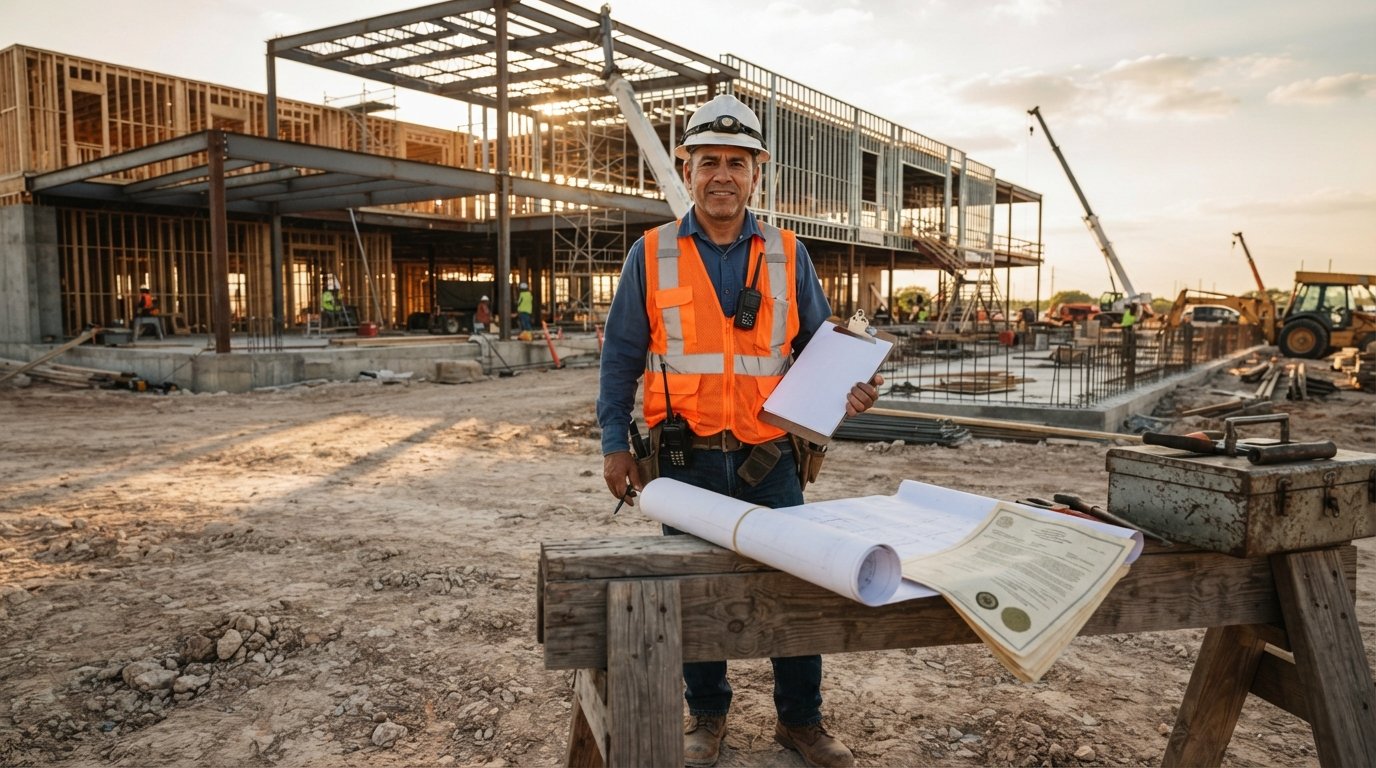
Texas Contractor Licensing and Bonding Requirements Explained
Get a clear breakdown of Texas contractor licensing, local permits, and surety bond requirements to keep your projects compliant and protected.

By Ignacio Mendez
In Texas, the construction industry is booming, but it is also heavily regulated. For contractors, navigating the maze of licensing and bonding rules can be as complex as any building project. A single misstep, such as operating without the proper license or failing to secure the required bond, can result in hefty fines, project delays, or even the loss of your business. This guide cuts through the jargon to give you a clear, actionable understanding of what it takes to operate legally and competitively in the Lone Star State. We will break down the specifics of state licensing, local permits, and the crucial role of surety bonds, including how they interact with your overall commercial insurance requirements.
The Two-Tier System: State Licensing in Texas
Texas does not have a single, blanket contractor license for all types of construction work. Instead, the state operates a two-tier system. The first tier involves specialized licenses issued by the Texas Department of Licensing and Regulation (TDLR) for specific trades. The second tier consists of local permits and registrations issued by cities and counties. Understanding which tier applies to your specific work is the foundational step to compliance.
For most general contractors who focus on residential or commercial remodeling, there is no statewide license required. However, this does not mean you are unregulated. You still need to register with the Texas Secretary of State if you operate as a corporation or LLC, and you must comply with local city and county rules. Conversely, if your work involves electrical, plumbing, or air conditioning and heating systems, you must hold a valid state license from the TDLR. Operating without one is a Class A misdemeanor, with penalties that can include jail time.
Key State-Issued Licenses You Should Know
The TDLR regulates several specific contractor categories. Each has its own application process, experience requirements, and examination. Here are the most common ones you will encounter:
- Electrical Licenses: Required for anyone who performs electrical work, including journeyman electricians, master electricians, and electrical contractors.
- Plumbing Licenses: Mandatory for plumbers and plumbing contractors who install or repair piping systems.
- Air Conditioning and Refrigeration (ACR) Licenses: Needed for technicians and contractors who work on HVAC systems.
- Irrigation Licenses: Required for installing or repairing irrigation systems, which is a common need in Texas landscapes.
Each license type has specific prerequisites. For example, to become a licensed electrical contractor, you typically need to have a master electrician on staff and provide proof of liability insurance. The TDLR also requires continuing education to maintain these licenses. Failing to renew your license on time can lead to a lapse, which not only halts your operations but can also void your insurance coverage if you have a claim during that period.
It is important to note that the state does not license general contractors or roofers. However, a roofer may need a local permit. This is where the confusion often begins. Homeowners and commercial property owners frequently believe they are hiring a 'state-licensed' general contractor when, in reality, that contractor may only hold a local permit. This distinction matters for liability and insurance purposes. If you are a general contractor, you must be acutely aware of the local rules in every city where you operate.
Local Licensing and Permit Requirements
While the state handles trade-specific licenses, cities and counties in Texas have the authority to impose their own registration and permitting requirements. For example, the City of Dallas requires a General Contractor License for any work exceeding a certain dollar amount. Similarly, Houston and Austin have their own registration processes, which often include background checks, proof of insurance, and payment of a fee.
This patchwork of local rules can be a significant operational hurdle for contractors working across multiple jurisdictions. You cannot assume that a permit from one city is valid in another. Each municipality has its own building codes and inspection schedules. To stay compliant, you should establish a process for checking local requirements before bidding on any project. Many cities now offer online portals where you can verify if a contractor is properly registered.
The consequences of skipping local permits are severe. If you work without a permit, the city can issue a stop-work order, which halts your project and forces you to pay for inspections and permit fees retroactively. You might also face fines that exceed the cost of the original permit. Worse, if you perform unpermitted work that later causes damage, your insurance company may deny your claim because you were operating outside the law.
Surety Bonds: A Different Kind of Protection
Once you have established your licensing requirements, you must address bonding. A surety bond is not insurance; it is a three-party contract. The parties are the principal (you, the contractor), the obligee (the project owner or government entity requiring the bond), and the surety (the company that backs your promise). If you fail to fulfill your contractual obligations, the obligee can make a claim against the bond to recover financial losses.
There are several types of surety bonds that contractors in Texas commonly need. Understanding the differences is crucial for protecting your business and your clients.
License and Permit Bonds
Many Texas cities and counties require contractors to post a license and permit bond as a condition of receiving a local business license. This bond is a form of consumer protection. It guarantees that you will comply with local laws and regulations. If you violate those laws, such as by performing shoddy work or failing to pay for a permit, the city can file a claim against your bond to compensate the affected party, often the homeowner.
The bond amount is typically set by the city and can range from $5,000 to $25,000. The cost to you is a percentage of that bond amount, usually between 1% and 3% of the total, depending on your credit score and financial history. For example, a $10,000 bond might cost you $100 to $300 per year. This is a small price to pay for the ability to legally operate in a lucrative market. Without this bond, you simply cannot obtain your local contractor license.
Performance and Payment Bonds
For larger commercial and public works projects, you will almost certainly need performance and payment bonds. These are required under the federal Miller Act for federal projects and under state 'Little Miller Acts' for state and local public projects. A performance bond protects the project owner by guaranteeing that you will complete the work according to the contract. A payment bond ensures that you pay your subcontractors, laborers, and material suppliers.
These bonds are not a simple purchase; they are a form of prequalification. The surety company will perform a thorough review of your financial statements, your track record, and your capacity to handle the project. This process can be daunting for small contractors, but it is a sign of financial stability. Successfully obtaining a performance bond signals to project owners that you are a reliable, established business. If you are a subcontractor on a bonded project, you are protected by the general contractor's payment bond, which is why it is critical to verify that a bond is in place before you start work.
How Bonding and Insurance Work Together
It is a common misconception that a surety bond and general liability insurance are interchangeable. They are complementary. General liability insurance protects you and your business from third-party claims of bodily injury or property damage. For example, if a visitor trips over your tools and gets hurt, your insurance pays for their medical bills and your legal defense. A surety bond, on the other hand, protects the project owner from your failure to perform the contract. It does not cover your own negligence that causes an accident.
In Texas, most project owners will require both. They want to see proof of insurance, typically a certificate of liability insurance, and they will also verify that you have the appropriate bonds. Your insurance policy and your bond work as a safety net for different types of risks. Consider a scenario where you damage a client's property during a renovation. Your liability insurance will cover the cost to repair the damage. But if you walk off the job halfway through and refuse to return, the owner will not file a claim on your insurance; they will make a claim against your performance bond. Having both in place is essential for operating a credible contracting business.
Navigating the Cost of Compliance
Licensing fees, bond premiums, and insurance premiums add up. For a small contractor, these costs can feel like a significant burden. However, they are a direct investment in your ability to win higher-value contracts. An unlicensed contractor is often limited to small, cash-only jobs, which severely caps your earning potential. In contrast, a properly licensed and bonded contractor can bid on commercial projects, government contracts, and larger residential renovations that command premium pricing.
To manage these expenses, you should consider bundling your insurance policies through a single provider. Many agencies, including Texas Policies, offer business owner's policies (BOPs) that combine general liability and commercial property insurance at a lower cost than buying them separately. When you work with an independent agency, they can shop your coverage with multiple carriers to find the best rate. They can also help you understand how your bond requirements affect your insurance needs, such as recommending an additional insured endorsement for the project owner, which is often a contract requirement.
Common Pitfalls and How to Avoid Them
Even experienced contractors can stumble when it comes to licensing and bonding. The most common pitfall is allowing a license to lapse. In Texas, most state licenses expire annually, and the renewal window is short. If you miss it, you may be required to retake an exam, which can take weeks. During that time, you cannot legally work. To avoid this, set calendar reminders for all license renewals and keep a file of all your certificates and bond paperwork.
Another frequent mistake is failing to disclose a prior bankruptcy or felony on a license application. Texas law requires full disclosure. If you hide this information, you can face license revocation later. It is always better to be upfront and provide context. Many licensing boards will still approve your application if you can demonstrate that you have addressed the issues that led to the bankruptcy or conviction.
Finally, do not rely on the general contractor's bond if you are a subcontractor. If the general contractor fails to pay you, you may find yourself in a difficult position. Your best protection is to file a mechanic's lien against the property, but this is a legal process that requires strict adherence to deadlines. A simpler solution is to verify that the GC has a valid payment bond and to request a copy of it before you begin work. If the project is public, the payment bond is your primary source of protection, so you must ensure it is in place.
In conclusion, mastering the licensing and bonding landscape in Texas is not optional; it is a fundamental part of running a successful construction business. The rules are complex, but they are navigable with the right information and professional support. By securing the correct state and local licenses, obtaining the necessary surety bonds, and pairing them with a robust commercial insurance policy, you protect your business, your clients, and your reputation. Before you bid on your next project, take the time to review your compliance status and consult with experts who understand the Texas market. A proactive approach today will save you from costly disruptions tomorrow.