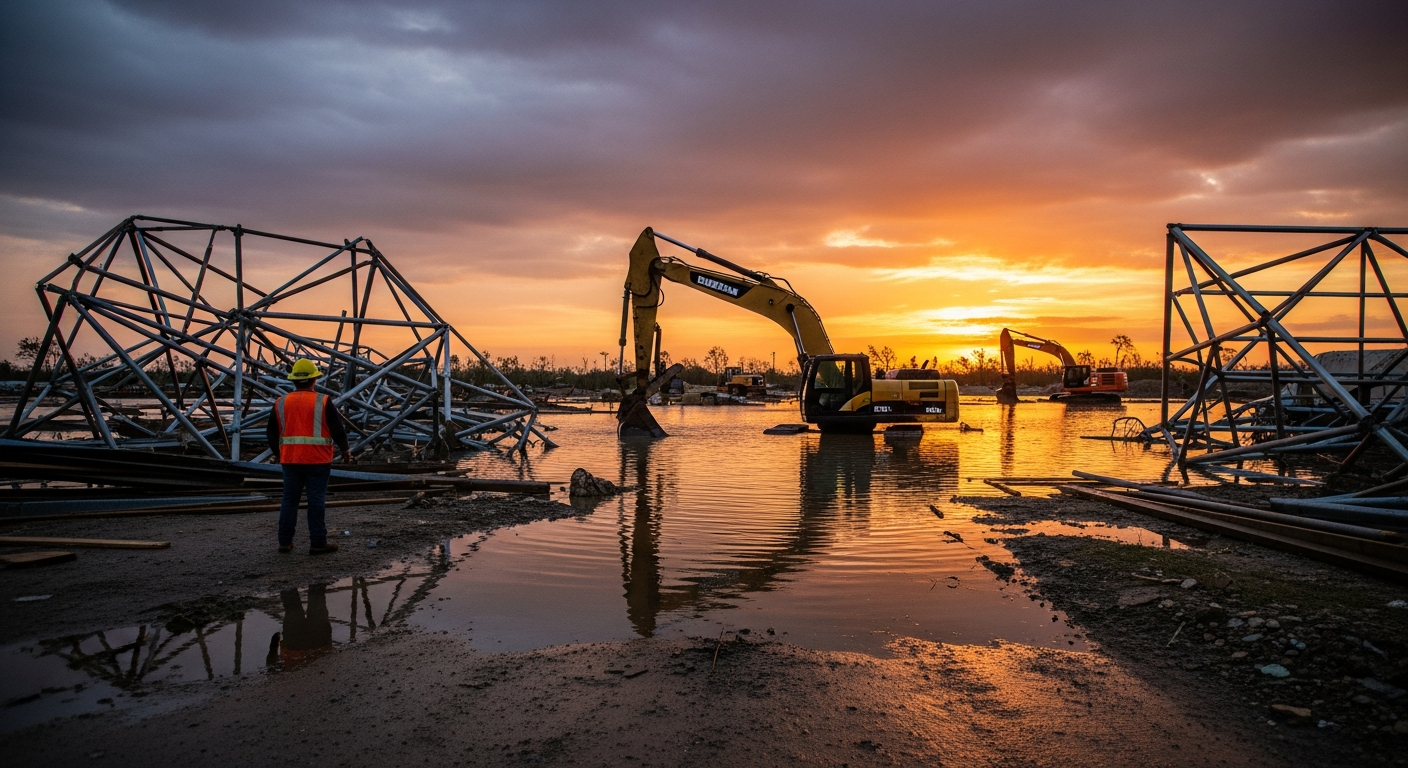

Imagine this: you are a Texas contractor with a fleet of specialized equipment parked at your Houston job site overnight. A major thunderstorm hits, causing flash flooding that submerges your excavators, generators, and scaffolding. Or perhaps you are transporting expensive materials from a Dallas supplier to a San Antonio project when a traffic accident damages your entire load. In these critical moments, your standard commercial auto or general liability policy will likely fall short, leaving you with devastating out-of-pocket losses. For contractors across Texas, from the oil fields of the Permian Basin to the booming construction hubs of Austin, these are not far-fetched scenarios but daily business risks. This is where inland marine insurance, a specialized and often misunderstood coverage, becomes your most powerful tool for financial protection. Unlike its name suggests, it has nothing to do with oceans and everything to do with protecting your business property while it is in motion over land or stored at temporary locations. Understanding the ten compelling reasons you need this coverage is essential for building a resilient and successful contracting business in the Lone Star State.
What Exactly Is Inland Marine Insurance for Contractors
Before diving into the specific reasons, it is crucial to clarify what inland marine insurance is. Originating from policies that covered cargo on ships, inland marine insurance evolved to cover property that is, quite literally, on the move. For Texas contractors, this policy is designed to protect your tools, equipment, and materials when they are not at your primary place of business. It fills the critical gaps left by other policies. Your commercial property insurance typically covers items at your permanent office or warehouse. Your commercial auto insurance covers the vehicle itself in an accident, but not the high-value equipment or materials inside it. Inland marine insurance is the flexible, mobile coverage that travels with your assets, ensuring that whether you are working on a high-rise in downtown Fort Worth or a residential development in El Paso, your investment is secure.
The scope of coverage is broad and can be tailored to your specific trade. A general contractor, an electrical subcontractor, and a plumbing company will all have different needs, and inland marine policies can be customized accordingly. This type of insurance is not a one-size-fits-all product; it is a strategic safeguard. Common items covered include contractor's equipment, from bulldozers and backhoes to laptops and laser levels, as well as materials and supplies in transit or stored on a job site. It can also cover installation risks, protecting equipment while it is being installed at a client's location. For Texas business owners navigating a landscape of extreme weather, long transport distances, and complex projects, this policy provides a foundational layer of security that other insurance products simply cannot match.
Protecting Your High-Value Tools and Equipment
Your equipment is the lifeblood of your operation. Without it, work grinds to a halt. Standard insurance policies often have significant limitations or outright exclusions for expensive, mobile equipment. An inland marine policy, often written as contractor's equipment insurance, is designed specifically to cover these assets for risks like theft, vandalism, and damage from accidents or weather. Consider the value of a single skid-steer loader or a mobile crane: losing such an asset without proper coverage could cripple your cash flow and your ability to fulfill contracts. In Texas, where job sites can be in remote or high-theft areas, this protection is not a luxury; it is a necessity for operational continuity.
For example, a landscaping contractor based in Austin might have a trailer full of commercial mowers, trimmers, and blowers stolen from a hotel parking lot overnight. Their commercial auto policy would not cover the equipment, only the trailer. Their commercial property policy would not apply because the loss occurred away from their premises. Only a properly structured inland marine policy would respond to this claim, allowing the contractor to replace the stolen equipment quickly and get back to work without a devastating financial setback. This coverage typically applies on an all-risk basis, meaning it protects against all perils unless they are specifically excluded in the policy wording, providing you with the broadest possible protection for your most critical business assets.
Coverage for Rented or Borrowed Equipment
A common and costly oversight for many contractors is failing to insure equipment they do not own. When you rent a scissor lift for a two-week project or borrow a specialty concrete saw from another contractor, you are almost always financially responsible for any damage or loss to that equipment while it is in your possession. The rental company's insurance will not cover it if you are negligent, and your own policies likely exclude it. An inland marine policy can be extended to cover this exposure, protecting you from having to pay out-of-pocket for a $50,000 rented excavator that is damaged in a rollover or stolen from your site. This add-on is often inexpensive compared to the potential liability and is a mark of a thorough and professional risk management strategy.
Securing Materials and Supplies in Transit and On-Site
Construction materials represent a massive upfront investment that is highly vulnerable until they are permanently installed. Lumber, copper wiring, HVAC units, and windows are all susceptible to theft, fire, and weather damage while sitting in your storage yard, on a truck, or at the job site. An inland marine policy can be written to include a builders risk or installation floater component, which protects these materials from the moment you take ownership until they are fixed in place and accepted by the project owner. This is particularly vital in Texas, where hailstorms can shred roofing materials, flash floods can ruin drywall deliveries, and the sheer scale of the state means materials spend significant time in transit on highways.
Imagine you are a custom home builder in the Hill Country. You take delivery of $80,000 worth of custom-made Italian tile for a luxury villa. The tiles are stored in a locked container on-site over the weekend. A pipe bursts in a nearby unit, flooding the container and destroying the entire shipment. Without an inland marine policy with builders risk coverage, you would bear the cost of replacing the tiles and the resulting project delays. With the right coverage, your insurer handles the claim, allowing you to re-order the materials and maintain your project schedule and budget. This seamless protection for materials ensures that a single unforeseen event does not derail your profitability or your reputation for delivering on time.
Meeting the Demands of Client Contracts
In today's competitive Texas construction market, it is becoming the rule rather than the exception for project owners and general contractors to require proof of inland marine insurance. When you are bidding on a large commercial project, a public works contract, or a high-end residential build, you will often find specific clauses in the contract mandating this coverage. These contractual requirements are put in place to protect the project owner and the general contractor from financial loss if your equipment or materials are damaged, causing delays or additional costs. Failing to have the required insurance can mean your bid is automatically disqualified, or you could be in breach of contract after work has begun, putting your payment and your legal standing at risk.
Beyond mere compliance, having this coverage signals professionalism and financial stability. It shows clients and general contractors that you are a serious business owner who understands and manages risk effectively. When you provide a certificate of insurance that includes inland marine coverage, you are not just checking a box; you are demonstrating that you have the safeguards in place to see their project through to completion, even if the unexpected occurs. This can be a significant differentiator, helping you win more bids and build relationships with larger, more reputable clients who value thoroughness and reliability.
Safeguarding Against Texas-Specific Risks
The unique geography and climate of Texas present a distinct set of challenges for contractors. The state is prone to a wide array of natural perils that can wreak havoc on job sites and equipment. From hailstorms in the Panhandle that can dent and destroy vehicles and stored materials to the hurricane and tropical storm threats along the Gulf Coast that bring high winds and flooding, the environmental risks are substantial. Furthermore, Texas's vast size means equipment is frequently transported long distances on interstate highways, increasing the risk of traffic accidents. An inland marine policy is specifically designed to respond to these mobile and location-based risks in a way that a static commercial property policy is not.
For instance, a roofing contractor in North Texas might have a job lined up for a Monday. On Sunday, a severe thunderstorm with baseball-sized hail moves through the area, destroying the entire pallet of shingles and underlayment that was delivered and staged on the roof deck on Friday. This is a total loss. An inland marine policy with the appropriate terms would cover the cost of the destroyed materials. Similarly, a South Texas contractor working in a coastal region must consider the threat of sudden flooding or high winds from a tropical disturbance. Standard policies may have sublimits or exclusions for these named perils, but a properly crafted inland marine policy can be negotiated to provide full coverage, ensuring your business can weather the storm, both literally and financially.
Key Benefits and Common Coverage Scenarios
To fully appreciate the value of inland marine insurance, it helps to see its benefits in action through common scenarios faced by Texas contractors. The core advantage is business continuity; by quickly replacing lost or damaged property, the policy prevents a single incident from causing prolonged downtime. It also protects your bonding capacity and creditworthiness, as insurers and lenders view well-insured businesses as lower risks. Furthermore, many inland marine policies can be written to include coverage for soft costs, such as the extra expenses incurred from project delays, like additional rental equipment fees or overtime labor, which are not covered by standard property policies.
Here are several common situations where inland marine insurance proves indispensable:
- Theft from an Unsecured Site: A subcontractor's trailer containing $25,000 worth of power tools is broken into overnight at a large, semi-secure commercial site in San Antonio.
- Transportation Accident: A flatbed truck carrying a portable air compressor and welding equipment is involved in a collision on I-35, damaging the equipment beyond repair.
- Weather Related Damage: A microburst or tornado in Central Texas overturns and destroys a mobile office and several pieces of equipment parked at a job site.
- Installation Floater Claim: An expensive, custom-built industrial pump is dropped and damaged by your crew while it is being positioned for installation at a manufacturing plant.
In each of these cases, the financial impact on an uninsured or underinsured contractor could be severe, potentially leading to bankruptcy. The inland marine policy acts as a financial shock absorber, allowing the business to absorb the loss and continue operating. When discussing coverage with your Texas insurance agent, be sure to outline all your business activities to ensure your policy is tailored to address the specific scenarios you are most likely to encounter.
How to Get the Right Inland Marine Coverage in Texas
Securing the right inland marine insurance policy requires a proactive and detailed approach. The first and most critical step is to work with an independent insurance agent or broker who specializes in commercial lines and has experience with contractors in Texas. They will understand the local market, the unique risks, and the carriers that offer the most comprehensive terms. Your agent will guide you through the process of creating a detailed schedule of your equipment, including descriptions, serial numbers, and values, as this forms the basis of your coverage. For materials, you will need to discuss the typical values and locations of your projects to establish appropriate limits.
When evaluating policies, pay close attention to the details. Look for all-risk coverage rather than named-peril coverage, as it provides broader protection. Understand the deductible amounts and how they apply. Confirm whether the policy provides replacement cost value, which pays to replace the item with a new one, or actual cash value, which deducts for depreciation. For contractors with rapidly changing inventory of materials and equipment, inquire about reporting form policies that allow for flexible limits based on monthly values reported. Finally, review the policy's territorial limits to ensure your coverage extends throughout all the areas of Texas where you conduct business. A thorough and well-structured inland marine policy is not an expense; it is an investment in the stability and future growth of your contracting business.
In the dynamic and often unpredictable world of Texas contracting, assuming risk is part of the job. However, assuming *unnecessary* financial risk can be a fatal business error. Inland marine insurance is the definitive solution for bridging the dangerous coverage gaps that exist in standard business insurance packages. It empowers you to protect your mobile assets, fulfill client contracts, and confidently navigate the specific environmental challenges of the Lone Star State. By investing in this specialized coverage, you are not just buying a policy; you are building a resilient foundation for your business, ensuring that your hard work and investment are safeguarded against the setbacks that could otherwise define your future. Consult with a knowledgeable Texas insurance professional today to tailor an inland marine policy that fits the unique blueprint of your operation.