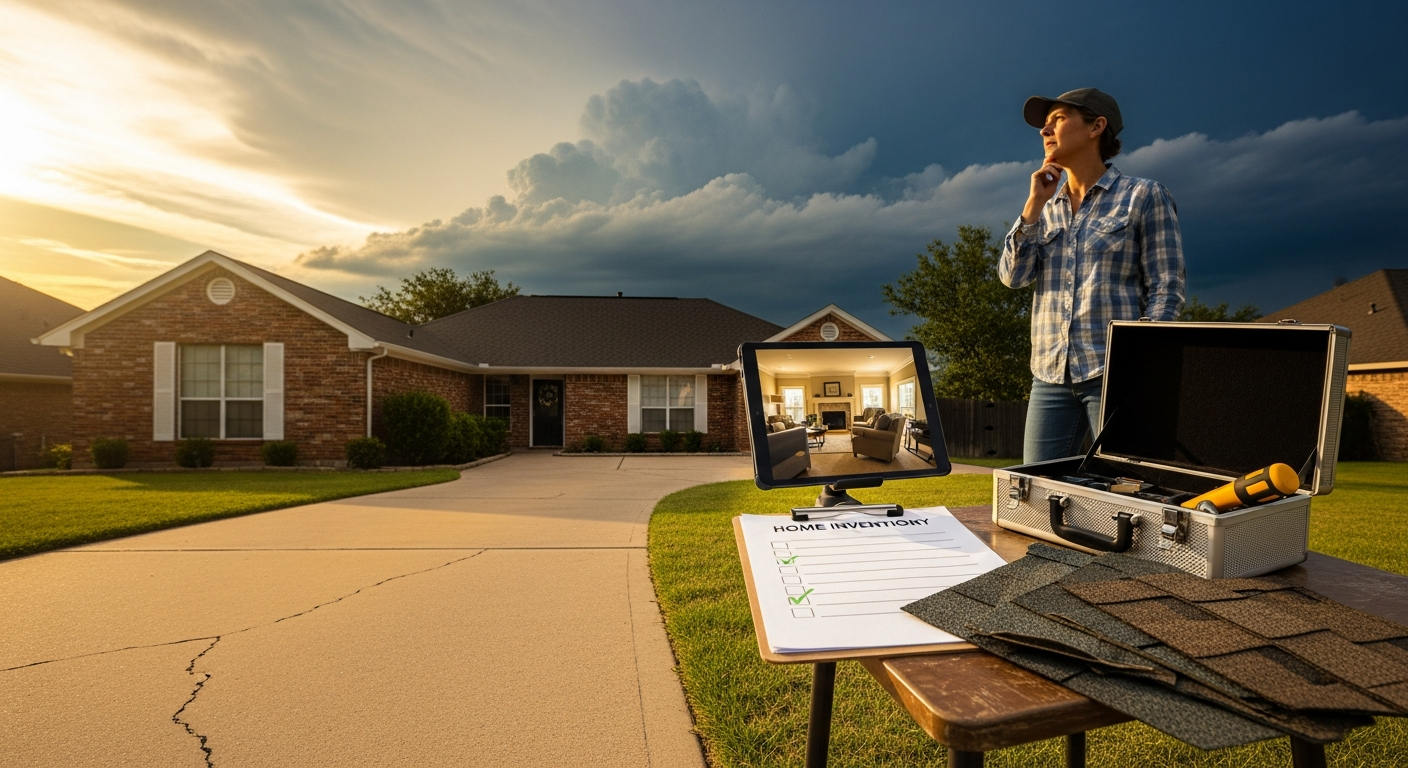

When a hailstorm cracks your roof in Dallas or a burst pipe floods your Houston kitchen, the quality of your homeowners insurance policy isn't just a line item-it's the difference between a swift recovery and financial devastation. Texas homeowners face a unique set of risks, from volatile weather patterns to specific state regulations, making a generic policy a significant gamble. Navigating the Texas insurance market requires a deliberate approach to ensure your most valuable asset is adequately protected against the very real threats it faces. This guide provides a clear, five-step framework to cut through the confusion and secure the right coverage for your Texas home.
Understanding the Texas Home Insurance Landscape
Before diving into policy details, it's crucial to grasp why insuring a home in Texas is distinct. The state's sheer size and geographic diversity create a wide spectrum of perils. A home in El Paso deals with intense sun and wind, while a property in Beaumont is more concerned with humidity and tropical storms. Furthermore, Texas operates as a "file-and-use" state, which means insurance companies can implement new rates and rules almost immediately after filing them with the Texas Department of Insurance, leading to a dynamic and sometimes volatile market. This makes understanding your policy's fine print more important than ever.
Texas homeowners also contend with a higher-than-average risk for certain natural disasters. Wind and hail damage are leading causes of claims, particularly in "Hail Alley" in the central part of the state. Wildfires can threaten the Hill Country and western regions, while coastal counties must manage the perennial risk of hurricanes and subsequent flooding. Standard Texas home insurance policies (HOA forms) often exclude flood damage entirely, a critical point for homeowners in flood-prone areas like parts of Harris County or along the Gulf Coast. Recognizing these regional threats is the first step in identifying the coverage gaps you need to fill.
Step 1: Conduct a Thorough Home Inventory and Risk Assessment
The foundation of adequate insurance is a precise understanding of what you need to insure and against what dangers. This step involves two key actions: creating a detailed home inventory and conducting a personalized risk assessment. Many Texas homeowners severely underestimate the replacement cost of their home and belongings, leading to being underinsured when disaster strikes. A proper inventory goes beyond a simple list; it establishes a verifiable record for the insurance company.
Start by documenting your home's structure. Note the square footage, construction type (e.g., brick, frame), the age of the roof, and any unique features or high-end upgrades like custom cabinetry or smart home systems. For your personal property, move room by room. The most effective method is a video walkthrough, describing each item as you film it. Open drawers and closets. For high-value items like jewelry, art, or electronics, take clear photographs and note serial numbers and receipts. Store this documentation in a secure, cloud-based location so it's accessible after a catastrophic event.
Next, perform a Texas-specific risk assessment. Consider these local factors:
- Wind/Hail Risk: Check your roof's condition and age. Is it rated for high winds?
- Flood Zone: Consult FEMA's Flood Map Service Center. Don't assume you're not at risk; many floods occur outside high-risk zones.
- Wildfire Exposure: If you live near wildland-urban interface areas, assess your home's defensible space.
- Plumbing: Older homes in Texas may have polybutylene pipes, which are prone to failure and can affect insurance.
This comprehensive assessment provides the hard data needed to have an informed conversation with insurance agents and ensures you are seeking coverage that truly matches your exposure.
Step 2: Decipher Key Texas Home Insurance Policy Components
With your inventory complete, you can now intelligently decode the components of a Texas homeowners insurance policy. A standard policy (often an HO-3) is a package of several types of coverage. Understanding what each part does is essential to building a robust financial shield.
Dwelling Coverage (Coverage A): This is the core of your policy, paying to repair or rebuild your house's structure if damaged by a covered peril. The amount should be based on your home's local replacement cost, not its market value. Market value includes the land, which isn't at risk, while replacement cost is the price to rebuild the structure from the ground up with materials of similar kind and quality. Given rising construction costs in Texas cities, it's vital to have an accurate, updated estimate.
Other Structures (Coverage B) and Personal Property (Coverage C): Coverage B protects structures not attached to your main home, like a detached garage, shed, or fence. Coverage C is for the contents of your home-furniture, clothing, appliances, etc. A common mistake is assuming Coverage C is a percentage of your dwelling coverage. Instead, it should be based directly on the home inventory you created in Step 1. Most policies impose limits on certain categories of valuable items, such as jewelry, firearms, or silverware. If you own high-value items, you will likely need a scheduled personal property endorsement for full coverage.
Liability Protection (Coverage L) and Medical Payments (Coverage M): These coverages protect your assets if you are found legally responsible for injuring someone or damaging their property. If a guest slips on your wet patio in San Antonio and sues you, liability coverage can help pay for your legal defense and any settlement. Medical payments coverage is a smaller, no-fault amount to cover minor medical bills for guests injured on your property, regardless of who was at fault. In a litigious environment, carrying high liability limits is a prudent financial decision.
Understanding Deductibles and Texas-Specific Endorsements
Your deductible is the amount you pay out-of-pocket on a claim before your insurance kicks in. In Texas, you must pay special attention to hurricane deductibles and wind/hail deductibles. These are often a percentage of your dwelling coverage (e.g., 1%-5%) rather than a flat dollar amount. For a home insured for $400,000, a 2% windstorm deductible means you would pay the first $8,000 of a wind-related claim. These separate deductibles are common in coastal counties and can have a massive impact on your finances after a storm.
Additionally, you may need to add endorsements (also called riders) to your base policy. Common and critical endorsements for Texas homeowners include:
- Water Backup Coverage: Protects against damage from sewer or drain backups, which are typically excluded.
- Ordinance or Law Coverage: Pays the extra cost to rebuild your home to current building codes, which have likely changed since your home was built.
- Extended Replacement Cost: Provides an additional cushion (e.g., 25% or 50%) above your dwelling coverage limit if rebuilding costs surge after a widespread disaster.
Step 3: Compare Quotes from Top Texas Carriers
Armed with knowledge of your needs and policy language, you are ready to shop. The goal is to compare apples-to-apples quotes from multiple reputable Texas insurance companies. Don't just default to the carrier with the funniest commercials; different insurers have different appetites for risk and may offer better rates or coverage for your specific profile.
When requesting quotes, provide each company with the exact same information: the dwelling coverage amount based on a reliable replacement cost estimator, your desired deductible amounts, and a list of any endorsements you want included. This ensures you are comparing identical coverage levels. Be prepared to discuss your home's construction, roof age, claims history, and the proximity of your home to a fire hydrant or fire station, as these factors heavily influence your premium.
Focus your search on carriers with a strong financial standing and a positive reputation for customer service in Texas. Look at third-party ratings from agencies like A.M. Best (for financial strength) and J.D. Power (for customer satisfaction). Read Texas-specific reviews to see how companies handle claims after major hailstorms or hurricanes. The cheapest policy is a poor bargain if the company is slow or difficult to work with when you file a claim.
Step 4: Master the Fine Print and Policy Review
Once you have a few quotes in hand, the most critical step begins: the policy review. The declarations page is a summary, but the real substance-and the potential for surprises-lies in the policy wording itself. You are looking for two things: what is covered and, just as importantly, what is excluded.
Pay close attention to the "Perils Insured Against" section. An HO-3 policy typically covers your dwelling on an "open perils" or "all-risk" basis, meaning it covers everything except what is specifically listed as excluded. Your personal property, however, is usually covered on a "named perils" basis, meaning it's only covered for the dangers listed (e.g., fire, windstorm, theft). This is a key distinction. Scrutinize the exclusions section. As noted, flood and earthquake are almost always excluded and require separate policies. Also, look for limitations on mold remediation, foundation damage, or wear and tear.
Before signing, create a final checklist. Confirm that the dwelling and personal property limits match your assessment. Verify the deductibles, especially for wind/hail. Ensure any scheduled personal property is listed correctly. Finally, understand your responsibilities in the event of a loss, such as the requirement to mitigate further damage (e.g., putting a tarp on a damaged roof). A thorough review now prevents devastating coverage denials later.
Step 5: Implement and Maintain Your Policy Annually
Securing the right policy is not a one-time event. Your home and life circumstances change, and your insurance must evolve with them. An annual review is a non-negotiable habit for a responsible Texas homeowner. Set a reminder for yourself each year, perhaps when you receive your renewal notice, to re-evaluate your coverage.
Ask yourself key questions during this review: Have you made any major renovations, like a kitchen upgrade or a new addition? These can significantly increase your home's replacement cost. Have you acquired any new high-value items that need to be scheduled? Has your risk profile changed-for instance, has a new development affected local drainage, increasing your flood risk? Even if you haven't made changes, the local construction cost trends have. An annual check-in ensures your coverage doesn't silently become inadequate over time.
This is also the time to shop your policy again. Loyalty can be expensive in the insurance market. By getting a new set of comparative quotes every few years, you can ensure you are still receiving competitive pricing for the coverage you need. However, never drop an existing policy for a new one until the new policy is officially in force.
Getting the right homeowners insurance in Texas is a deliberate process of assessment, education, and comparison. It demands an understanding of local risks and a willingness to look beyond the premium to the quality of the coverage. By following these five steps-assessing your assets, learning the policy language, comparing carriers, scrutinizing the details, and committing to annual reviews-you transform your policy from a simple contractual requirement into a robust, reliable safeguard for your Texas home. Your home is your sanctuary; the right insurance policy is the shield that protects it.