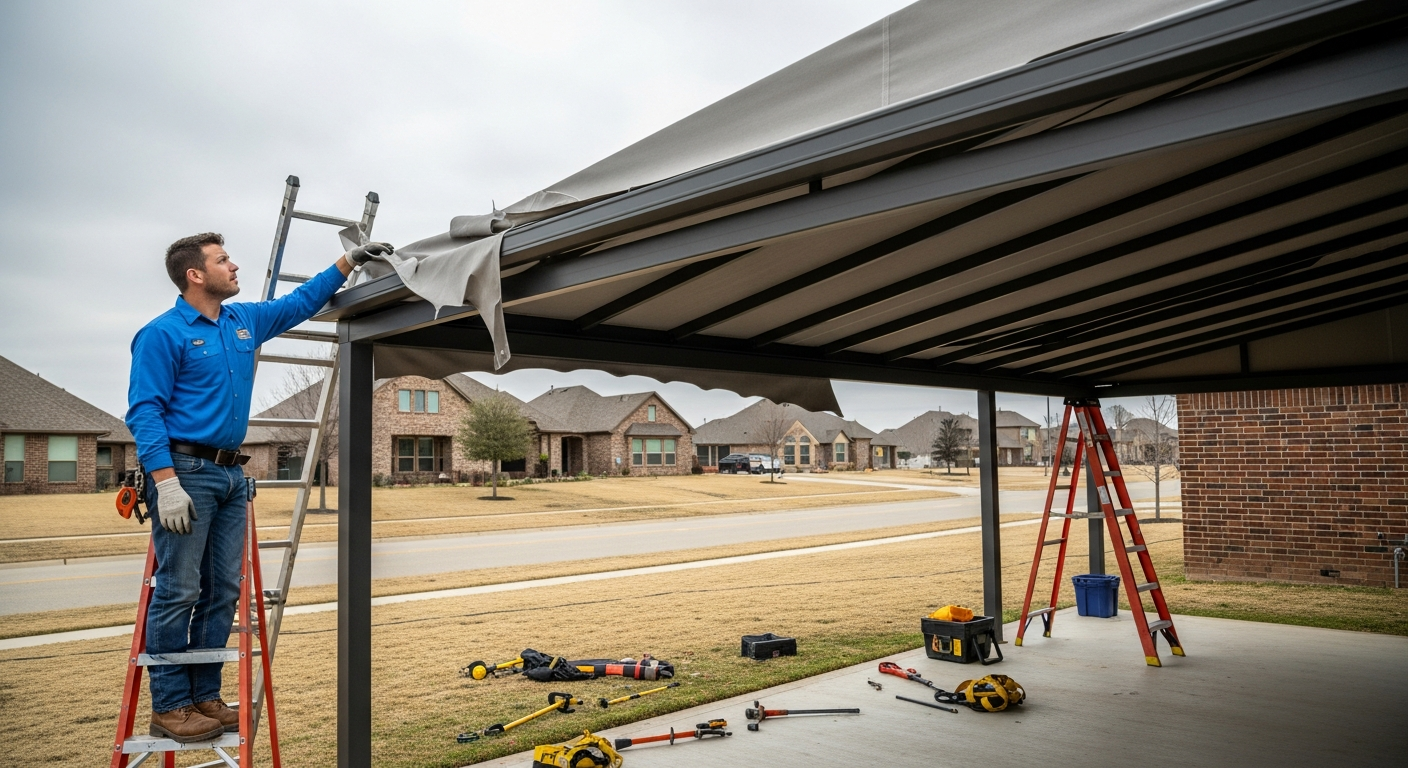

When a Texas storm sends patio furniture flying through your freshly installed awning, or a client trips on loose equipment at your worksite, your business suddenly faces thousands in damages and legal fees. Awning contractors face unique risks in Texas' extreme weather conditions and litigious environment - from hail damage destroying expensive inventory to third-party injury claims that can bankrupt unprotected operations. Having proper awning contractor insurance in Texas isn't just about compliance; it's about ensuring your livelihood survives the unexpected.
Why Texas Awning Contractors Need Specialized Insurance
Texas presents distinct challenges for awning professionals that standard business policies often overlook. The state's volatile weather patterns bring hailstorms, high winds, and sudden temperature fluctuations that can damage materials during installation or compromise completed projects. Additionally, Texas' legal landscape favors plaintiffs in liability cases, making adequate coverage essential for protection against lawsuits. Without proper insurance, a single incident could lead to devastating financial consequences that threaten your business continuity.
Beyond environmental factors, Texas awning contractors face operational risks throughout the service delivery process. During installations, you're working at heights, using specialized equipment, and modifying client properties - each activity carrying inherent liability. Even after project completion, you remain exposed to potential claims if an awning fails or causes property damage. Comprehensive insurance addresses these vulnerabilities by transferring risk from your business to the insurance carrier, providing financial protection that preserves your assets and reputation.
Essential Insurance Policies for Texas Awning Professionals
Building adequate protection requires understanding which policies address your specific risks. While coverage needs vary by business size and services offered, certain insurance types form the foundation of proper risk management for awning contractors operating in Texas.
General Liability Insurance
General liability insurance serves as your first line of defense against third-party claims of bodily injury or property damage. For awning contractors, this coverage proves crucial when accidents occur on job sites or completed projects cause issues. Imagine installing an awning at a restaurant when a ladder slips and damages the building exterior, or a poorly secured awning detaches and damages a client's vehicle. General liability would cover the repair costs and legal expenses if the client sues.
This policy typically includes premises liability for incidents occurring at your business location, operations liability for work performed elsewhere, and completed operations coverage for issues arising after projects finish. In Texas' litigation-prone environment, carrying adequate general liability limits - often $1-2 million per occurrence - provides essential protection against potentially catastrophic claims that could otherwise devastate your business finances.
Commercial Auto Insurance
Whether you're transporting materials to job sites or traveling between client consultations, vehicles used for business purposes require commercial auto coverage. Personal auto policies typically exclude business-related incidents, creating coverage gaps that leave you financially exposed. Commercial auto insurance protects your vehicles, drivers, and cargo while addressing liability for accidents occurring during business operations.
For awning contractors, this coverage proves particularly valuable when transporting expensive materials like aluminum frames, canvas, or specialty fabrics. If an accident damages your cargo, commercial auto insurance helps replace these business-critical materials. Additionally, Texas' high traffic volumes and urban congestion increase accident risks, making proper vehicle coverage non-negotiable for contractors who rely on mobility to serve clients across the state.
Workers' Compensation Insurance
Texas stands unique as the only state where employers aren't mandated to carry workers' compensation coverage, yet skipping this protection creates substantial risk. Awning installation involves working at heights, handling heavy materials, and using power tools - activities with significant injury potential. Without workers' comp, an injured employee could sue your business directly for medical expenses, lost wages, and pain and suffering.
Even if Texas doesn't require this coverage, carrying workers' compensation insurance provides crucial protection for both employees and your business. It establishes clear procedures for workplace injuries while limiting your liability for employee medical costs and lost income. For awning contractors with employees, this coverage represents both ethical business practice and financial prudence in a physically demanding industry where accidents can occur despite safety precautions.
Understanding NCCI Class Codes for Awning Contractors
The National Council on Compensation Insurance (NCCI) develops classification codes that help standardize how insurers assess risk and calculate premiums. These codes categorize businesses by operational activities, with incorrect classification potentially leading to inadequate coverage or premium overcharges. Texas utilizes NCCI codes primarily for workers' compensation insurance, though they influence other policy types as well.
Awning contractors typically fall under classification code 5474, which covers "Out-of-Door Advertising Sign Erection or Repair." Despite the name, this classification properly addresses awning installation and maintenance activities. The code encompasses outdoor structure installation, including both permanent and temporary projects, and accounts for the elevation risks inherent in awning work. Understanding this classification helps ensure you're properly categorized and paying appropriate premiums for your specific operations.
Misclassification represents a common issue for awning contractors who might be incorrectly coded under broader construction categories. Using an improper code can mean paying for coverage that doesn't match your risk profile - either overpaying for unnecessary protection or discovering coverage gaps when claims occur. Working with an insurance provider experienced in contracting businesses ensures accurate classification that reflects your actual operations while optimizing your insurance costs.
Factors Influencing Insurance Costs in Texas
Insurance premiums for awning contractors vary significantly based on multiple business-specific and external factors. Understanding these variables helps you manage costs while maintaining adequate protection for your Texas-based operation.
Your business location within Texas directly impacts insurance expenses. Contractors operating in metropolitan areas like Houston or Dallas typically face higher premiums due to increased liability risks, higher claim frequencies, and greater repair costs. Similarly, coastal regions prone to severe weather may carry additional premium surcharges for certain coverage types. Your claims history also substantially influences costs, with frequent past claims typically resulting in higher premiums.
Several operational factors affect your insurance pricing:
- Annual payroll and revenue: Higher payroll increases workers' comp costs, while greater revenue often correlates with increased liability exposure
- Number of employees: More staff typically means higher premiums across multiple policy types
- Services offered: Specialized services like large commercial installations or historical restoration may increase specific risk factors
- Coverage limits and deductibles: Higher coverage limits increase premiums, while higher deductibles can reduce costs
- Safety programs and certifications: Documented safety protocols and employee training may qualify you for premium discounts
The type of awning projects you specialize in also influences your risk profile and associated costs. Residential contractors typically face different liability exposures than commercial specialists, while those working with historic properties may encounter unique coverage requirements. Being transparent with your insurance provider about your specific operations ensures accurate premium calculations that reflect your actual risk rather than industry averages.
Navigating Texas-Specific Insurance Considerations
Operating as an awning contractor in Texas involves navigating state-specific regulations and environmental factors that influence your insurance needs. Unlike many states, Texas' unique regulatory environment creates both opportunities and challenges for business owners seeking adequate protection.
Texas' status as the only state where employers can opt out of workers' compensation creates important decisions for awning contractors with employees. While choosing alternative coverage options like occupational accident policies may offer initial cost savings, these alternatives often provide less comprehensive protection than traditional workers' comp. Understanding the implications of each approach requires careful evaluation of your risk tolerance, financial capacity, and employee relations strategy.
The state's weather patterns present another Texas-specific consideration. From hailstorms in North Texas to hurricanes along the coast, weather-related claims represent significant risks for awning contractors. Ensuring your policies adequately address weather-related damage to both projects-in-progress and completed installations requires specific endorsements or separate coverage elements. Additionally, Texas' extreme summer heat creates workplace safety concerns that may influence both your liability exposure and workers' compensation risks.
Building Your Customized Insurance Portfolio
Creating comprehensive protection involves assembling policies that address your specific business model, client types, and operational methods. While general liability, commercial auto, and workers' compensation form your coverage foundation, several additional policies merit consideration based on your individual circumstances.
Commercial property insurance protects your business location, tools, and inventory against damage or theft. For awning contractors, this coverage proves particularly valuable for safeguarding specialized installation equipment and stored materials. Inland marine insurance extends this protection to materials and equipment while in transit or at job sites, addressing the mobile nature of contracting work. Tools and equipment coverage can be written as part of your business owner's policy or as standalone protection.
For contractors who design awnings or provide consultation services, professional liability insurance (also called errors and omissions coverage) addresses claims related to design flaws or inadequate recommendations. This coverage becomes increasingly important as your services expand beyond basic installation to include custom design work. Similarly, installation floaters provide specific protection for materials and projects during the installation process, covering risks that might be excluded under standard property policies.
Building a complete insurance portfolio requires assessing both your current operations and future growth plans. As your business expands into new service areas or increases project values, your coverage needs will evolve accordingly. Regular insurance reviews with a knowledgeable provider ensure your protection remains aligned with your changing business activities and risk exposures.
Managing Insurance Costs Without Compromising Protection
While insurance represents a necessary business expense, several strategies can help Texas awning contractors optimize costs without creating dangerous coverage gaps. Implementing these approaches requires proactive risk management and informed decision-making about your insurance program.
Bundling multiple policies with a single carrier often generates significant premium savings through multi-policy discounts. Business owner's policies (BOPs) combine general liability and property coverage at lower rates than purchasing separately. Additionally, working with an independent insurance agent who represents multiple carriers allows comparison shopping to identify the most competitive rates for your specific risk profile.
Implementing robust safety programs represents another effective cost-management strategy:
- Develop documented safety protocols for installation procedures and equipment use
- Provide regular employee training on hazard identification and safe work practices
- Maintain thorough incident documentation and conduct post-accident analyses
- Establish equipment inspection schedules and maintenance records
- Create emergency response plans for common job site incidents
These practices not only reduce accident frequency but may also qualify you for insurance premium credits. Many carriers offer discounts for businesses with formal safety programs, claims-free histories, or specific safety certifications. Additionally, choosing higher deductibles where financially feasible can lower premium costs, though this approach requires maintaining adequate cash reserves to cover potential out-of-pocket expenses when claims occur.
Your awning business represents significant investment and livelihood, making proper insurance protection fundamental to long-term success. By understanding the specific coverage needs for Texas contractors, accurately classifying your operations, and implementing cost-management strategies, you can build an insurance program that provides robust protection while supporting your financial objectives. Regular consultation with insurance professionals who understand both the contracting industry and Texas' unique regulatory environment ensures your coverage evolves alongside your business needs.