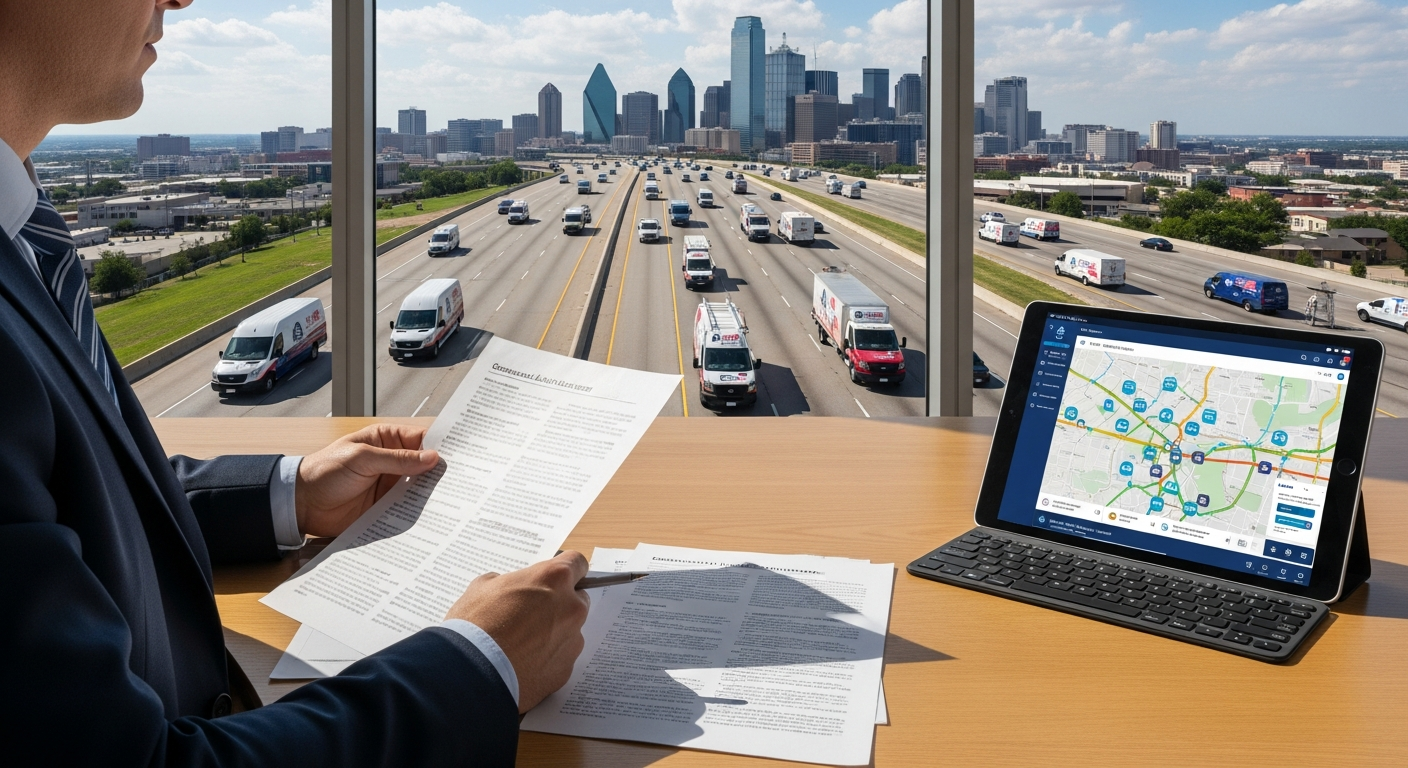

When your commercial vehicles hit the busy streets of Dallas - from the I-35E corridor to the sprawling industrial hubs of the Metroplex - your business is on the line with every mile. A single accident, theft, or liability claim can derail operations and inflict significant financial damage. For Texas businesses that rely on vehicles, from a few service vans to an entire logistics fleet, standard auto insurance falls dangerously short. Commercial auto insurance in Dallas isn't just a policy; it's a fundamental component of your risk management and operational continuity strategy. This comprehensive guide delves into the specifics of fleet insurance solutions designed to protect Dallas-based businesses, addressing the unique challenges of Texas roads and legal landscape to ensure your assets and your future are secure.
What is Commercial Auto Insurance for Dallas Fleets?
Commercial auto insurance is a specialized policy designed to cover vehicles used for business purposes. For a Dallas fleet, this extends beyond a simple collection of individual vehicle policies. A true fleet insurance solution consolidates coverage for all your company-owned vehicles-cars, vans, trucks, and semi-trucks-under a single, master policy. This approach provides seamless protection that is specifically tailored to the collective risk profile of your entire operation, rather than treating each vehicle as a separate entity. It is a fundamental requirement for any Texas business whose employees drive to perform their jobs, transport goods, or provide services.
The distinction from personal auto insurance is critical. Personal policies explicitly exclude coverage for accidents that occur while conducting business. If one of your employees is involved in a collision while making a delivery or traveling to a worksite, a personal auto policy will likely deny the claim, leaving your business exposed to massive out-of-pocket costs for vehicle repairs, medical bills, and legal fees. Commercial auto insurance fills this gap, providing the necessary financial protection for bodily injury, property damage, and vehicle damage that can arise from business-related use on Texas highways and Dallas city streets.
Key Coverage Components of a Dallas Fleet Policy
A robust commercial auto policy for a Dallas fleet is built on several core coverage components. Understanding these elements is the first step in building a protection plan that aligns with your specific operational risks.
Liability Coverage: Your First Line of Defense
Liability coverage is the cornerstone of any commercial auto policy. In the event your driver is at fault in an accident, this coverage pays for injuries to other people and damage to their property. Texas law mandates minimum liability limits, but for a business with significant assets, the state minimums are often insufficient. Given the high traffic density in Dallas and the potential for severe multi-vehicle accidents on roads like I-635 or US-75, carrying higher liability limits is a prudent business decision. This coverage protects your company's finances from being depleted by a single catastrophic claim.
Physical Damage Coverages: Protecting Your Assets
While liability covers others, physical damage coverage protects your own fleet vehicles. This is split into two main parts: collision and comprehensive. Collision coverage pays for damage to your vehicle resulting from an impact with another vehicle or object, such as a crash on the Dallas North Tollway. Comprehensive coverage, often called "other-than-collision," handles damage from non-crash events common in North Texas, including hail storms, flooding, fire, theft, and vandalism. For a fleet, this means your essential business assets are protected from a wide array of physical perils, ensuring a damaged vehicle can be repaired or replaced swiftly to minimize downtime.
Additional Crucial Coverages for Texas Businesses
Beyond the basics, several other coverages are vital for a comprehensive fleet insurance solution in Texas. Medical Payments or Personal Injury Protection (PIP) can cover medical expenses for you and your passengers, regardless of who is at fault. Uninsured/Underinsured Motorist (UM/UIM) coverage is critically important in Texas, which has a high rate of uninsured drivers; it protects your business if your driver is hit by someone with no insurance or inadequate coverage. For businesses that transport goods, Motor Truck Cargo insurance is essential, as it covers the loss or damage of the products being hauled. Finally, Hired and Non-Owned Auto Insurance (HNOA) extends liability coverage to vehicles your business rents or to employees' personal vehicles used for company errands.
Why Your Dallas Business Needs a Custom Fleet Insurance Program
Purchasing a generic commercial auto policy can leave dangerous gaps in your coverage. A custom fleet insurance program, designed with the specific nuances of your Dallas-based operation in mind, is not a luxury but a necessity for robust risk management. A tailored program considers all the variables that define your risk profile, creating a protection plan that grows and adapts with your business.
The primary advantage of a customized program is cost efficiency and streamlined administration. Instead of managing dozens of individual policies with different renewal dates, you have one master policy for your entire fleet. This not only simplifies paperwork and payments but also often results in significant premium savings. Insurance carriers typically offer more competitive rates for fleets because they can spread risk across multiple vehicles. Furthermore, a custom program can be structured with flexible deductibles, coverage limits, and endorsements that precisely match your financial tolerance and operational needs, whether you run a construction company in Fort Worth or a delivery service throughout the DFW area.
Key factors that shape a custom fleet program include:
- Vehicle Types and Uses: Coverage needs differ drastically between a sedan used for client meetings and a dump truck used on construction sites.
- Driver Profiles and Safety Records: Insurers will assess the driving history of your employees to determine risk.
- Garaging Locations and Primary Operational Territories: A fleet garaged in downtown Dallas faces different risks than one based in a suburban industrial park.
- Cargo and Hauling Requirements: The value and type of goods transported directly impact your needed cargo liability limits.
By partnering with an insurer that understands these local and industry-specific factors, you secure a policy that acts as a true business asset, not just a compliance requirement.
Navigating Texas-Specific Insurance Regulations and Challenges
Operating a commercial fleet in Texas requires a clear understanding of the state's unique insurance and legal environment. Texas is a "fault" or "tort" state for auto accidents, meaning the driver who causes the accident is financially responsible for the resulting damages. This system makes carrying adequate liability limits absolutely critical, as your business could be sued for damages that exceed your policy's coverage.
Texas also has specific financial responsibility laws. The state minimum for liability coverage is often referred to as 30/60/25: $30,000 for bodily injury per person, $60,000 for bodily injury per accident, and $25,000 for property damage. However, these minimums are widely considered inadequate for commercial operations, especially with today's high medical and vehicle repair costs. For a business fleet, it is strongly recommended to carry limits of $1 million or more to protect your company's assets from a devastating lawsuit. Another critical Texas-specific consideration is the state's high percentage of uninsured drivers. Making sure your UM/UIM coverage limits match your liability limits is a essential step in protecting your business and employees from financially irresponsible motorists.
Steps to Secure the Right Fleet Insurance in Dallas
Securing the optimal fleet insurance policy for your Dallas business is a strategic process. Rushing this decision can lead to overpaying for unnecessary coverage or, worse, being dangerously underinsured. Following a structured approach will help you find a policy that offers both comprehensive protection and competitive pricing.
The first and most crucial step is to conduct a thorough risk assessment of your entire operation. Document every vehicle in your fleet, including its year, make, model, VIN, and primary use. Compile a list of all drivers, along with their driver's license numbers and Motor Vehicle Records (MVRs). You should also detail the typical routes, the type of cargo hauled, and the annual mileage for each vehicle. This information is the foundation upon which insurers will build an accurate quote.
Once your assessment is complete, the next step is to shop around with specialized providers. Not all insurance carriers are created equal when it comes to commercial fleet policies. Look for providers, like TexasPolicies.com, that have deep experience with Texas commercial auto insurance and a proven track record with businesses similar to yours. When comparing quotes, be sure you are comparing policies with identical coverage types, limits, and deductibles to make a true apples-to-apples comparison. The final step is to implement the policy and integrate ongoing safety and management practices. Many insurers offer premium discounts for businesses that establish formal driver safety training programs, use telematics to monitor driving behavior, and enforce strict policies on distracted driving.
Essential documentation to have ready includes:
- A complete vehicle schedule with VINs for all cars, trucks, and vans.
- Driver information for all employees who operate company vehicles.
- Business operational details, including garaging addresses and description of services.
- Loss history reports for the past 3-5 years, if available.
Maximizing Value and Minimizing Premiums on Your Policy
While comprehensive coverage is non-negotiable, there are several proven strategies to manage and reduce the cost of your commercial fleet insurance premiums without sacrificing protection. Insurers price policies based on risk, so any action you take to demonstrably lower your risk profile can lead to direct savings.
One of the most effective methods is to invest in a formal driver safety program. Training your drivers in defensive driving techniques, especially those relevant to dense urban environments like Dallas, can lead to fewer accidents and fewer claims. Many insurance carriers will provide a substantial discount for businesses that can certify their drivers have completed an approved safety course. Another powerful tool is the implementation of telematics or fleet tracking technology. These systems monitor driving behaviors such as speeding, hard braking, and rapid acceleration. By identifying and coaching high-risk drivers, you can proactively reduce the likelihood of accidents. Insurers often offer discounts for fleets that utilize this technology, as it provides them with concrete data showing a reduced risk.
Additionally, you can optimize your premium by carefully selecting your deductibles. Opting for a higher deductible on physical damage coverage can lower your annual premium. However, this strategy requires that your business has the financial liquidity to cover the higher out-of-pocket cost in the event of a claim. It's a balance between short-term savings and long-term financial planning. Finally, the simplest way to save is by bundling your commercial auto policy with other business insurance policies, such as general liability or commercial property insurance, through the same provider. This "multi-policy" or "bundle" discount is commonly offered and can result in significant overall savings on your business insurance portfolio.
Protecting your Dallas fleet with a comprehensive, custom-tailored commercial auto insurance policy is one of the most strategic investments you can make in the stability and longevity of your business. It transforms a potential liability into a managed risk, allowing you to focus on growth and service delivery across Texas with confidence. By understanding the coverage components, navigating state-specific regulations, and implementing risk-reduction strategies, you secure not just your vehicles, but the very future of your enterprise. Let a specialized provider help you build a solution that fits your unique needs and keeps your business moving forward safely.