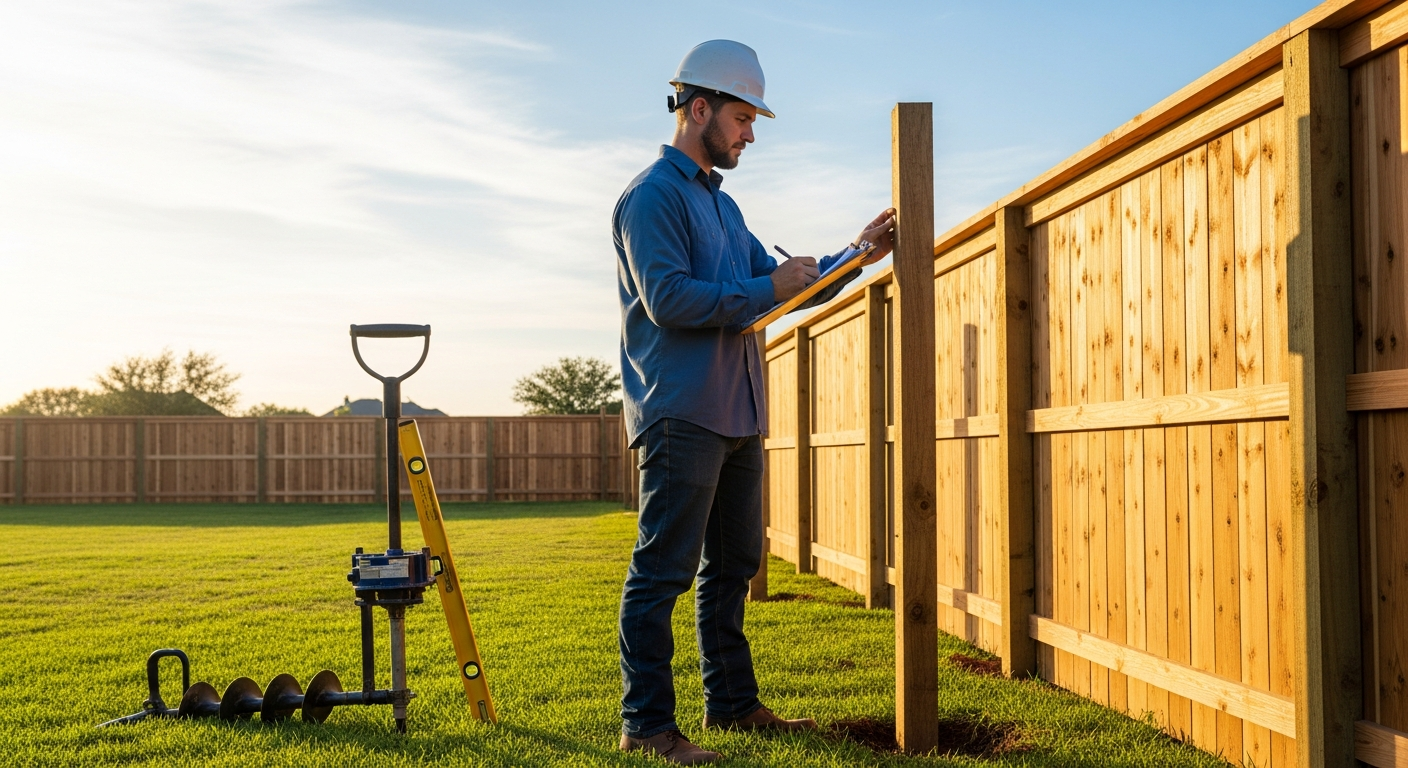

Picture this: you've just started your fence installation business in Texas, and you're ready to transform residential and commercial properties with beautiful, functional fencing. Your tool belt is stocked, your crew is trained, but have you considered what happens when a post-hole accident damages a client's underground utility line? Or what if a newly installed fence collapses during a Texas thunderstorm, causing property damage? These aren't just hypothetical scenarios - they're real risks that Texas fence contractors face daily. While the Lone Star State doesn't mandate specific insurance policies for fence installers by statute, operating without proper coverage is like building a fence without concrete footings: it might stand temporarily, but the first serious storm will reveal its fatal weaknesses.
Texas Insurance Requirements for Fence Companies
Unlike some states that dictate exact insurance requirements for specific trades, Texas takes a more hands-off approach to regulating fence installation businesses. The Texas Department of Licensing and Regulation doesn't require fence installers to carry specific insurance policies to obtain a general business license. However, this regulatory freedom comes with significant responsibility - the burden falls entirely on business owners to protect themselves, their employees, and their clients through adequate insurance coverage.
Many Texas fence installers mistakenly believe that since the state doesn't mandate specific policies, they can operate without insurance entirely. This misconception has led to countless business failures when unexpected incidents occur. The reality is that while Texas law might not require fence installation insurance, your clients, financial institutions, and business partners certainly will. Most commercial property owners, residential developers, and even individual homeowners now require proof of insurance before signing any fencing contract. Without it, you'll find yourself locked out of the most profitable projects and vulnerable to financial ruin from even minor job-site incidents.
Essential Insurance Policies for Texas Fence Installers
Building a comprehensive insurance portfolio is critical for fence installation businesses operating in Texas. The unique risks associated with this trade - from damaging underground utilities to installing structures that must withstand Texas weather extremes - demand specialized coverage that goes beyond basic business policies.
General Liability Insurance
General liability insurance forms the foundation of protection for any fence installation business in Texas. This policy covers third-party bodily injury, property damage, and personal injury claims that occur during your operations. For example, if your employee accidentally breaks a client's expensive landscaping feature while installing a fence, or if a pedestrian trips over your equipment left on a sidewalk, general liability would cover the resulting claims. In Texas, where property values and medical costs continue to rise, having adequate liability limits is non-negotiable. Most commercial clients in major Texas markets like Houston, Dallas, and Austin now require at least $1 million in general liability coverage, with many large projects demanding $2 million or more.
The property damage component is particularly important for fence installers, as Texas properties often feature expensive underground utilities, irrigation systems, and landscaping that can be easily damaged during post-hole digging. A single incident involving a damaged gas line or fiber optic cable could result in six-figure repair costs and business interruption claims from multiple affected parties. Additionally, Texas' extreme weather patterns mean that partially installed fences can become projectiles during sudden storms, potentially causing damage to neighboring properties.
Commercial Auto Insurance
Texas fence companies rely heavily on vehicles to transport materials, equipment, and crews to job sites throughout the state. Personal auto policies explicitly exclude coverage for vehicles used in business operations, leaving you exposed to significant financial risk if an accident occurs while conducting business. Commercial auto insurance covers your work vehicles, whether owned, leased, or hired, and provides protection against liability claims, collision damage, and comprehensive incidents like theft or weather-related damage.
Consider the typical Texas fence installer's vehicle: loaded with expensive materials, powerful tools, and often towing heavy trailers. An accident involving this type of vehicle could result in massive liability claims, especially if it occurs on busy Texas highways. Commercial auto policies can be tailored to cover not just the vehicles themselves, but also the valuable cargo they carry. Given the high theft rates for construction tools and materials in many Texas urban areas, this coverage is particularly valuable for protecting your business assets while in transit.
Workers' Compensation Insurance
While Texas is the only state that doesn't require most private employers to carry workers' compensation insurance, opting out of this coverage represents a tremendous gamble for fence installation businesses. The physical nature of fence installation - involving heavy lifting, power tools, and exposure to weather extremes - creates significant injury risks for your employees. Without workers' comp coverage, you could be personally liable for medical expenses, lost wages, and disability benefits if an employee gets injured on the job.
Texas fence companies should carefully consider these key factors when evaluating workers' compensation needs:
- Employee safety: Even with rigorous safety protocols, accidents happen in construction trades
- Legal protection: Workers' comp generally protects employers from lawsuits by injured employees
- Contract requirements: Many commercial clients require proof of workers' comp coverage
- Financial stability: A single serious injury could generate medical costs that bankrupt an uninsured business
The decision becomes particularly complex for Texas businesses that employ subcontractors. Misclassifying employees as independent contractors can lead to severe penalties and unexpected liability if those workers are injured. Many fence installation businesses find that carrying workers' comp, even when not legally required, provides crucial financial stability and makes them more competitive when bidding on larger projects.
Additional Coverage Options for Enhanced Protection
Beyond the essential policies, several specialized insurance coverages can provide crucial protection for Texas fence installation businesses facing unique regional challenges and industry-specific risks.
Installation Floater and Inland Marine Insurance
Installation floaters, a type of inland marine insurance, provide coverage for materials and equipment while they're in transit or stored at job sites. For fence installers, this means your expensive lumber, metal panels, gates, and hardware are protected from theft, damage, or destruction before they're permanently installed. This coverage is particularly valuable in Texas, where job sites might be exposed to extreme weather events, from hailstorms in West Texas to tropical storms along the Gulf Coast.
Consider a scenario where you've delivered $15,000 worth of custom cedar fencing to a job site in San Antonio, only to have it destroyed by an unexpected microburst storm before installation. Without an installation floater, this loss would come directly from your business profits. Similarly, the high incidence of construction material theft in Texas urban areas makes this coverage essential for protecting your inventory investment while materials await installation.
Tools and Equipment Coverage
Fence installation requires significant investment in specialized tools and equipment - from post-hole diggers and augers to pneumatic nail guns and power saws. Standard business policies often provide limited coverage for these essential assets, particularly when they're stolen from vehicles or job sites. Tools and equipment insurance can be written to cover these items both on your business premises and while they're in use at installation sites throughout Texas.
The portability of fence installation equipment makes it particularly vulnerable to theft. A single incident involving a stolen tool trailer could put your business operations on hold for weeks while you replace essential equipment. Given that many Texas fence companies operate across multiple job sites simultaneously, often leaving equipment overnight at residential properties, this coverage provides crucial protection against business interruption due to equipment loss.
Commercial Umbrella Insurance
Commercial umbrella insurance provides an extra layer of liability protection that kicks in when your underlying policy limits are exhausted. For Texas fence installers working on high-value properties or commercial projects, umbrella coverage offers peace of mind against catastrophic claims that could otherwise destroy your business. Given Texas' robust property values and the potential for significant injury claims, even well-insured businesses can benefit from the additional protection umbrella policies provide.
Imagine a scenario where a poorly secured fence panel dislodges during installation and causes a multi-vehicle accident on a busy Austin highway. The resulting liability claims could easily exceed standard policy limits. Umbrella coverage ensures that a single incident doesn't wipe out your business assets and future earnings. For growing fence companies taking on larger projects, umbrella insurance represents a smart investment in long-term business stability.
Cost Factors for Fence Installer Insurance in Texas
Insurance premiums for Texas fence installation businesses vary significantly based on multiple risk factors that insurers carefully evaluate. Understanding these variables can help you manage your insurance costs while maintaining adequate protection.
Your business location within Texas dramatically impacts your insurance rates. Companies operating in metropolitan areas like Houston, Dallas, or San Antonio typically face higher premiums due to increased theft rates, higher property values, and greater litigation risks. The type of fencing you specialize in also influences costs - installers working with premium materials like wrought iron or custom wood generally pay more than those installing basic chain-link fences, reflecting the higher replacement costs and greater liability exposure.
Texas fence companies can take several proactive steps to control insurance costs while maintaining comprehensive coverage:
- Implement rigorous safety protocols: Documented safety programs and employee training can significantly reduce your risk profile
- Maintain thorough records: Detailed job records, client contracts, and safety documentation demonstrate professional operation
- Choose coverage limits wisely: Work with an insurance professional to balance adequate protection with affordable premiums
- Consider higher deductibles: Increasing deductibles on certain policies can lower premium costs
- Bundle coverage: Many insurers offer package discounts when you purchase multiple policies
Your business history, including years in operation and claims history, also significantly influences your insurance costs. Newer businesses typically pay higher rates until they establish a track record of safe operations. Similarly, businesses with previous claims will face increased premiums, highlighting the importance of proactive risk management in controlling long-term insurance expenses.
Legal and Contractual Insurance Requirements in Texas
While Texas state law doesn't specifically mandate insurance for fence installers, numerous legal and contractual obligations effectively require adequate coverage. Navigating these requirements is essential for operating successfully within Texas' business landscape.
Most significantly, Texas businesses with employees are subject to federal regulations that may require specific insurance coverage. If you hire employees (as opposed to working with true independent contractors), you must carry workers' compensation coverage to comply with federal workplace safety regulations, even though Texas doesn't mandate it at the state level. Additionally, commercial vehicle operations fall under both state and federal jurisdiction, with specific insurance requirements based on vehicle weight and usage.
From a contractual perspective, nearly all commercial fencing projects and many residential jobs now require proof of insurance before work can commence. Standard construction contracts in Texas typically include insurance requirements that specify:
- Minimum coverage limits: Often $1 million or more for general liability
- Additional insured status: Requiring that property owners be named as additional insureds on your policy
- Workers' compensation coverage: Even though not state-mandated, most commercial contracts require it
- Commercial auto coverage: With specific liability limits for vehicles used on the project
Failure to maintain the insurance requirements specified in your contracts can result in breach of contract claims, project termination, and loss of payment - even for completed work. Many Texas property management companies, homeowners associations, and general contractors now verify insurance coverage electronically and regularly, meaning lapses in coverage can immediately halt your operations on multiple projects simultaneously.
The reality of operating a fence installation business in Texas is that while the state grants significant freedom regarding insurance requirements, the practical business environment demands comprehensive coverage. From protecting your assets against unexpected incidents to meeting client requirements and positioning your business for growth, adequate insurance isn't just a safety net - it's a fundamental component of professional operation in the Texas construction industry. Working with an insurance provider who understands both the fencing trade and Texas' unique regulatory environment ensures you get the right coverage at the right price, allowing you to focus on what you do best: building quality fences for Texas properties.