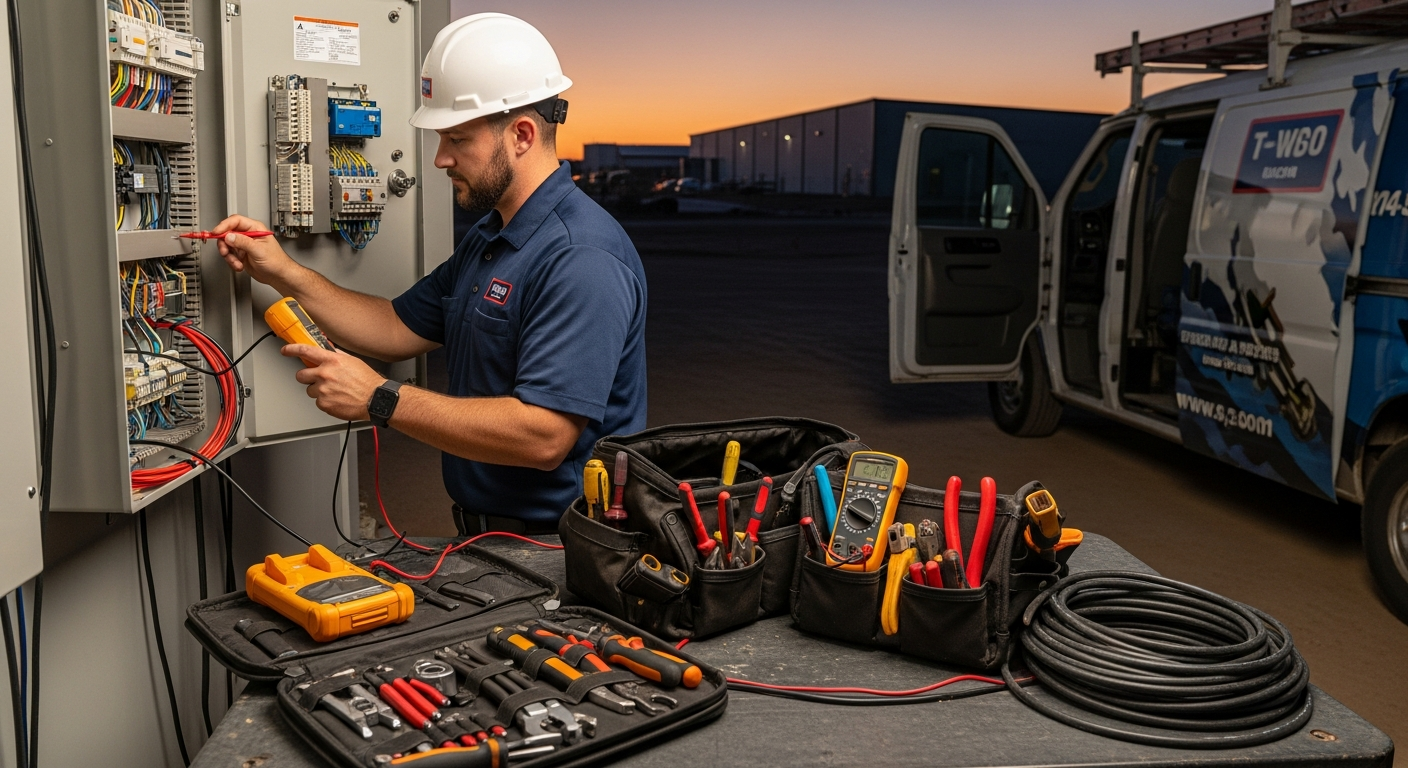

When you're an electrician in Texas, your expertise keeps homes safe and businesses running - but what protects your livelihood when accidents happen? Electrical work involves significant risks: a single wiring mistake could cause property damage, workplace injuries could lead to costly lawsuits, and damaged equipment could shut down your operations. Texas doesn't mandate specific insurance requirements for electricians at the state level, but nearly all clients, contractors, and project owners will require proper coverage before you can even bid on jobs. Understanding the right insurance portfolio isn't just about compliance - it's about building a resilient business that can withstand the unique challenges of electrical contracting in the Lone Star State.
Texas Insurance Requirements for Electricians
While Texas doesn't establish statewide insurance mandates specifically for electricians, you'll encounter several non-negotiable coverage requirements through other channels. Most municipalities require electricians to carry insurance as part of their local licensing process. For instance, Houston, Dallas, and San Antonio all mandate specific liability coverage limits for licensed electrical contractors. Additionally, general contractors typically require subcontractors to provide certificates of insurance before beginning work on commercial or residential projects. These requirements create a de facto regulatory environment where proper insurance becomes essential for operating your electrical business.
The most critical requirement you'll face is general liability insurance, which most clients and municipalities require at minimum levels between $500,000 and $1,000,000 per occurrence. Many commercial projects, especially government contracts or large developments, may require even higher limits - sometimes $2 million or more. Workers' compensation insurance becomes mandatory once you hire your first employee in Texas, though sole proprietors without employees can opt for coverage voluntarily. Commercial auto insurance is required for any vehicles used in your business, while tools and equipment coverage, though often optional, becomes practically essential given the high value of specialized electrical instruments.
Essential Insurance Policies for Texas Electricians
Building the right insurance portfolio requires understanding how different policies protect various aspects of your electrical business. Each coverage type addresses specific risks inherent to electrical work, from third-party injuries to equipment theft. The most comprehensive protection comes from combining these policies into a business owner's policy (BOP), which typically offers better rates than purchasing coverages separately.
General Liability Insurance
General liability insurance forms the foundation of your protection strategy, covering third-party bodily injuries, property damage, and personal/advertising injury claims. Consider this scenario: while rewiring a kitchen in a Dallas home, your apprentice accidentally damages a custom granite countertop worth $5,000. Your general liability policy would cover the replacement cost. Similarly, if a client trips over your extension cord at a job site and breaks an arm, the policy covers their medical expenses and any resulting lawsuit. This protection extends to completed operations as well - if faulty wiring you installed six months ago causes an electrical fire, your policy responds to the property damage claim.
Texas electrical contractors should typically carry at least $1 million in general liability coverage, with many opting for $2 million policies to meet client requirements for larger projects. The premium costs vary based on your annual revenue, number of employees, and the types of electrical work you perform. Industrial electricians working with high-voltage systems typically pay higher rates than residential specialists due to the increased risk exposure.
Workers' Compensation Insurance
Workers' compensation insurance provides crucial protection for your employees - and yourself if you elect coverage - when workplace injuries occur. Texas stands apart from most states in that employers aren't legally required to carry workers' comp, but once you hire employees, going without coverage creates significant financial risk. Without this protection, you could be personally liable for medical bills, lost wages, and disability benefits if an employee gets hurt on the job. For electricians, where workplace hazards include electrical shocks, falls from ladders, and cuts from tools, this coverage becomes particularly important.
Consider these key aspects of workers' comp for Texas electricians. Premiums are calculated based on your payroll and the risk classification of your work - electrical installation carries different rates than clerical work. Claims cover medical treatment, rehabilitation costs, and partial wage replacement during recovery. In exchange for providing these benefits, employees generally cannot sue you for workplace injuries, creating a predictable system for handling accidents. Even if you're a sole proprietor without employees, voluntary coverage can protect your income if you suffer a disabling injury.
Commercial Auto Insurance
Your personal auto policy typically excludes coverage when vehicles are used for business purposes, making commercial auto insurance essential for Texas electricians who drive to job sites. This coverage protects your work vehicles - whether owned, leased, or hired - against accidents, theft, and damage. Beyond covering vehicle repairs, it provides liability protection if you cause an accident while transporting equipment or traveling between jobs. Given that electricians often carry expensive tools and materials in their vehicles, this policy becomes doubly important.
Commercial auto policies for electrical contractors should include adequate liability limits (typically $1 million), physical damage coverage for your vehicles, and hired/non-owned auto liability if employees use their personal vehicles for business tasks. For electricians who operate specialized vehicles like bucket trucks or utility vans with custom shelving systems, you'll need to ensure your policy accounts for these modifications and the specialized equipment they carry.
Tools and Equipment Coverage
Your electrical tools represent a significant investment - and without proper protection, their loss could halt your operations. Tools and equipment coverage (often called inland marine insurance) protects your portable tools, testing equipment, and supplies whether they're in your vehicle, at job sites, or in storage. Standard property insurance typically only covers items at your primary business location, leaving thousands of dollars worth of equipment vulnerable elsewhere.
This coverage becomes particularly valuable considering that electricians commonly carry specialized tools like thermal imaging cameras, circuit analyzers, and crimping tools that can cost hundreds or thousands of dollars each. A single theft from an unattended truck at a San Antonio construction site could easily result in $10,000 worth of losses. When selecting this coverage, ensure it includes replacement cost value rather than actual cash value, so you receive enough to buy new equipment rather than depreciated values.
Additional Coverage Options for Electrical Contractors
Beyond the essential policies, several additional coverages can provide more complete protection for your electrical business. These specialized policies address risks that standard insurance might exclude or insufficiently cover. Evaluating these options requires understanding your specific business model, client types, and risk tolerance.
Professional liability insurance, also known as errors and omissions coverage, protects against claims alleging professional mistakes or negligence in your electrical design or advisory services. If you provide consulting services or design electrical systems, this coverage responds when clients claim your professional advice caused financial loss. Installation floater policies cover materials and supplies while they're in transit or stored at job sites before installation - particularly important for electricians working with expensive fixtures or specialized components. Cyber liability insurance has become increasingly relevant as electrical contractors adopt digital systems for operations, protecting against data breaches or cyber attacks that compromise client information or disrupt your business systems.
Cost of Electrician Insurance in Texas
Insurance costs for Texas electricians vary significantly based on multiple factors, making it essential to understand what drives premiums and how to manage them effectively. A sole proprietor working primarily residential jobs might pay $3,000-$5,000 annually for essential coverage, while a mid-sized commercial electrical contractor with multiple employees could see premiums between $15,000 and $30,000 annually. These variations reflect differences in risk exposure, revenue, claims history, and coverage selections.
Several key factors influence your insurance costs. Your annual revenue serves as the primary rating factor for general liability, with premiums typically calculated as a percentage of your gross receipts. The number of employees directly impacts workers' compensation costs, while your claims history can significantly affect all policy types. The specific electrical services you provide also matter - low-voltage specialists generally pay less than industrial electricians working with high-voltage systems. Your location within Texas creates cost variations too, with urban areas like Houston and Dallas typically commanding higher premiums than rural regions due to different risk profiles and claim frequencies.
To manage insurance costs effectively, consider these strategies. Bundling multiple policies into a business owner's policy typically provides 10-20% savings compared to purchasing coverages separately. Implementing robust safety programs and maintaining clean driving records can qualify you for additional discounts. Higher deductibles generally lower premiums, though you'll assume more out-of-pocket costs when claims occur. Most importantly, work with an insurance provider who understands the electrical trade and can help you avoid overpaying for unnecessary coverage while ensuring you're properly protected against real risks.
How to Get Insured as a Texas Electrician
Securing the right insurance coverage involves a systematic approach to evaluating your needs, comparing options, and maintaining proper documentation. Begin by conducting a thorough risk assessment of your electrical business. Document your services, equipment values, number of employees, vehicle details, and annual revenue projections. Identify any specific insurance requirements from your regular clients or the municipalities where you operate. This preparation ensures you request appropriate coverage types and limits when shopping for policies.
When you're ready to obtain quotes, follow this proven process. First, gather necessary documentation including your business details, revenue figures, payroll information, vehicle descriptions, and equipment inventories. Next, approach multiple insurance providers who specialize in contractor coverage - consider both independent agents who can compare multiple carriers and direct writers who may offer competitive pricing. Provide consistent information to each provider to ensure comparable quotes. Carefully review each proposal, paying attention to coverage limits, exclusions, and deductibles rather than focusing solely on premium costs.
After selecting a policy, maintain proper documentation and risk management practices. Keep certificates of insurance current and readily available for client requests. Implement safety protocols including regular equipment inspections, employee training programs, and documented procedures for hazardous tasks. Review your coverage annually or whenever your business undergoes significant changes like expanding services, hiring employees, or purchasing expensive new equipment. Consider working with an insurance professional who understands electrical contracting to ensure your coverage evolves with your business needs.
Proper insurance protection enables Texas electricians to focus on what they do best - delivering quality electrical services - while managing the inherent risks of their trade. The right coverage portfolio not only meets compliance requirements but also builds client trust and creates financial stability. By understanding your specific needs, comparing options carefully, and maintaining your protection as your business grows, you establish a foundation for long-term success in Texas's competitive electrical contracting market.