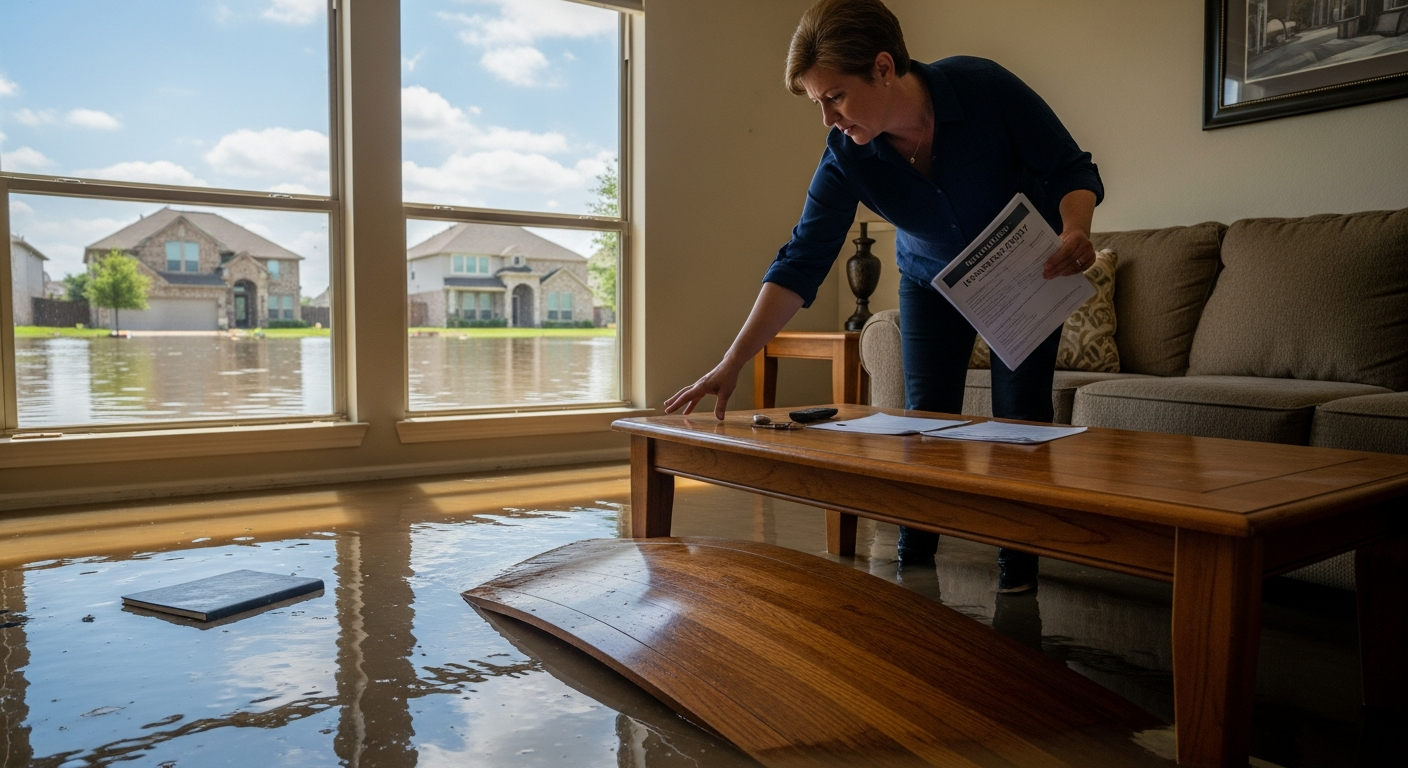

When Hurricane Harvey stalled over the Texas coast in 2017, it dumped an unprecedented 60 inches of rain, flooding hundreds of thousands of homes across Houston and surrounding areas. The shocking reality for many homeowners was discovering that their standard Texas homeowners insurance policy offered zero protection against the rising waters that destroyed their homes and belongings. This scenario has repeated itself in Dallas flash floods, Gulf Coast storm surges, and Central Texas river overflows. The fundamental, and often devastating, truth is that flood damage is excluded from virtually every standard home insurance policy in the state. For Texas homeowners, understanding this critical gap in coverage isn't just a matter of policy fine print; it's a fundamental step in safeguarding your most valuable asset against one of the state's most common and destructive natural hazards.
Understanding the Flood Exclusion in Homeowners Insurance
To grasp why a separate flood policy is necessary, you must first understand what a standard Texas home insurance policy is designed to cover. These policies are comprehensive for a wide range of perils, from fire and lightning to theft and windstorm. However, they uniformly define and exclude "flood." This isn't an oversight or a way for insurance companies to save money; it's a fundamental aspect of risk management. Insuring a home against fire or theft involves calculating risks that are relatively predictable and spread across a large pool of policyholders. Flood risk, by contrast, is highly concentrated in specific geographic areas. If a standard policy covered flooding, a single major event like a hurricane could financially overwhelm the insurer, jeopardizing its ability to pay all claims for every other peril.
It's also crucial to distinguish flood damage from water damage that is covered. This is a common point of confusion for Texas policyholders. Your homeowners policy will typically cover water damage that originates from inside your home. For example, if a pipe bursts in your upstairs bathroom and water cascades down, damaging walls and floors, that is a covered loss. Similarly, if an ice dam causes your roof to leak during a rare North Texas winter storm, the resulting water damage is generally covered. The defining characteristic of a "flood," in insurance terms, is water coming from outside your home, inundating normally dry land, and affecting at least two properties. This includes overflow of tidal or inland waters, unusual and rapid accumulation of runoff, and mudflows.
Why Texas is Uniquely Vulnerable to Flooding
Texas's geography and climate create a perfect storm of flood risk factors. The state isn't just vulnerable to hurricanes; it faces a multifaceted flood threat that makes additional coverage a wise consideration for nearly every homeowner, not just those on the coast. The sheer size of Texas means it encompasses multiple climate zones and topographies, each with its own flood hazards. From the Flash Flood Alley of Central Texas to the sprawling, low-lying coastal plains, no region is entirely immune.
The primary drivers of flooding in Texas include coastal storm surge from hurricanes and tropical storms in the Gulf, torrential rainfall from seasonal thunderstorms that cause flash flooding in urban corridors like Austin and San Antonio, and riverine flooding from major river basins like the Trinity, Brazos, and Colorado overflowing their banks. Furthermore, the rapid development and extensive paving in metropolitan areas like Dallas-Fort Worth and Houston have reduced natural ground absorption, significantly increasing runoff and urban flooding during heavy rain events. This means that even homes well outside a designated FEMA "high-risk" flood zone can, and frequently do, experience devastating flood events.
The Growing Threat of Flash Flood Alley
Central Texas, including Austin and San Antonio, is famously known as "Flash Flood Alley," one of the most flash-flood-prone regions in the entire United States. The unique combination of a relatively flat coastal plain meeting the steep, rocky terrain of the Hill Country creates an environment where heavy rainfall has nowhere to go but downhill, rapidly. Creeks and rivers can rise dozens of feet in a matter of hours, catching residents off guard. The 2022 floods in Austin, which caused millions in property damage, are a stark reminder that this risk is persistent and not confined to historical events. For homes in these areas, the risk isn't seasonal; it's a year-round possibility tied to unpredictable thunderstorm patterns.
FEMA Flood Maps and Their Limitations in Texas
The Federal Emergency Management Agency (FEMA) creates Flood Insurance Rate Maps (FIRMs) to designate Special Flood Hazard Areas (SFHAs), also known as the 100-year floodplain. Homes in these zones with mortgages from federally regulated or insured lenders are required to have flood insurance. However, relying solely on these maps for your flood risk assessment can be a catastrophic miscalculation for a Texas homeowner.
FEMA maps are often outdated and can take years to be updated, failing to account for recent development, changes in watersheds, and the increased frequency of severe weather events due to climate patterns. In Texas, a significant percentage of all flood insurance claims come from properties located in low and moderate-risk zones, designated as Zones B, C, and X. These areas are not immune; they are simply considered to have a lower statistical risk. However, "lower risk" does not mean "no risk." A single intense storm cell can drop enough rain to flood any neighborhood, regardless of its FEMA zone designation. Furthermore, the maps do not account for localized issues like inadequate drainage, construction debris blocking culverts, or new upstream development that alters water flow.
Before purchasing a home or deciding against flood insurance, Texas homeowners should consider these critical points about flood maps:
- They are not real-time risk assessments: The maps represent historical data and statistical models, not a forecast of future weather.
- They can be incomplete: Some areas of Texas, particularly newer developments, may not have detailed, modern flood studies.
- They don't cover all flood types: The maps primarily focus on riverine and coastal flooding, often underrepresenting the risk from flash flooding and urban runoff.
For a more accurate view of your property's risk, you can consult FEMA's online map service center, but also consider talking to your local city or county planning department, which may have more recent, localized data.
The Lifeline of National Flood Insurance Program (NFIP) Policies
For most Texans, flood insurance is obtained through the National Flood Insurance Program (NFIP), which is managed by FEMA. This federally backed program was created to provide an insurance option for property owners in participating communities. An NFIP policy is a separate contract from your homeowners insurance and provides specific, dedicated coverage for flood damage.
An NFIP policy covers two main categories: the building property and the personal contents. For a single-family home, the building coverage limit is up to $250,000, and contents coverage is available up to $100,000. It is important to note that these are separate limits; a contents claim does not deplete your building coverage, and vice versa. Building coverage includes the physical structure and its foundation, electrical and plumbing systems, central air conditioning equipment, water heaters, and major appliances like refrigerators and stoves. Contents coverage applies to your personal belongings, such as furniture, electronics, clothing, and certain valuable items like art (up to a specified limit).
However, NFIP policies also have notable exclusions and limitations that Texas policyholders must be aware of. They do not cover damage to landscaping, septic systems, decks and patios, fences, or cash and precious metals. More significantly, they do not cover additional living expenses-the cost of temporary housing if your home is uninhabitable due to flood damage. This is a critical difference from a standard homeowners policy, which typically does provide loss-of-use coverage. For higher-value homes where the NFIP's $250,000 building coverage limit is insufficient, homeowners can explore private flood insurance or excess flood policies to cover the gap.
Exploring Private Flood Insurance in the Texas Market
In recent years, the private flood insurance market in Texas has grown significantly, offering an alternative to the NFIP. These private policies can provide more flexible coverage options and, in some cases, higher coverage limits that are better suited for luxury homes or those with unique risk profiles. While the NFIP offers standardized coverage, private insurers can tailor policies to individual needs.
The potential advantages of a private flood policy can be substantial for the right homeowner. These policies often offer higher coverage limits for both dwelling and personal property, making them essential for homes valued above $250,000. They may also include coverages that the NFIP excludes, such as additional living expenses (loss of use) and coverage for detached structures like garages or pool houses. The underwriting process for private insurance can also be more nuanced, potentially offering lower premiums for homes that are elevated or have other flood mitigation features, even if they are in a high-risk zone. However, it's important to work with an experienced Texas insurance agent, as the private market can be more volatile, and policy availability can change based on recent weather events and overall market capacity.
A Practical Guide to Purchasing Flood Insurance in Texas
Procuring the right flood insurance policy requires a strategic approach. The process involves more than just filling out a form; it requires a clear understanding of your home's value, its contents, and its specific flood risk. Acting before a storm is on the horizon is crucial, as all flood policies have a mandatory 30-day waiting period from the date of purchase before coverage takes effect. This rule is designed to prevent last-minute purchases when a flood is imminent.
To ensure you obtain adequate protection, follow this step-by-step guide:
- Assess Your Risk: Check the current FEMA flood maps for your property, but also research local flood history with your city or county government. Don't assume you're safe in a low-risk zone.
- Determine Your Coverage Needs: Calculate the cost to rebuild your home (the dwelling coverage) and the total value of your personal possessions (the contents coverage). Remember that NFIP limits are $250,000 for the dwelling and $100,000 for contents.
- Consult a Licensed Texas Insurance Agent: Speak with an agent who is knowledgeable about both NFIP and private flood insurance options. They can provide quotes for both and explain the differences in coverage, cost, and exclusions.
- Compare and Select a Policy: Evaluate the quotes based on coverage limits, deductibles, and covered perils. Pay close attention to whether the policy includes additional living expenses, which is a significant advantage of many private policies.
- Complete the Application and Payment: Once you've selected a policy, complete the application accurately. Be prepared to pay the first premium to bind the coverage, and remember the 30-day waiting period.
Keep your flood insurance policy documents with your other important household papers and review your coverage annually, especially if you make significant renovations to your home or acquire new high-value personal property.
Mitigating Risk: Protecting Your Texas Home from Flood Damage
While insurance is a financial safety net, proactively reducing your home's vulnerability to flood damage can prevent loss, lower insurance premiums, and provide peace of mind. Flood mitigation involves a combination of structural improvements and strategic planning. For homes in high-risk areas, these measures are not just recommendations; they are essential practices for resilience.
Effective strategies start with the landscape around your home. Ensuring proper grading so that the ground slopes away from your foundation can direct water away from the structure. Installing check valves in your plumbing can prevent sewage from backing up into your home during a flood-a common and severe problem. For more significant protection, consider elevating critical utilities, such as your electrical panel, HVAC system, and water heater, above the potential flood level for your area. Even simple actions like using flood-resistant materials (like concrete, tile, and pressure-treated lumber) in basements and lower levels and installing a sump pump with a battery backup can make a dramatic difference in the amount of damage your home sustains.
Beyond physical modifications, every Texas household should have a flood emergency plan. This includes knowing your evacuation routes, having a communication plan for your family, and preparing a "go-bag" with essential documents, medications, and supplies. Taking steps to protect your property, such as storing valuables on upper floors and securing outdoor furniture before a storm, can also minimize potential losses.
In a state where the weather can shift from drought to deluge with little warning, assuming your standard home insurance has you covered is a risk you cannot afford to take. Flooding is the most common and costly natural disaster in the United States, and Texas sits squarely in its path. Securing a dedicated flood insurance policy is not an admission of fear, but a rational, responsible decision for any Texas homeowner. It transforms an uninsurable disaster under your standard policy into a manageable, predictable event, ensuring that when the waters rise, your financial foundation remains secure.