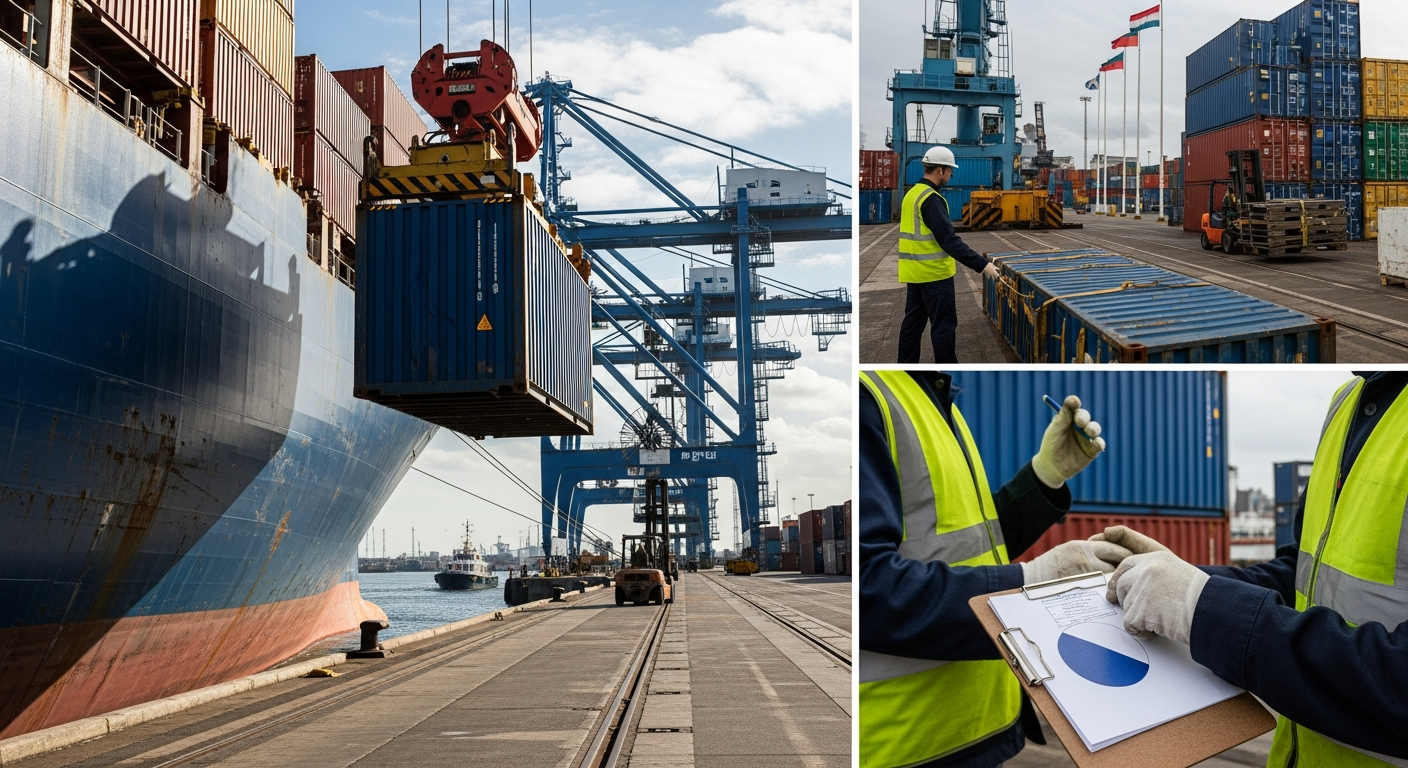

Every day, the bustling Houston Port, one of the busiest in the United States, handles billions of dollars worth of cargo, from petrochemicals and machinery to consumer goods and agricultural products. This constant flow of commerce is the lifeblood of the Texas economy, but it also navigates a complex web of risks-hurricanes, collisions, theft, and logistical errors, to name just a few. For any business operating in this vital hub, a single unforeseen incident can lead to catastrophic financial losses, derailing operations and threatening your company's bottom line. Protecting your investment isn't just a prudent measure; it's a fundamental requirement for sustainable growth and resilience in the competitive maritime and logistics industry. Securing specialized Houston Port and maritime insurance is the definitive strategy to shield your cargo business from these perils, ensuring that your goods and your company's future are secure.
Understanding the Houston Port Complex and Its Unique Risks
The Port of Houston Authority oversees a massive, interconnected complex stretching along the 52-mile long Houston Ship Channel. This includes numerous public and private terminals like Barbours Cut Container Terminal and Bayport Container Terminal, which are critical for international trade. The sheer scale and volume of operations introduce a unique set of challenges that are inherent to doing business here. Unlike inland logistics, maritime cargo is exposed to a tripartite threat environment: risks during ocean transit, hazards while handling cargo at the port facilities, and vulnerabilities during overland transport to and from the docks. The Gulf Coast climate adds another significant layer of risk, with the annual hurricane season posing a constant threat of high winds, storm surges, and flooding that can halt operations and damage goods.
Beyond environmental factors, businesses must contend with the complexities of intermodal transfers, where cargo is most susceptible to damage from improper handling or equipment failure. Cargo theft is another persistent concern in and around major logistics hubs. Furthermore, the legal landscape governing international shipping, such as the Carriage of Goods by Sea Act (COGSA), imposes specific liabilities and limitations on shippers and carriers, making it essential to have insurance that fills the gaps in these contractual obligations. Understanding this risk profile is the first step in recognizing why a standard commercial property policy is woefully inadequate for protecting cargo moving through this dynamic environment.
Essential Types of Maritime Insurance for Your Cargo Business
To build a robust risk management framework, cargo businesses need to be familiar with the specific types of marine insurance available. These policies are designed to address the distinct phases of a shipment's journey and the different parties involved in the supply chain. A comprehensive coverage plan often involves a combination of these policies to create a seamless safety net from the point of origin to the final destination.
Marine Cargo Insurance
This is the cornerstone of protection for your goods in transit. Marine cargo insurance provides coverage for physical loss or damage to shipments while they are being transported via sea, air, rail, or road. A crucial distinction for importers and exporters in Texas is that this policy can be tailored to cover goods from the moment they leave the seller's warehouse until they are delivered to the buyer's warehouse, a concept known as "door-to-door" coverage. This is vital for covering gaps between other liability policies. For example, if a container of electronics is damaged by saltwater during a storm while waiting to be loaded onto a vessel at the Bayport terminal, marine cargo insurance would typically respond, whereas a carrier's liability might be limited or excluded.
Policies can be written on an "All-Risk" or "Named Perils" basis. An All-Risk policy offers the broadest protection, covering all causes of loss except those specifically excluded in the policy wording, such as inherent vice (a natural deterioration of the goods) or wilful misconduct. A Named Perils policy, conversely, only covers the risks explicitly listed in the policy, such as fire, sinking, or collision. For businesses using the Houston Port, securing an All-Risk policy is generally recommended due to the vast and unpredictable nature of potential hazards.
Protection and Indemnity (P&I) Insurance
While marine cargo insurance covers the goods themselves, Protection and Indemnity (P&I) insurance is designed for vessel owners, operators, or charterers. However, it is also critically important for non-vessel operating common carriers (NVOCCs) and other businesses that assume significant liability. This type of insurance provides coverage for third-party liability claims that arise from the operation of a ship. This can include a wide range of exposures, such as bodily injury to stevedores or other port workers, damage to other vessels or fixed objects like docks, pollution clean-up costs from fuel spills, and even cargo liability that exceeds the limits set by international conventions.
For a business that contracts for shipping space, understanding the P&I coverage of your carriers is essential. However, if your business activities expose you to similar liabilities-for instance, if you are responsible for hiring stevedoring companies-it may be prudent to secure contingent P&I coverage. This acts as a backup if the primary carrier's P&I insurance is insufficient or denied, protecting your Texas-based business from devastating legal and financial repercussions.
Key Coverages and Policy Considerations for Texas Businesses
When evaluating or purchasing a maritime insurance policy, it's not enough to simply know the policy types. You must delve into the specific coverages and clauses that are most relevant to operations in the Gulf Coast region. A policy that is not tailored to the local context may leave dangerous gaps.
Here are several critical components to scrutinize in your policy:
- General Average Coverage: This is a fundamental principle in maritime law. If a vessel owner intentionally sacrifices some cargo or incurs an expense to save the entire voyage (e.g., jettisoning containers during a storm to refloat a ship), all parties with a financial interest in the voyage must contribute proportionally to the loss. Your marine cargo policy must include General Average coverage to pay your share of these contributions, which can be substantial.
- Warehouse-to-Warehouse Clause: This clause is paramount for comprehensive protection. It ensures continuous coverage from the point of origin, through all modes of transit and temporary storage, until the goods are delivered to their final destination. This is especially important for cargo moving through the extensive Houston Port complex, where goods may be stored at multiple terminals or off-dock facilities.
- Delay in Start-Up Coverage: For businesses importing machinery or components critical to their operations, a delay in cargo arrival can mean a delay in production or project start-up, leading to significant financial losses. This coverage can provide compensation for fixed operational costs incurred due to an insured delay.
- Political Risk or Strikes Coverage: The Houston Port is a key node in global trade, making it susceptible to international disruptions. This coverage can protect against losses resulting from political unrest, riots, labor strikes, or acts of terrorism that prevent the loading, unloading, or transit of your cargo.
For Texas-based businesses, it is also imperative to confirm that the policy explicitly covers perils like hurricanes, windstorms, and flood without restrictive sub-limits. You should also discuss the claims process with your insurer, ensuring they have a strong network of surveyors and adjusters in the Houston-Galveston area who can respond quickly following an incident.
The Process of Acquiring and Managing Your Marine Insurance
Securing the right maritime insurance policy is a proactive process that requires careful planning and documentation. Rushing this process can lead to inadequate coverage or disputes at the time of a claim. A structured approach ensures you get a policy that accurately reflects your business's risk exposure.
Follow these key steps to acquire and manage your marine insurance effectively:
- Conduct a Full Risk Assessment: Begin by meticulously documenting your supply chain. Identify all parties involved, the routes your cargo takes, the types of goods you ship, their value, and all handoff points. This assessment will highlight your specific vulnerabilities.
- Gather Essential Documentation: An insurer will need detailed information to provide an accurate quote. This includes a history of your shipments, loss records, commercial invoices, packing lists, and the contracts of carriage you use (e.g., Bills of Lading). These documents outline the terms and liabilities, helping the insurer understand your coverage needs.
- Work with a Specialized Agent or Broker: The nuances of maritime law and insurance are complex. Partnering with an insurance provider that has deep expertise in Houston Port operations and Texas-specific regulations is invaluable. They can help you navigate policy wordings, negotiate terms, and identify the most reputable carriers.
- Review and Place the Policy: Carefully review the policy quotation, paying close attention to the coverage extensions, exclusions, deductibles, and limits. Do not base your decision on price alone. Ensure the policy wording aligns perfectly with the risks identified in your assessment.
- Implement Ongoing Policy Management: Your insurance is not a "set-it-and-forget-it" product. Regularly review your coverage, especially if your business expands into new markets, changes the nature of its goods, or alters its shipping routes. Promptly report any changes in risk exposure to your insurer to keep your coverage valid.
Maintaining open communication with your insurance provider is crucial. They can offer risk management advice, such as proper packing and stowage techniques or cybersecurity protocols for your digital shipping documents, which can help prevent losses and potentially lower your premiums over time.
Why Texas-Based Expertise is Non-Negotiable
While international marine insurers are abundant, the value of a local, Texas-focused insurance partner cannot be overstated. The regulatory environment, common weather patterns, and specific operational practices at the Port of Houston create a unique insurance landscape. A provider based in Texas, or one with a dedicated practice in the state, will have pre-established relationships with local surveyors, legal experts, and claims adjusters, which can dramatically expedite the claims process after an event like a hurricane.
Furthermore, a local expert understands the economic and legislative priorities of the state, which can influence liability laws and insurance requirements. They are better equipped to advise on how Texas statutes might interact with federal maritime law in the event of a dispute. This localized knowledge transforms your insurance policy from a simple financial contract into a strategic asset built on a foundation of relevant, actionable expertise. It ensures that when you need to file a claim for a loss that occurred at Barbours Cut Terminal or due to a Gulf Coast squall, you are working with a team that knows the territory, the terminology, and the most efficient path to restitution.
Navigating the complexities of the Houston Port requires a resilient and well-protected cargo business. By understanding the unique risks, securing the right blend of maritime insurance policies, and partnering with a knowledgeable local provider, you can transform a potential vulnerability into a competitive advantage. This strategic approach to risk management ensures that your business is built not just for profit, but for long-term endurance and success in the dynamic world of international trade.