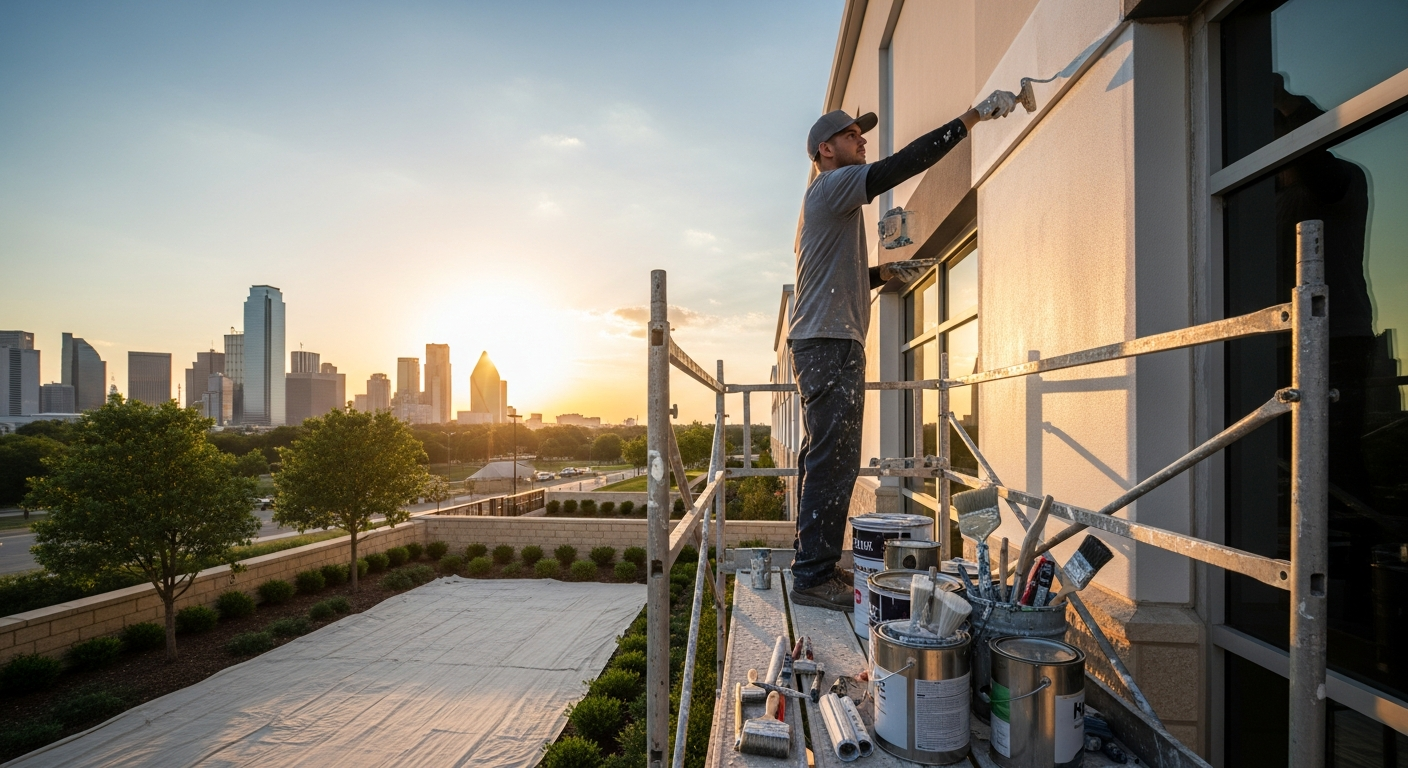

As a painting contractor in Texas, you know that a single accident or lawsuit could wipe out your hard-earned business. The vibrant cities from Houston to Dallas are full of opportunity, but they also come with significant risks that make painting contractor insurance not just a smart choice-but a critical one for your financial survival. While the cost of this essential protection is a primary concern for any business owner, the price of being uninsured is infinitely higher. The final premium you pay isn't a one-size-fits-all figure; it's a customized calculation based on your business's unique profile, risk exposure, and the specific coverage you select. Understanding the factors that influence your Texas painting insurance cost is the first step toward securing your livelihood without breaking the bank.
Key Factors Influencing Your Insurance Premium
Insurance providers assess risk meticulously, and your premium is a direct reflection of their evaluation. A smaller residential painting operation will have a vastly different risk profile-and therefore a different insurance cost-than a large commercial contractor working on multi-story office buildings. The underwriters will scrutinize every aspect of your business to determine how likely you are to file a claim. This process ensures that your premium is fair and accurately reflects the level of protection you require for your specific contracting work in Texas.
Several core elements come together to form your final quote. Your annual revenue and payroll are fundamental, as they represent the scale of your operations and your potential liability. The number of employees you have directly impacts your workers' compensation costs. The types of projects you undertake-whether interior residential repaints or exterior commercial work involving scaffolding-carry different levels of risk. Even your business location within Texas matters, as claim frequencies and local regulations can vary between counties. Your claims history is also a major factor; a clean record demonstrates responsible business practices and can lead to significant savings.
Breaking Down the Core Insurance Policies
Your painting business insurance isn't a single product but a portfolio of coverages designed to protect different parts of your operation. The most common and often legally required policies form the foundation of your protection. Understanding what each one covers and its typical cost is essential for building a policy that safeguards your assets without unnecessary overlap or expense.
General Liability Insurance
This is the cornerstone of any contractor's insurance plan. General liability insurance protects your business from third-party claims of bodily injury, property damage, and personal and advertising injury (like slander or copyright infringement). Imagine a scenario where a client's expensive hardwood floor is damaged by paint spills, or a visitor to a job site trips over your equipment and is injured. This policy would cover the associated medical bills, legal fees, and settlement costs, which could otherwise be devastating. For most painting contractors in Texas, this is the most fundamental layer of protection.
The cost for general liability insurance is often calculated based on your business's gross annual revenues. For a typical painting contractor in Texas, you can expect a baseline cost. However, this is highly variable. A small, solo operator might pay towards the lower end of the spectrum, while a larger firm with multiple crews and high-value contracts will pay significantly more. The specific limits of liability you choose, such as $1 million per occurrence and a $2 million aggregate, will also adjust the premium accordingly.
Workers' Compensation Insurance
If you have employees in Texas, workers' compensation insurance is not just a good idea-it's legally required. This policy provides benefits to your employees if they suffer a job-related injury or illness. It covers medical expenses, a portion of lost wages, and rehabilitation costs. In exchange for these benefits, employees generally forfeit the right to sue your business for negligence. Common claims in the painting industry include falls from ladders, respiratory issues from fumes, and repetitive strain injuries.
The cost of workers' comp is primarily driven by your company's payroll and the classification of your employees. The rate is expressed as a certain cost per $100 of payroll. Painting is considered a moderate-risk trade, and rates in Texas are regulated but can be competitive. A business with a strong safety record and a formal safety program in place may qualify for lower premiums through discounts. Conversely, a history of claims will likely lead to higher rates.
Commercial Auto Insurance
Your personal auto policy will not cover vehicles used for business purposes. If you or your employees are driving to job sites, transporting equipment, or running errands for the business, you need a commercial auto policy. This insurance covers liability, collision, and comprehensive damage for vehicles owned by your company. A simple fender bender in a company van could lead to costly repairs and liability claims that a personal policy would deny, putting your entire business at risk.
Premiums are determined by factors such as the number of vehicles, their make and model, how they are used, and the driving records of the employees who operate them. Insuring a single pickup truck for local jobs will cost far less than insuring a fleet of vans that travel across the state daily.
Additional Coverages to Consider
While the policies above form a strong foundation, your painting business may face unique risks that require specialized protection. These additional coverages allow you to build a comprehensive safety net tailored to your specific operations and the value you've built in your company.
Tools and equipment are the lifeblood of your trade. If your sprayers, ladders, and power washers are stolen from a job site or damaged in a fire, replacement costs can be crippling. Inland marine insurance, or a contractor's tools and equipment floater, is designed to protect this mobile property. Similarly, if a fire destroys your business premises or a burst pipe ruins your office equipment, commercial property insurance would cover the cost to repair or replace your damaged assets. For contractors who provide professional advice, such as color consultations or substrate preparation recommendations, professional liability (errors and omissions) insurance can protect against claims of financial loss due to your professional services.
Average Cost Ranges for Painting Contractors in Texas
Providing an exact price is impossible without a custom quote, but we can outline realistic annual cost ranges based on common business profiles. These figures are estimates intended to give you a ballpark idea for budgeting purposes. Your actual premium will be calculated based on the specific underwriting details of your company.
For a small, solo painting contractor operating as an LLC with no employees and moderate annual revenue, the core insurance package can be quite affordable. This would typically include a robust general liability policy. A growing business with a few employees and higher revenue will see an increase in cost. This premium reflects the addition of a workers' compensation policy for the team and higher liability limits to match the increased scale of operations. A well-established commercial painting company with a significant payroll, multiple vehicles, and high-value contracts will have the most substantial insurance investment. This cost accounts for maximum liability limits, a full workers' comp policy, commercial auto for a fleet, and likely several of the additional coverages mentioned above.
To give you a clearer picture, here are some typical annual premium ranges for different business sizes:
- Solo Operator (No Employees): $1,200 - $3,500 for General Liability and tools coverage.
- Small Business (2-5 Employees): $4,000 - $8,000 for General Liability, Workers' Comp, and one commercial vehicle.
- Established Company (10+ Employees): $10,000 - $25,000+ for a full suite of coverage including high-limit liability, workers' comp, commercial auto fleet, and inland marine.
Remember that these are starting points. A business with a perfect safety record and several years of experience may pay at the lower end of these ranges, while a new business in a high-risk niche might pay more.
How to Get the Best Insurance Rates
While insurance is a necessary expense, there are several proactive steps you can take to manage and reduce your costs. Insurance carriers reward businesses that demonstrate a commitment to safety and professionalism. By presenting your company as a low-risk client, you position yourself to receive the most favorable quotes available in the Texas market.
First, implement and document a formal safety program. This should include regular safety meetings, proper equipment maintenance logs, and clear protocols for hazardous tasks like working at heights. A strong safety record is one of the most powerful tools for lowering your workers' compensation and general liability premiums. Second, consider choosing a higher deductible. Opting for a higher out-of-pocket cost in the event of a claim can significantly lower your annual premium, but ensure you have the cash reserves to cover that deductible if needed. Finally, work with an independent insurance agent who specializes in contractor policies for Texas businesses. They have access to multiple carriers and can shop your policy to find the best combination of coverage and price.
Here is a numbered list of actionable steps to secure a competitive rate:
- Shop Around and Compare: Don't accept the first quote you receive. Get proposals from at least three different providers.
- Bundle Your Policies: Many insurers offer a Business Owner's Policy (BOP) that bundles general liability and property insurance at a discount.
- Maintain a Clean Claims History: Avoid small claims when possible, as a frequent claims history will increase your premiums.
- Review Your Coverage Annually: As your business grows or changes, your insurance needs will evolve. An annual review ensures you're not over-insured or under-insured.
Building a long-term relationship with a trusted insurance provider can also lead to loyalty discounts and more personalized service over time. They will get to know your business and can proactively advise you on risk management strategies.
Why Cutting Corners on Insurance is a Risky Strategy
In a competitive industry, it can be tempting to view insurance as an area where you can cut costs. However, this is one of the most dangerous financial decisions a painting contractor can make. Being underinsured is essentially the same as being uninsured when a major claim arises. The financial consequences of a single lawsuit or major jobsite accident can include out-of-pocket legal fees, court-ordered settlements, medical bills, and property repair costs that far exceed what a proper insurance policy would have covered.
Furthermore, many clients, particularly general contractors, property management firms, and commercial clients, will require you to provide a certificate of insurance (COI) with specific coverage limits before you can even bid on a job. Without adequate insurance, you automatically disqualify yourself from these more lucrative contracts. In this way, a comprehensive insurance policy is not just a protective measure-it's a business development tool that opens doors to higher-value projects and demonstrates your professionalism and reliability to potential clients.
Investing in the right painting contractor insurance is a fundamental part of building a resilient and reputable business in Texas. By understanding the costs, the factors that influence them, and the strategies for securing the best value, you can make an informed decision that protects your assets, your employees, and your future. The goal is not to find the cheapest policy, but to find the most effective coverage that allows you to operate with confidence, knowing that your hard work is safeguarded against the unexpected.