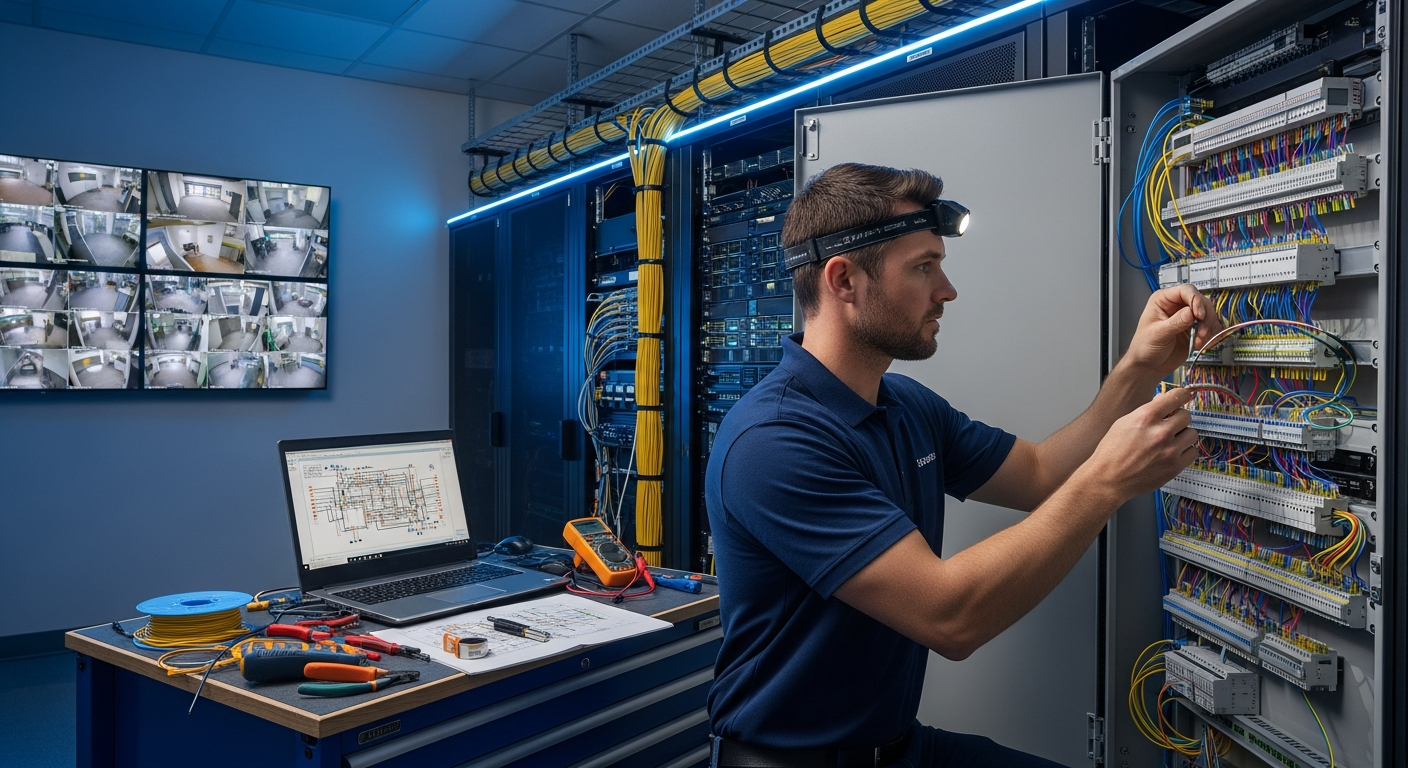

When a multi-million dollar commercial property's security system fails during a burglary or a sophisticated audiovisual installation malfunctions during a critical corporate presentation, the financial and reputational consequences can be devastating. For low voltage contractors in Texas specializing in security and AV systems, these aren't just hypothetical scenarios-they are real business risks that can lead to crippling lawsuits, repair costs, and lost client trust. The intricate nature of installing and maintaining complex low voltage systems, from access control and surveillance cameras to boardroom video conferencing and whole-home audio, carries a unique set of liabilities that standard business insurance often fails to address. Protecting your Texas-based low voltage contracting business isn't just a prudent financial step; it's a fundamental requirement for sustainable growth, client acquisition, and peace of mind in a highly competitive and technically demanding industry.
Why Low Voltage Contractors in Texas Need Specialized Insurance
Many business owners mistakenly believe that because their work involves "low voltage" systems, the risks are similarly low. This is a dangerous misconception. While the electrical current may be minimal, the financial and functional stakes of the systems you install and service are incredibly high. A faulty wiring connection in a burglar alarm system could render an entire building's security useless, leading to massive property theft. An error in configuring a networked AV system could compromise a client's sensitive data. Texas law does not diminish your professional responsibility simply because the systems operate at a lower voltage. Clients and general contractors will hold you to a high standard of care, and your insurance must reflect that.
The specific business environment in Texas further underscores this need. The state's rapid commercial and residential growth, particularly in major hubs like Houston, Dallas, Austin, and San Antonio, creates immense opportunity but also intensifies competition and client expectations. Furthermore, Texas's legal landscape, including its comparative fault rules and potential for significant litigation, means that even if you are only partially at fault for an incident, you could still face a substantial lawsuit. General liability insurance alone is not designed to cover errors in your professional workmanship, the failure of a system you designed, or the cost of recalling and reinstalling a defective product. Without a policy tailored to the technical services you provide, your business assets-and even your personal assets-are exposed.
Essential Insurance Coverage for Security and AV Contractors
A robust insurance portfolio for a low voltage contractor is multi-layered, designed to address a spectrum of risks from third-party bodily injury to professional mistakes. Relying on a single policy is inadequate. The right combination of coverages creates a safety net that allows you to confidently take on larger projects, bid for contracts that require proof of insurance, and operate without the constant fear of a single incident derailing your company.
General Liability Insurance
This is the foundational coverage for virtually any business, but it's particularly critical for contractors who work on client property. General liability protects against claims of third-party bodily injury or property damage caused by your business operations. For example, if one of your technicians accidentally drills into a water pipe while running cable, causing flooding and water damage to a client's finished walls and expensive flooring, general liability would cover the cost of repairs and any associated legal fees. It also covers non-professional incidents, like a client tripping over your tools and getting injured at a worksite.
However, it is crucial to understand the limits of this policy. General liability is not errors and omissions insurance. It will not cover a claim that arises from your professional advice, a design flaw, or the failure of a security system to perform as expected. For those risks, you need the next layer of protection.
Professional Liability (Errors and Omissions) Insurance
This is arguably the most important coverage for a low voltage contractor specializing in technical systems like security and AV. Also known as Errors and Omissions (E&O) insurance, professional liability protects you against claims of negligence, mistakes, or failures in the professional services you provide. If you design, install, or maintain a system that fails to perform its intended function, leading to a financial loss for your client, E&O insurance is your primary defense.
Consider these real-world scenarios: You install an access control system for a commercial office, but a software configuration error allows unauthorized entry, resulting in stolen equipment. A client sues you because the video conferencing system you specified and installed consistently drops calls during high-stakes investor meetings, causing them to lose a potential business deal. In both cases, the physical installation might be perfect-the failure is in the professional service. General liability would deny these claims, but your professional liability policy would cover the legal defense costs and any resulting settlements or judgments. For contractors who provide consulting, system design, or programming, this coverage is non-negotiable.
Inland Marine (Equipment) Insurance
Your specialized tools and equipment are the lifeblood of your operation. Inland marine insurance, often called contractors equipment insurance, covers your valuable business property when it is away from your primary place of business. This includes all the high-cost items you regularly transport to job sites: diagnostic equipment, specialized hand tools, oscilloscopes, wire crimpers, stock of security cameras, AV receivers, and control panels.
A standard commercial property policy typically only covers equipment at your insured office or warehouse. If your van is broken into and $20,000 worth of gear is stolen, or a pallet of new speakers is damaged in a traffic accident while in transit, inland marine insurance provides the funds to replace them. Without it, you would face significant out-of-pocket costs and potentially be unable to complete your current projects, leading to further financial loss and damaged client relationships.
Additional Coverages to Fortify Your Business
While the three coverages above form the core, a truly resilient insurance plan considers other common risks. Depending on the size and scope of your operations, you should strongly consider these additional policies.
Commercial Auto Insurance is legally required in Texas for any vehicles owned by your business. Your personal auto policy will not cover accidents that occur while using a vehicle for business purposes. This coverage protects your company vehicles and provides liability coverage if your employee causes an accident while driving to a job site.
Workers' Compensation Insurance, while not legally mandated for all employers in Texas, is critically important. If one of your employees is injured on the job, for instance, falling from a ladder while running cable or suffering an electrical shock, workers' comp covers their medical expenses and a portion of their lost wages. Without it, your business could be sued directly by the injured employee, potentially for a much larger sum.
Cyber Liability Insurance is becoming increasingly relevant. As low voltage systems become more integrated with IT networks and the Internet of Things (IoT), a security breach through a system you installed could implicate your business. This coverage helps with the costs associated with a data breach, including client notification, credit monitoring services, and regulatory fines.
How to Choose the Right Insurance Provider in Texas
Selecting an insurance carrier is as important as selecting the right coverages. Not all providers understand the nuanced risks of the low voltage contracting industry. You need a partner, not just a policy.
First, seek out providers who specialize in or have extensive experience with contractor insurance, specifically for electricians or technology installers. They will be more familiar with the specific exposures of your work and can help you identify potential gaps in coverage that a generalist might miss. Ask potential agents about their experience with claims related to professional errors for security or AV systems. A knowledgeable agent will be able to discuss real claim examples and explain how different policies would respond.
Secondly, carefully evaluate the policy details beyond the premium cost. A cheaper policy might have exclusions that render it useless when you need it most. Pay close attention to:
- Policy Limits and Deductibles: Ensure the maximum payout (limit) is sufficient to protect your assets for a worst-case scenario, and choose a deductible you can comfortably afford.
- Coverage Exclusions: Read the fine print. Are there exclusions for specific types of work, such as installations in high-risk buildings or for certain brands of equipment?
- Claims-Made vs. Occurrence Form: This is especially important for Professional Liability. An "occurrence" policy covers any incident that *occurs* during the policy period, regardless of when the claim is filed. A "claims-made" policy only covers claims that are both made *and reported* during the policy period. Understand which one you are purchasing.
Finally, work with a provider that offers the convenience of a Business Owner's Policy (BOP). A BOP bundles general liability and commercial property insurance, often at a discounted rate compared to purchasing them separately. This can be an efficient way to secure your foundational coverages, to which you can then add specialized policies like inland marine and professional liability.
Understanding Texas-Specific Regulations and Requirements
Operating a contracting business in Texas comes with its own set of rules that can impact your insurance needs. While Texas does not have a state-level licensing requirement for low voltage contractors, many municipalities do. Cities like Houston, Dallas, and Austin have their own registration, permitting, and licensing requirements for contractors working within their jurisdiction.
These local regulations often include strict insurance requirements as a condition of obtaining and maintaining your license. You may be required to provide a certificate of insurance (COI) proving you carry general liability coverage with specific minimum limits, often $1 million per occurrence. Failure to maintain this insurance can result in fines and the revocation of your right to work in that city. Furthermore, when bidding on projects, nearly all general contractors and commercial property owners will require you to provide a COI naming them as an "additional insured" on your policy for the duration of the project. This protects them from liability for your work. Having the right insurance is not just about risk management; it's a key that unlocks business opportunities and ensures regulatory compliance across Texas.
Your insurance needs will also be influenced by the types of clients you serve. Working on government buildings, schools, or large corporate campuses often comes with more stringent insurance requirements than residential work. Always review the contract and insurance requirements for every major project you undertake.
Navigating the complex world of low voltage contractor insurance in Texas is a critical investment in the longevity and credibility of your business. By securing a comprehensive package that includes general liability, professional liability, and inland marine coverage, you are not just buying a policy-you are building a foundation for secure growth. You protect the assets you've worked hard to build and demonstrate to your clients that you are a serious, reliable professional. In an industry where your work is meant to provide security and seamless technology for others, it only makes sense to ensure your own business is equally protected.