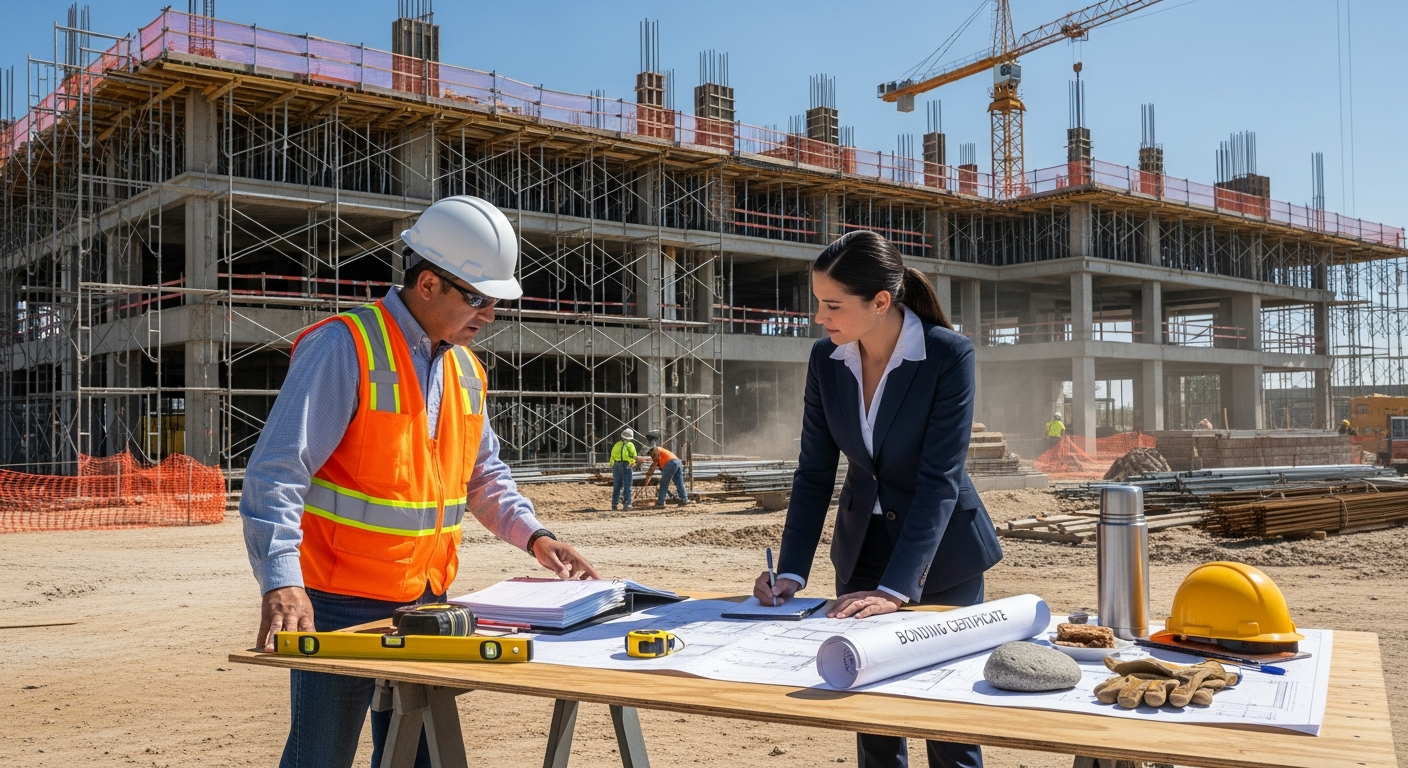

Every construction site in San Antonio tells a story of growth and ambition, from new residential developments in Stone Oak to major commercial projects downtown. However, hidden beneath the bustle of these job sites are significant financial risks that can jeopardize your entire business. A single worksite accident, a claim of property damage, or a client dispute over project completion can lead to devastating out-of-pocket costs, costly lawsuits, and irreparable harm to your hard-earned reputation. For Texas contractors, securing the right insurance and bonding isn't just a bureaucratic step-it's the foundation of a resilient and trustworthy business. Understanding the essential roles of general liability insurance and surety bonds is the first step in building a protective framework that allows your company to thrive in the competitive Alamo City market.
Understanding General Liability Insurance for Contractors
Commercial General Liability (CGL) insurance is a foundational policy designed to protect your contracting business from third-party claims of bodily injury, property damage, and personal and advertising injury. Imagine a scenario where a client's visitor trips over your power cord on a remodeling site in Alamo Heights and suffers an injury. Or consider what would happen if a misplaced tool from your employee caused significant damage to a client's existing structure. Without general liability coverage, your business would be responsible for all associated medical bills, legal defense fees, and settlement costs, which could easily reach tens or even hundreds of thousands of dollars. This policy acts as a critical financial safety net for these everyday risks inherent in construction work.
In Texas, the legal environment can be particularly challenging for contractors. The state's laws governing liability and negligence mean that even if you are only partially at fault for an incident, you could be held financially responsible. A robust CGL policy is your first line of defense. It typically covers claims that occur on your premises, at a client's job site, or as a result of your ongoing operations. Furthermore, many clients, from homeowners' associations in San Antonio to general contractors overseeing large projects, will require you to show proof of general liability insurance before they sign a contract. It is not merely a best practice; it is a prerequisite for doing business and winning competitive bids.
What General Liability Insurance Covers
The value of a general liability policy lies in its specific coverages. It is crucial to understand the scope of protection to ensure there are no surprises when you need to file a claim. The policy is generally broken down into several key areas of coverage that address the most common risks contractors face.
Bodily Injury and Property Damage Liability is the core of the policy. This applies if your business operations cause physical harm to a person or damage to someone else's property. For instance, if a subcontracted electrician accidentally starts a fire that damages a client's building, this coverage would handle the claim. Personal and Advertising Injury protects you against claims of slander, libel, false arrest, malicious prosecution, or copyright infringement in your advertisements. Medical Payments coverage is a no-fault provision that pays for minor medical expenses if someone is injured on your premises or because of your work, regardless of who was at fault, helping to avoid a larger lawsuit. Finally, Damage to Premises Rented to You coverage can pay for fire damage to a home or office space you are renting for a project.
The Role and Importance of Surety Bonds
While insurance protects against accidental events and unforeseen risks, a surety bond is a three-party guarantee that ensures specific contractual obligations will be met. The three parties involved are the principal (your contracting business), the obligee (your client, often a public or private project owner), and the surety (the bonding company that guarantees your performance). In essence, a surety bond is a risk management tool for the project owner, providing them with financial recourse if you, the contractor, fail to perform the work as stipulated in the contract. For many public works projects in Texas and virtually all state-funded jobs, having a surety bond is not optional-it is mandated by law.
Think of a surety bond as a line of credit for your credibility. It sends a powerful message to potential clients that a third-party surety company has vetted your business and financials and has deemed you reliable and capable of fulfilling your contracts. This assurance can be the deciding factor that wins you a bid over a non-bonded competitor. The bonding process involves a thorough underwriting review of your company's credit history, work experience, and financial statements. This rigorous assessment means that becoming bonded itself enhances your professional standing and demonstrates a commitment to financial responsibility and ethical business practices.
Common Types of Contractor Bonds in Texas
Contractors in San Antonio will typically encounter a few key types of surety bonds. Understanding the difference is critical to ensuring you have the right bond for each project. The two most essential bonds for contractors are license bonds and contract bonds.
A License and Permit Bond is often required by a city or county government to obtain or maintain your contractor's license. For example, the City of San Antonio may have specific bonding requirements for licensed professionals. This bond guarantees that you will operate your business in accordance with all local and state regulations. A Contract Bond, on the other hand, is tied to a specific construction project. The most common contract bonds are Bid Bonds, which guarantee that you will enter into the contract if your bid is accepted; Performance Bonds, which guarantee you will complete the project according to the contract terms; and Payment Bonds, which guarantee that you will pay your subcontractors, laborers, and material suppliers.
Failure to fulfill the terms of a bonded contract can lead to a claim being filed against the bond by the obligee. The surety company will investigate the claim, and if it is valid, they will pay the obligee up to the bond's penal sum. However, this is not free money for the contractor. Because the bond is a form of credit, the surety company will then seek reimbursement from you, the principal, for all costs and payouts, making it vital to only bid on and accept projects you are confident you can complete successfully.
Key Differences Between Insurance and Bonds
Although both insurance and bonds are fundamental to risk management, they serve fundamentally different purposes and operate on different principles. Confusing the two can lead to significant coverage gaps. The most critical distinction lies in the number of parties involved and the nature of the financial relationship.
General liability insurance is a two-party agreement between your business and the insurance carrier. You pay a premium to transfer the risk of specific, unforeseen events (like an accident or injury) to the insurer. If a covered claim occurs, the insurance company pays for the damages and handles the legal defense, and you are generally not expected to pay that money back. It is a protective pool of resources for unexpected liabilities.
A surety bond, in contrast, is a three-party agreement that functions more like a line of credit. The surety company does not expect claims to be filed and acts as a guarantor of your performance and financial reliability. If a claim is made and paid out by the surety, the legal and financial responsibility ultimately falls back on you, the contractor. The surety will require you to reimburse them for every dollar they pay on your behalf, plus any associated fees. In short, insurance protects your assets from third-party claims, while a bond protects the project owner from your potential failure to perform.
- Parties: Insurance involves you and your insurer. A bond involves you, the project owner (obligee), and the surety.
- Financial Responsibility: With insurance, the insurer is liable for covered claims. With a bond, you are always ultimately liable to the surety for any payouts.
- Purpose: Insurance manages the risk of accidental loss. A bond guarantees contractual performance and compliance.
- Relationship: Your relationship with an insurer is ongoing. Your relationship with a surety is typically project-specific or license-specific.
Because of these fundamental differences, a comprehensive risk management plan for a San Antonio contractor must include both. They are not interchangeable but are complementary tools that address different aspects of business risk.
Why San Antonio Contractors Need Both
Operating a contracting business in San Antonio's dynamic construction industry without both general liability insurance and the appropriate surety bonds is like building a house without a foundation and a roof. You are exposed to risk from all sides. General liability protects you from the unpredictable-the slip-and-fall accident, the damaged client heirloom, the alleged slander. These are operational risks that can occur on any job, regardless of how well you manage your projects. Without this coverage, a single lawsuit could easily exceed your business's financial resources, leading to bankruptcy.
Surety bonds, however, protect your business's future and its ability to secure work. They are a prerequisite for competing for the most profitable and prestigious projects, especially in the public sector. A client hiring for a major commercial build-out or a municipal infrastructure project will see a bonded contractor as a lower-risk, more reputable partner. Furthermore, bonds protect you from the financial fallout of subcontractor disputes. A payment bond, for instance, ensures that your subs and suppliers get paid, which in turn protects you from mechanics liens being placed on the project property-a common and complicated issue in Texas construction law.
Together, this combination does more than just mitigate risk; it builds a powerful business identity. It tells the San Antonio market that you are a professional, financially stable, and reliable contractor who stands behind your work and manages your obligations responsibly. This reputation is invaluable for growth, allowing you to build stronger relationships with clients, general contractors, and financial institutions.
Navigating Texas-Specific Insurance and Bonding Requirements
Texas maintains a distinct regulatory landscape for contractors, with specific requirements that vary by city and the type of work performed. Unlike some states, Texas does not have a mandatory state-level license for general contractors. However, this does not mean an absence of regulation. The responsibility often falls to individual municipalities, each with its own rules, making it essential to understand the local requirements in San Antonio and the surrounding areas.
For instance, while you may not need a state license, the City of San Antonio requires specific trades, like electricians and plumbers, to be licensed, and this licensing often requires proof of both general liability insurance and a license bond. Furthermore, any contractor working on a public project for a Texas government entity is required by state law (Texas Government Code, Title 10, Subtitle F) to secure a performance and payment bond for any contract exceeding $100,000. This law, known as the "McGregor Act," is designed to protect public funds and ensure that subcontractors and suppliers are paid.
Beyond legal mandates, the practical reality of the Texas market demands this protection. The state's strong "right to repair" laws, also known as Chapter 27 of the Texas Property Code, provide homeowners with a specific process for resolving construction defect claims. Having robust general liability insurance is critical for navigating this process without facing financial ruin. Similarly, the prevalence of severe weather in Texas-from hailstorms to flash floods-increases the risk of accidental property damage during construction or repair work, making liability coverage non-negotiable.
How to Get the Right Coverage for Your Business
Securing the right general liability insurance and surety bonds requires a strategic approach tailored to your specific trade, project size, and business financials. The process begins with a thorough assessment of your risks. Consider the types of projects you undertake, the value of the contracts you typically sign, the number of employees you have, and your company's financial history. This information is crucial for both an insurance agent and a surety bond underwriter.
When seeking general liability insurance, be prepared to discuss your business operations in detail. The premium will be calculated based on your specific trade (e.g., roofing, electrical, plumbing), your annual revenue, and your payroll. For surety bonds, the process is more akin to applying for a loan. The surety will examine your personal and business credit scores, your company's financial statements (including balance sheets and income statements), your work history, and your track record of completing projects successfully. A strong financial standing and a history of reliability are key to securing bonding at the best possible rates.
Working with an independent insurance agency that specializes in Texas contractor policies, like TexasPolicies.com, is highly advantageous. An independent agent can shop your coverage with multiple A-rated insurance carriers and surety companies to find you the most comprehensive protection at a competitive price. They understand the local San Antonio market and can help you navigate the specific insurance and bonding requirements for your trade, ensuring you are fully compliant and protected before you step onto the next job site.
Building a successful contracting business in San Antonio demands more than just skill and hard work; it requires a proactive strategy for managing risk. General liability insurance and surety bonds are not mere expenses but vital investments in your company's stability, credibility, and long-term growth. They work in tandem to create a safety net that protects you from the unexpected and a solid foundation that enables you to take on larger, more rewarding projects with confidence. By securing the right coverage, you are not just following rules-you are building a reputation as a dependable, professional contractor who is prepared for whatever challenges the Texas construction industry may bring.