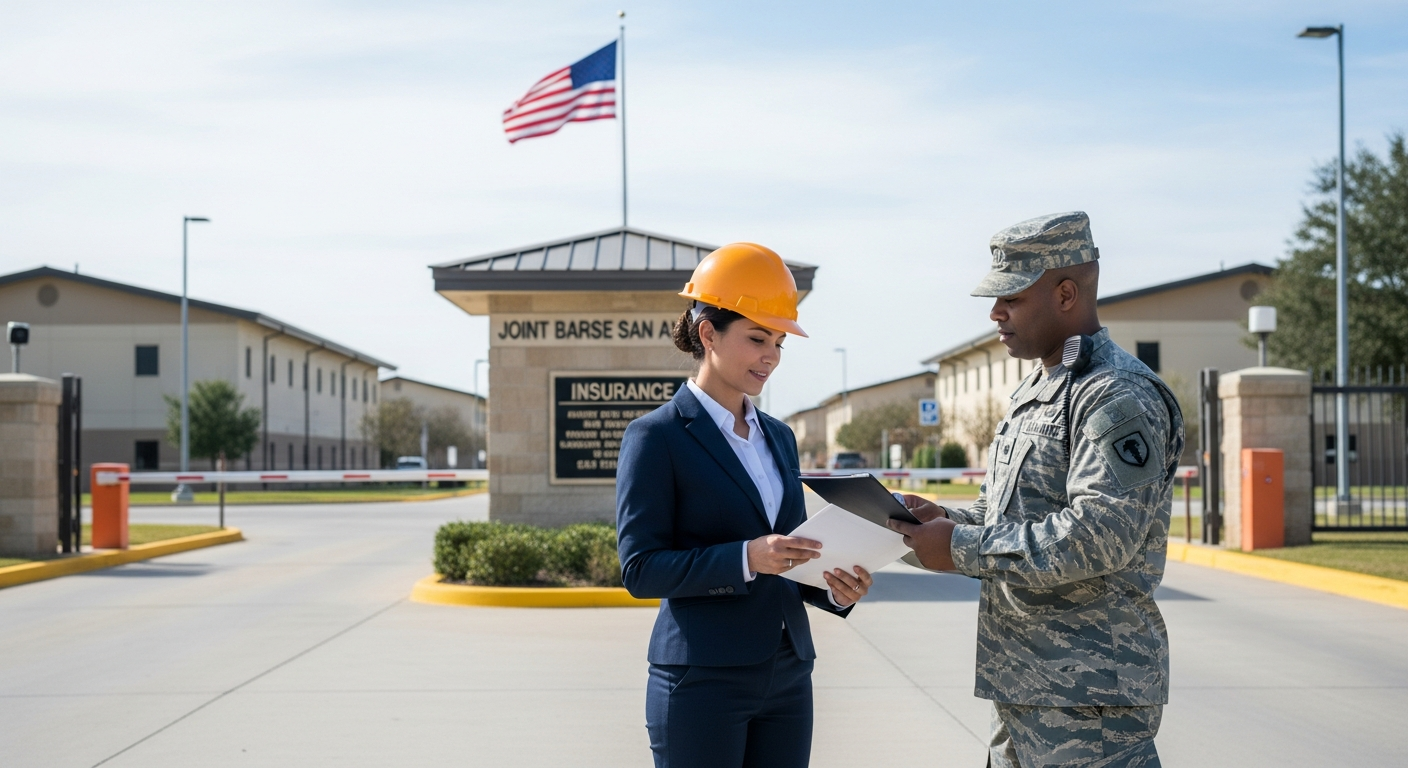

When your business takes you onto a military installation like Joint Base San Antonio, the standard insurance policy that protects your operations back in town suddenly isn't enough. You're entering a high-stakes environment where the rules are different, the risks are amplified, and the financial consequences of being underinsured can be catastrophic. Whether you're a general contractor building new facilities, an IT specialist upgrading network infrastructure, or a local supplier delivering goods, securing the right San Antonio military base insurance isn't just a good idea-it's a mandatory requirement for access. For Texas-based contractors and businesses, this specialized coverage is your key to unlocking the vast opportunities presented by one of the nation's largest and most critical military hubs, ensuring your company is protected, compliant, and ready to serve.
The Unique Insurance Landscape for San Antonio Military Work
Operating on a military base fundamentally changes your business's liability profile. These are secured federal properties with unique operational protocols, sensitive assets, and a zero-tolerance policy for disruptions. A simple mistake, like a subcontractor accidentally damaging a data line, can halt mission-critical operations, leading to immense claims that far exceed the limits of a standard commercial general liability (CGL) policy. Furthermore, the federal government, through acts like the Federal Tort Claims Act, has sovereign immunity, meaning you cannot typically sue them for accidents that occur on their property. This places the full burden of risk squarely on your shoulders as the contractor.
For Texas businesses, this is compounded by the sheer scale and diversity of Joint Base San Antonio (JBSA), which encompasses Fort Sam Houston, Lackland Air Force Base, and Randolph Air Force Base. Each location hosts a different branch of the military with varying projects, from aircraft maintenance hangars to medical research laboratories. Your insurance must be as adaptable as your services. The core challenge is that base authorities require proof of specific, often heightened, insurance coverage before they will even issue a badge or a contract. This isn't a negotiation; it's a non-negotiable prerequisite for doing business.
Key Insurance Policies for Contractors and Businesses
Navigating the insurance requirements for a San Antonio defense contract means assembling a portfolio of policies that work together to create a comprehensive safety net. While your specific needs will depend on your trade and the contract's scope, several core policies are almost universally required.
Commercial General Liability and Its Limits on Base
Your Commercial General Liability (CGL) policy is your first line of defense, covering third-party bodily injury, property damage, and personal and advertising injury. However, on a military base, the standard CGL form has critical gaps. For instance, if your work causes damage to a government-owned vehicle or building, the base's claims department will seek compensation directly from your insurer. Most contracts will require you to name the United States government as an "additional insured" on your policy, which provides them with protection under your coverage.
Key considerations for your CGL policy on a Texas military base include:
- Higher Liability Limits: Base contracts often require limits of $1 million, $2 million, or even more per occurrence, significantly higher than standard business policies.
- Completed Operations Coverage: This is essential. It protects you if a flaw in your work, discovered months or years after a project is complete, causes property damage or injury on the base.
- Premises Liability: If you are operating out of a leased office or warehouse on the base, this covers accidents that happen within that space.
It is crucial to review your CGL policy with an agent who understands defense contracting to ensure all endorsements and required language are in place before you begin work.
Commercial Auto Insurance for On-Base Vehicles
Any vehicle you drive onto a military installation, whether for deliveries or service calls, requires a robust commercial auto policy. Personal auto insurance is almost always voided on federal property, especially if used for business purposes. The risks are unique: you could be sharing the road with massive military convoys, operating in tight industrial areas, or navigating flight lines.
Your policy must include Hired and Non-Owned Auto Liability (HNOA) if your employees use their personal cars for business-related trips to the base. If they get into an accident, your business could be held liable. Furthermore, you will need to meet or exceed the liability limits stipulated in your contract and provide a certificate of insurance to the base's transportation office for each registered vehicle.
Workers' Compensation for a Texas Workforce
In Texas, unlike most states, employers are not mandated to carry workers' compensation insurance. However, this is not an option for military base work. The Department of Defense requires all on-site contractors to carry statutory workers' comp coverage. If an employee is injured while working on JBSA-for example, a construction worker falling from scaffolding or an electrician suffering a shock-this policy covers their medical expenses and a portion of their lost wages.
Operating without it not only violates your contract but also exposes your business to devastating lawsuits from injured employees. Given the physical nature of many contracting jobs, this is one of the most critical components of your insurance portfolio.
Specialized Coverage for High-Risk Operations
Beyond the foundational policies, certain specialized coverages are triggered by the specific nature of defense work. These are not mere add-ons; they are often central to the contract's risk management plan.
Professional Liability (Errors & Omissions)
If your business provides advice, designs, consulting, or IT services, you need Professional Liability, also known as Errors and Omissions (E&O) insurance. Your CGL policy explicitly excludes failures in your professional work. For example, if an architect's flawed design for a new base facility leads to structural issues, or if a software contractor's coding error creates a security vulnerability, the resulting financial losses would be covered by E&O insurance. This is vital for protecting Texas tech firms and engineering consultants serving the San Antonio military community.
Cyber Liability Insurance
In today's digital age, Cyber Liability is no longer just for tech companies. Any contractor that handles, stores, or transmits government data-even something as simple as employee information for background checks-is at risk. A data breach could expose sensitive information and violate federal data security regulations like the Defense Federal Acquisition Regulation Supplement (DFARS). Cyber insurance helps cover the costs of data recovery, legal fees, notification services, and regulatory fines, protecting your business from a modern and pervasive threat.
Builder's Risk and Installation Floater Policies
For construction and renovation projects on Fort Sam Houston or Lackland AFB, a Builder's Risk policy is essential. This coverage protects buildings and structures while they are under construction from perils like fire, theft, vandalism, and severe Texas weather. Similarly, an Installation Floater is designed for contractors who are installing high-value equipment, such as network servers or medical devices. It covers that specific equipment from the moment it leaves your warehouse until it is successfully installed and operational on the base.
Navigating the Contractual Insurance Requirements
The government outlines its insurance demands in the contract documents, often referencing Federal Acquisition Regulation (FAR) clauses. Understanding and complying with these is a non-negotiable part of the project lifecycle.
Before you bid on a project, you must carefully review the insurance specifications in the Solicitation or Invitation for Bid (IFB). These will detail the exact types of coverage, minimum limits, and required policy endorsements. Common requirements include:
- Additional Insured Status: You must endorse your policies to name the United States of America as an additional insured.
- Waiver of Subrogation: This clause prevents your insurance company from trying to recover costs from the government after paying a claim for an incident that may not have been entirely your fault.
- Primary and Non-Contributory Wording: This ensures your policy pays first, before any other applicable insurance (like the government's own policies), and that it will not seek contribution from other policies.
Failing to secure these specific endorsements will result in your certificate of insurance being rejected, delaying project start and potentially putting the entire contract at risk. The most critical step is to provide all contract documents to your insurance agent, who can then bind a policy that meets every requirement.
Why a Texas-Specialist Insurance Agent is Critical
Purchasing military base insurance isn't a DIY online task. The nuances of federal contracts and Texas insurance law create a complex puzzle that requires an expert guide. A local Texas agent who specializes in contractor insurance and, specifically, work on military installations, provides an invaluable service.
They understand the unique risks presented by the South Texas climate, from hailstorms that can damage a worksite to heat-related injuries affecting workers. They have established relationships with "A-rated" carriers that are familiar with underwriting this specialized risk and are less likely to deny a claim based on a technicality. A specialist agent acts as your advocate, helping you:
- Decipher Contract Language: They translate complex FAR clauses into clear insurance requirements.
- Secure Proper Endorsements: They ensure your policies include all necessary riders, like additional insured status for the federal government.
- Streamline Compliance: They work directly with the base's contract officer or facility manager to provide the correct certificates of insurance, smoothing the onboarding process.
- Advise on Risk Management: They offer practical advice on safety protocols and documentation to help prevent claims and potentially lower your premiums over time.
This partnership is your best defense against the financial pitfalls of working in a high-stakes federal environment, ensuring your business can focus on successful project completion rather than administrative headaches.
Securing the right insurance for work on San Antonio's military bases is the definitive step in transforming a significant opportunity into a secure, long-term revenue stream for your Texas business. It’s the foundation that allows you to bid with confidence, operate with authority, and build a reputable track record with one of the world's most demanding clients. By partnering with a knowledgeable insurance provider, you can navigate these requirements seamlessly, ensuring your company is fully protected and poised for growth within the vital defense sector of the Lone Star State.