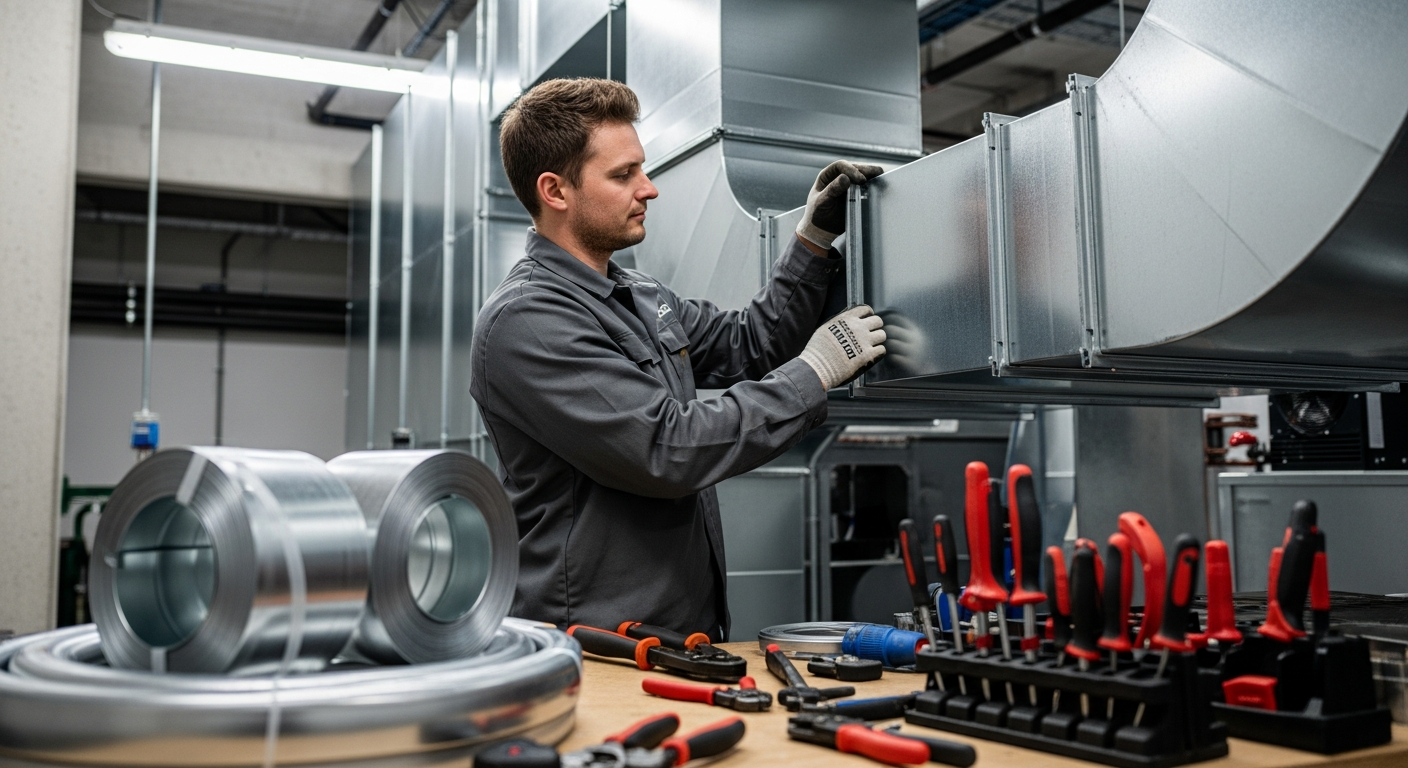

The Texas sun beats down relentlessly, and the hum of industrial machinery is the soundtrack of commerce across the state. For sheet metal contractors specializing in HVAC systems and custom fabrication, this environment is both an opportunity and a minefield. From a commercial HVAC installation on a high-rise in Dallas to crafting intricate ductwork for a new manufacturing plant in Houston, your work is essential. But with these complex projects come significant risks: a worker's injury from handling sharp metal, a faulty weld causing property damage, or a vehicle accident while on a service call. In Texas, where the legal and regulatory landscape is as vast as the state itself, operating without a robust sheet metal contractor insurance safety net isn't just risky-it's a threat to your livelihood. Protecting your business, your employees, and your hard-earned reputation requires a policy as sturdy and well-constructed as the metal you shape.
Why Insurance is Non-Negotiable for Texas Sheet Metal Contractors
Many skilled tradespeople start their businesses focusing on craftsmanship, assuming that quality work is their primary shield against liability. While excellence is crucial, it is not a legal defense. Texas law, for instance, does not require most employers to carry workers' compensation insurance. However, opting out of this coverage, known as being a "non-subscriber," exposes you to significantly greater liability for workplace injuries. Without a workers' comp policy, an injured employee can sue you directly for full damages, including medical bills, lost wages, and pain and suffering. Furthermore, virtually every commercial client, from general contractors to property management firms, will require you to present a certificate of insurance (COI) before you can even step foot on a job site. This isn't a request; it's a prerequisite for doing business.
Beyond these legal and contractual obligations, insurance is your financial backstop. Consider the real-world scenarios that unfold daily in the Texas construction and fabrication sectors. A newly installed sheet metal roof panel, not yet fully secured, is caught by a strong Lubbock wind gust and damages a client's expensive equipment. A fabrication shop employee suffers a severe laceration from a shear, leading to a costly ambulance ride and surgery. Your company truck, with your business name emblazoned on the side, is involved in a fender-bender in Austin traffic. Without the proper coverage, any one of these common events could result in out-of-pocket costs that cripple or bankrupt your small business. Insurance transforms a potential financial catastrophe into a manageable claim process, allowing you to focus on recovery and continuing your operations.
Core Insurance Policies for Your Sheet Metal Business
Building a comprehensive insurance portfolio for your sheet metal contracting business involves layering several key policies. Each one addresses a specific area of risk, and together they form a cohesive shield for your company's assets and future. The exact combination will depend on your specific services-whether you're predominantly an HVAC installer, a custom fabrication shop, or a hybrid of both-but certain core coverages are universally essential.
General Liability Insurance: Your First Line of Defense
Often considered the foundation of a business insurance plan, general liability insurance protects your company from third-party claims of bodily injury, property damage, and personal and advertising injury. For a sheet metal contractor, this is arguably your most critical policy. Your work is physically intrusive and involves handling materials that can cause harm. If a client or a member of the public trips over your tools and breaks an arm, or if a stray spark from your welding torch starts a fire that damages the client's property, your general liability policy will cover the associated medical and repair costs, as well as your legal defense fees.
This coverage also extends to less obvious risks. For example, if a competitor alleges that your advertising slogan slanders their business-a claim of "personal and advertising injury"-your general liability policy can help manage the legal fallout. Given the litigious environment, even a frivolous lawsuit can cost tens of thousands of dollars to defend. In Texas, where client relationships and reputation are everything, having this fundamental protection allows you to operate with confidence.
Commercial Auto Insurance for Texas Roads
If your business owns, rents, or leases any vehicles-be it a single service van or a fleet of trucks hauling metal coils-personal auto insurance will not suffice. Texas law requires commercial auto insurance for vehicles used for business purposes. This policy covers liability if your vehicle causes an accident, resulting in injury to others or damage to their property. It can also include coverage for physical damage to your own vehicle from collisions or comprehensive events like hail or theft, which is a frequent concern given Texas' volatile weather.
For sheet metal contractors, the exposure is particularly high. You are constantly transporting heavy, expensive, and sometimes sharp materials. An improperly secured load on I-35 could become a major hazard. Furthermore, "hired and non-owned auto liability" is a crucial endorsement to consider. This covers you if an employee uses their personal vehicle for a work-related errand, like running to a supplier for more fasteners, and gets into an accident. Without this add-on, your business could be held liable.
Workers' Compensation and Employer's Liability
As mentioned, Texas is unique in its optional workers' compensation system. However, choosing to forgo this coverage is a high-stakes gamble. Workers' comp is a no-fault system that provides benefits to employees who suffer job-related injuries or illnesses, covering medical expenses and a portion of lost wages. In return, employees generally give up the right to sue their employer for those injuries. For a trade as hands-on as sheet metal work, the risk of injury is substantial.
The physical nature of the job involves lifting heavy materials, operating powerful machinery like press brakes and rollers, and working with tools that can cause cuts, burns, and eye injuries. A workers' comp policy ensures that if an employee is hurt, they receive the care they need without your business facing a devastating lawsuit. The alternative-being a non-subscriber-means you must have a very robust and legally sound alternative injury benefit plan and be prepared for the potentially unlimited liability of a civil lawsuit. For most Texas sheet metal contractors, securing a workers' compensation policy is the safer and more financially predictable path.
Specialized Coverage for HVAC and Fabrication Risks
While the policies above form a solid base, the specialized nature of sheet metal work demands additional, tailored coverage. These policies address the unique financial risks that come with providing skilled services and creating custom products.
Protecting Your Work with Inland Marine Insurance
The name can be confusing, but inland marine insurance is vital for contractors who transport valuable items or have property at job sites. For a sheet metal contractor, this typically includes two key types: contractors' equipment insurance and installation floater coverage. Contractors' equipment insurance covers your tools and machinery, whether they are in your shop, on your truck, or at a job site. If your $20,000 plasma cutter is stolen from a locked trailer overnight, this policy would cover its replacement.
Installation floater coverage is even more critical. It protects materials and equipment while they are in transit or being installed but are not yet accepted by the client. Imagine you have delivered and partially installed $50,000 worth of custom-fabricated ductwork in a new San Antonio office building. A fire caused by another subcontractor destroys your work. Your general liability policy won't cover the cost of your own materials and labor-but an installation floater will. This ensures you aren't financially devastated by a loss of your products before the client takes ownership.
Errors and Omissions for Professional Services
Also known as Professional Liability insurance, Errors and Omissions (E&O) is crucial for contractors whose work relies on expert design and consultation. This is particularly relevant for HVAC sheet metal contractors. If you design a ductwork system for a building and a flaw in your design leads to inadequate airflow, poor climate control, or excessive energy consumption for the building owner, you could be held liable for the cost of redesigning and correcting the system, even if there was no physical property damage. The client would claim your professional advice or design was negligent.
General liability insurance explicitly excludes this type of "professional service" failure. An E&O policy fills that gap, covering the financial loss your client suffers due to a mistake or omission in your professional work. For fabrication shops that provide engineering or design services alongside their metalwork, this coverage is equally important.
Building Your Customized Texas Insurance Portfolio
Understanding the available policies is the first step; the next is assembling them into a portfolio that fits your specific business. A one-person HVAC service operation will have different needs than a 20-employee fabrication shop that serves industrial clients across the Gulf Coast. The process involves a careful assessment of your exposures and a strategic selection of coverages and limits.
Begin by conducting a thorough risk assessment of your operations. Consider every aspect: the value of your tools and equipment, the size of your payroll, the types of projects you undertake, and the specific requirements written into your client contracts. Many contracts with general contractors will stipulate minimum coverage limits for general liability and require you to name them as an "additional insured" on your policy. Failing to meet these contractual obligations can put your payment at risk and void your agreement.
When structuring your policy, pay close attention to these key elements:
- Policy Limits: These are the maximum amounts an insurer will pay for a covered claim. Don't just opt for the minimums required by a single contract. Consider your total potential exposure. A $1,000,000 general liability limit is a common commercial standard, but larger projects may require $2,000,000 or more.
- Deductibles: This is the amount you pay out-of-pocket before insurance kicks in. Choosing a higher deductible can lower your premium, but ensure it's an amount your business could comfortably afford if a claim occurs.
- Endorsements and Riders: These are additions that modify your policy. Common ones for sheet metal contractors include the "hired and non-owned auto" endorsement for commercial auto policies and adding "additional insureds" to your general liability policy at the request of clients.
It is highly advisable to work with an independent insurance agent who specializes in commercial policies for contractors in Texas. They have the expertise to identify risks you may have overlooked and can shop your coverage among multiple carriers to find the best combination of price and protection. They understand the nuances of Texas insurance law and can help you navigate the complexities of claims-made versus occurrence-based policies, ensuring there are no gaps in your crucial safety net.
The integrity of a sheet metal contractor's work is measured in precise bends, strong welds, and efficient systems. The integrity of your business, however, is measured by your preparedness for the unexpected. In Texas' demanding and competitive market, the right insurance portfolio is not an expense-it is a strategic investment in your company's resilience and longevity. It protects the assets you've worked hard to build and provides the stability needed to bid confidently on new projects, hire skilled workers, and grow your enterprise. By securing comprehensive coverage tailored to the unique risks of HVAC and fabrication work, you are not just buying a policy; you are forging a foundation for a secure and prosperous future.