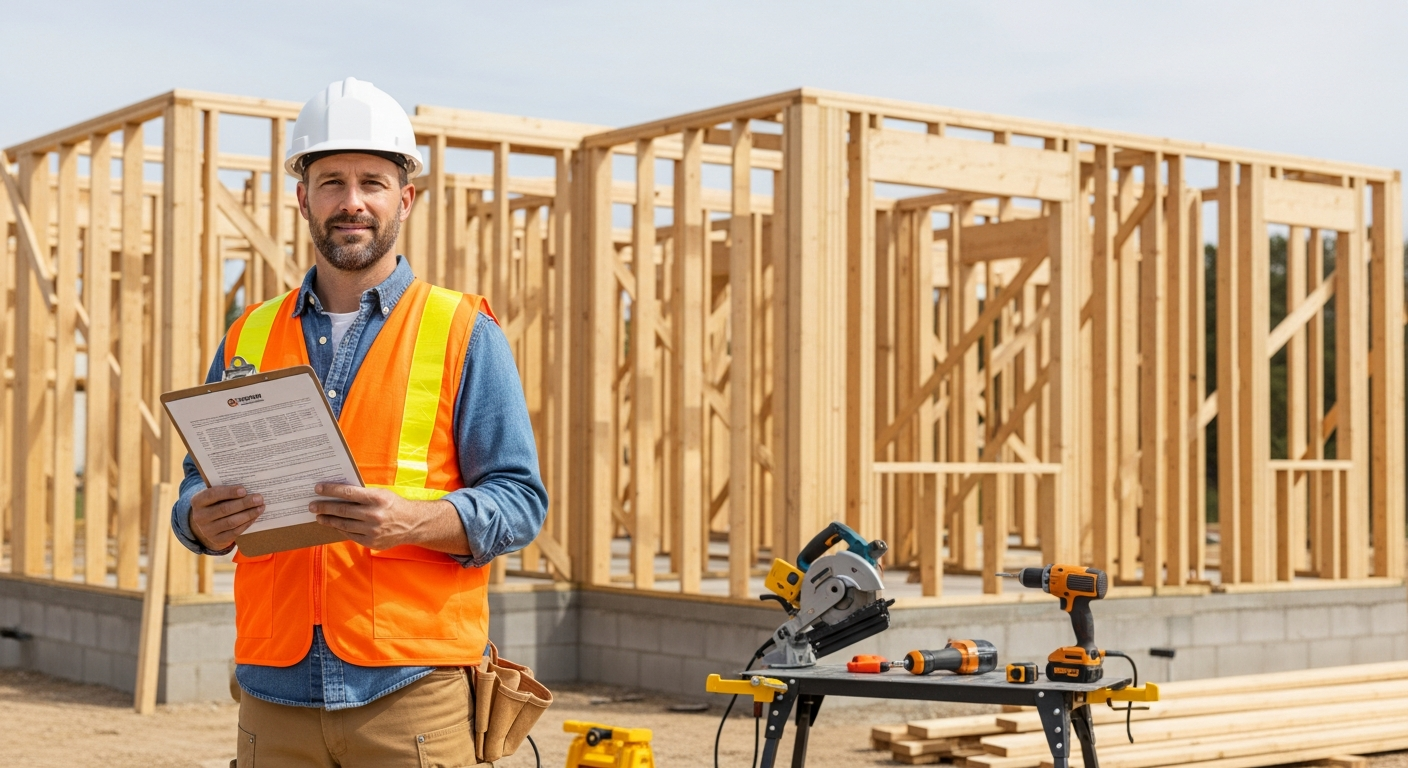

As a Texas contractor, you know every worksite presents unique challenges - from sudden hailstorms in Dallas to unexpected soil issues in Houston excavations. But your biggest risk isn't weather or difficult projects: it's operating without proper contractor insurance protection. Texas law doesn't require most contractors to carry general liability insurance, but that doesn't mean you can work without coverage. Many clients won't even consider hiring uninsured contractors, and a single lawsuit could wipe out everything you've built. Understanding which policies you actually need can mean the difference between thriving through challenges and closing your business permanently.
Texas-Specific Insurance Requirements for Contractors
Texas operates under what's known as a "freedom to contract" principle when it comes to contractor insurance, meaning the state generally doesn't mandate specific coverage types for most contracting businesses. However, this apparent flexibility comes with significant hidden requirements that effectively make certain insurance policies necessary. For instance, while Texas doesn't require general liability insurance by statute, most general contractors will require subcontractors to carry minimum coverage levels, typically $500,000 to $1 million per occurrence. Similarly, commercial clients, property management companies, and government entities almost universally require proof of insurance before allowing contractors to bid on projects.
The Texas Department of Insurance regulates insurance providers but doesn't dictate what coverage contractors must carry. This creates a situation where market requirements rather than legal mandates drive insurance decisions. Many contractors discover they need coverage only after losing bids to insured competitors or when project specifications explicitly require certain policy types. Texas also has unique exposure considerations that influence insurance needs - the state leads the nation in hail damage claims, experiences regular flooding in coastal regions, and has higher-than-average litigation rates for construction defects. These regional factors make some coverage types particularly important for Texas contractors.
Essential Insurance Policies for Texas Contractors
While your specific needs will vary based on your trade, project types, and business structure, certain core policies form the foundation of proper contractor protection in Texas. These essential coverages address the most common and severe risks Texas contractors face daily.
General Liability Insurance
Commercial General Liability (CGL) insurance serves as your first line of defense against third-party claims of bodily injury, property damage, or personal injury. In Texas' litigious environment, even minor incidents can lead to substantial lawsuits. Consider this scenario: a client trips over your tool cabinet at a remodeling site in San Antonio and suffers a back injury. Without general liability coverage, you'd pay medical costs, legal fees, and potential settlements from your business assets or personal savings. A typical Texas CGL policy covers claims occurring at your workplace, job sites, or resulting from your completed operations.
Texas contractors should look for occurrence-form CGL policies rather than claims-made policies when possible. Occurrence policies cover incidents that happen during the policy period regardless of when the claim is filed, while claims-made policies only cover claims made while the policy is active. This distinction matters significantly in construction, where problems like foundation issues or faulty wiring might not become apparent until years after project completion. Most Texas contractors benefit from policy limits between $1-2 million per occurrence with $2 million aggregate limits, though subcontractor agreements often specify required minimums.
Commercial Auto Insurance
If your business owns, leases, or regularly uses vehicles for work purposes, personal auto insurance won't adequately cover accidents that occur during business activities. Texas requires all drivers to carry minimum liability coverage, but these limits - $30,000 per injured person, $60,000 per accident, and $25,000 for property damage - prove woefully inadequate for commercial accidents. When your work truck causes a multi-vehicle collision on I-35 during business hours, commercial auto insurance covers vehicle repairs, medical expenses, legal defense costs, and judgments that exceed personal policy limits.
Beyond liability coverage, Texas contractors should consider comprehensive and collision coverage for owned vehicles, uninsured/underinsured motorist protection (particularly important in Texas with its high uninsured driver rate), and hired/non-owned auto liability if employees use personal vehicles for business errands. Remember that standard exclusions in personal auto policies typically void coverage when vehicles are used for business purposes, leaving significant gaps if you rely solely on personal coverage for work-related driving.
Workers' Compensation Insurance
Texas stands alone as the only state that doesn't require most private employers to carry workers' compensation coverage. However, opting out of the workers' comp system creates substantial risks that make coverage advisable for nearly all contractors with employees. Without workers' comp, injured employees can sue you directly for workplace injuries, and Texas courts often award significantly higher amounts than standard workers' comp benefits. The Texas Department of Insurance reports that non-subscribers face lawsuit success rates around 70%, with average payouts exceeding $40,000 per claim.
Contractors who choose to participate in the workers' comp system gain important protections, including limits on liability for work-related injuries and established processes for handling claims. Premiums vary by trade classification, with roofers and framers typically paying highest rates while finish carpenters and painters pay lower premiums. Even if you currently work alone, consider that most general contractors require subs to carry workers' comp, and you may need coverage to qualify for certain projects. Additionally, securing coverage before hiring employees prevents coverage gaps that could prove costly.
Specialized Coverage for Texas-Specific Risks
Beyond the essential policies, Texas contractors face unique regional exposures that require specialized insurance solutions. The state's diverse geography, weather patterns, and regulatory environment create distinct risks that standard policies might not fully address.
Tools and equipment coverage proves particularly valuable in Texas, where theft from job sites and vehicles represents a persistent problem. Texas contractors report higher-than-average equipment theft rates, especially in rapidly growing metropolitan areas where multiple active construction sites present attractive targets. This coverage protects your business against theft, disappearance, or damage to tools, equipment, and machinery - both owned and rented. Consider scheduling high-value items individually and maintaining detailed purchase records to streamline claims processing.
Professional liability insurance (often called errors and omissions coverage) becomes increasingly important as contractors take on design-build projects or provide consulting services. Texas courts have expanded liability for construction defects in recent years, particularly regarding water intrusion, foundation issues, and mechanical system failures. If your work involves any design elements, specification development, or project planning, professional liability protects against claims alleging negligence, mistakes, or omissions in your professional services. This coverage typically complements rather than replaces your general liability policy.
Builder's risk insurance provides essential protection for construction projects in progress, covering structures and materials against damage from fires, storms, theft, and vandalism. In Texas, where severe weather frequently interrupts construction, this coverage proves particularly valuable. Policies can be written to cover specific projects or ongoing operations, with premiums based on project duration, value, and location. Given Texas' susceptibility to hurricanes, hail, and windstorms, carefully review policy exclusions for weather-related damage and consider adding endorsements for full windstorm coverage in coastal counties.
Factors That Influence Your Insurance Needs
Your specific contracting business characteristics significantly impact which coverages you need and how much protection makes sense. A one-person handyman operation has dramatically different insurance requirements than a commercial electrical contractor with multiple crews and million-dollar projects.
Your trade specialization directly affects both your risk exposure and insurance costs. Roofers face higher liability premiums due to fall risks and water intrusion concerns, while landscapers deal with different exposures related to equipment operation and property damage. Texas insurance providers use classification codes that group similar trades, with premiums reflecting the historical claim experience for each classification. Be accurate in describing your primary operations, as misclassification can lead to denied claims or policy cancellation.
Consider these key factors when evaluating your insurance needs:
- Business structure: Sole proprietorships might need different coverage than LLCs or corporations
- Number of employees: More employees typically increase workers' comp needs and liability exposures
- Project types: Residential remodeling carries different risks than commercial ground-up construction
- Geographic service area: Operating in multiple Texas regions might require different policy endorsements
- Client requirements: Many contracts specify minimum coverage levels and additional insured status
- Subcontractor usage: Hiring subs requires verifying their insurance and potentially adjusting your own coverage
Your business revenue and contract values also influence appropriate coverage limits. While a $1 million general liability policy might suffice for smaller residential contractors, commercial contractors working on multi-million dollar projects typically need higher limits - often $2-5 million - to satisfy client requirements and provide adequate protection. The assets you need to protect, including business property, equipment, and personal assets, should guide your decisions about coverage limits and umbrella policies.
Navigating the Texas Insurance Market
Finding appropriate contractor insurance in Texas requires understanding how local market conditions affect availability, pricing, and policy terms. Texas operates as a competitive insurance market with numerous carriers offering contractor coverage, but insurer appetite varies significantly by trade, region, and business characteristics.
Insurance shopping typically begins with identifying specialized providers familiar with contractor risks. Many standard business insurance carriers don't adequately understand construction exposures or might decline certain trades altogether. Look for agencies that specifically mention contractor insurance or have construction industry experience. These specialists can help you navigate the unique aspects of Texas insurance, including windstorm pools for coastal properties, certification requirements for certain trades, and regulatory considerations specific to Texas construction.
The process generally involves these key steps:
- Compile necessary business information, including revenue projections, payroll details, vehicle information, and project types
- Identify specific coverage needs based on your trade, client requirements, and risk tolerance
- Request quotes from multiple Texas-domiciled insurance carriers familiar with contractor risks
- Compare coverage terms, exclusions, and limits rather than focusing solely on premium costs
- Review additional insured, waiver of subrogation, and primary/non-contributory wording requirements
- Select the policy that provides the best combination of coverage, service, and value for your specific situation
Remember that the cheapest policy often provides inadequate protection when claims occur. Texas insurance regulations provide consumer protections, but policyholders still bear responsibility for understanding their coverage and ensuring it matches their business needs. Working with an experienced Texas insurance agent who specializes in contractor coverage can help you avoid common pitfalls like coverage gaps, improper classifications, or inadequate limits that could prove costly when claims arise.
Managing Insurance Costs Without Sacrificing Protection
Texas contractors face increasing insurance premiums due to rising claim costs, litigation trends, and weather-related losses. However, strategic approaches can help control costs while maintaining essential protection for your business and assets.
Policy deductibles represent one of the most effective cost management tools. Increasing your deductibles from $500 to $2,500 can reduce premiums significantly while still protecting against catastrophic claims. This approach works particularly well for contractors with strong cash reserves who can absorb smaller claims without insurance payouts. Similarly, bundling multiple policies with the same carrier - often called a business owner's policy or contractor's package - typically generates premium discounts of 10-20% compared to purchasing coverage separately.
Implementing formal risk management programs demonstrates to insurers that you're proactively managing exposures, potentially qualifying for additional premium credits. Documented safety programs, employee training records, drug-free workplace policies, and equipment maintenance logs all contribute to favorable underwriting consideration. Many Texas insurance carriers offer premium discounts for contractors who complete recognized safety courses or implement specific loss control measures tailored to their trade.
Regular policy reviews represent another cost management strategy. As your business evolves - taking on new project types, expanding service areas, or changing revenue patterns - your insurance needs change accordingly. An annual coverage review with your insurance professional ensures you're not overinsured for diminished risks or underinsured for new exposures. This process also identifies potential discounts for improved claim experience, trade association memberships, or payment plan options that improve cash flow while maintaining continuous protection.
Choosing the right insurance coverage represents one of the most critical business decisions Texas contractors make each year. Proper protection enables you to confidently pursue new projects, satisfy client requirements, and weather unexpected events that would otherwise threaten your business survival. By understanding the unique insurance landscape in Texas and selecting coverage that matches your specific risk profile, you build a foundation that supports sustainable growth while protecting the business you've worked hard to establish.