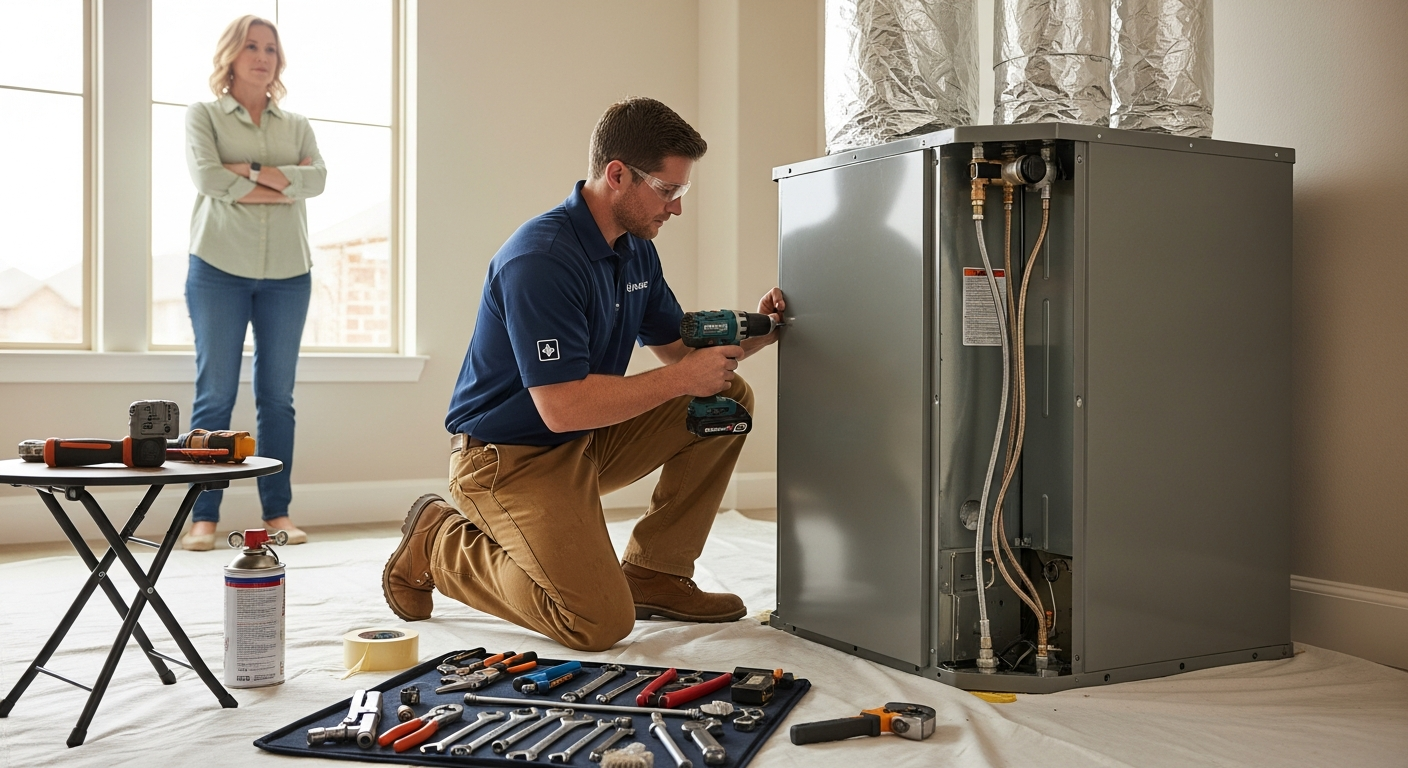

As an HVAC contractor in Texas, you know that proper licensing is non-negotiable for operating legally and building trust with clients. But did you know that securing the right insurance is just as critical a step in the licensing process with the Texas Department of Licensing and Regulation (TDLR)? The state mandates specific insurance coverage not just as a bureaucratic hurdle, but as a vital layer of protection for your business, your employees, and your customers. Navigating these requirements can be complex, and failing to maintain continuous coverage can result in hefty fines or even license suspension. This comprehensive guide will walk you through the exact Texas HVAC license insurance requirements, explaining not just what you need, but why it's essential for your company's longevity and financial health.
Texas HVAC License Insurance: The Core Requirements
The Texas Department of Licensing and Regulation sets forth clear insurance mandates for all licensed HVAC contractors. These are not optional recommendations; they are legal prerequisites for obtaining and renewing your license. The primary purpose is to ensure that you have the financial backing to cover potential liabilities arising from your work. Without this safety net, a single accident or faulty installation could lead to devastating financial losses, lawsuits, and irreversible damage to your professional reputation. The TDLR requires proof of this insurance at the time of your initial application and will periodically require you to confirm that coverage remains active and in good standing.
At its core, the state's requirement is designed to protect the public. When a homeowner hires a licensed HVAC professional, they have a reasonable expectation that the work will be performed safely and correctly. If something goes wrong-such as a fire caused by an electrical error during an installation or a flood from a broken condensate line-the customer needs assurance that they will not be left solely responsible for the damages. Your insurance acts as that guarantee. For your business, it transforms a potentially catastrophic financial event into a manageable claim, allowing you to resolve issues professionally and maintain your operational stability.
Mandatory General Liability Insurance
General liability insurance is the cornerstone of the TDLR's insurance requirements for HVAC contractors. This policy provides broad protection against third-party claims of bodily injury, property damage, and personal and advertising injury. In the context of HVAC work, this could cover a scenario where a client trips over your tools and is injured, or where a refrigerant line you are installing bursts and causes water damage to the customer's expensive hardwood floors. It is fundamental risk management for any contractor who operates on someone else's property.
The state of Texas mandates a minimum amount of coverage for general liability. You must maintain a policy with limits of at least $300,000 per occurrence and a $600,000 aggregate limit. The "per occurrence" limit is the maximum your insurer will pay for a single claim, while the "aggregate" is the total it will pay for all claims during the policy period (usually one year). It is crucial to understand that these are state minimums. For many HVAC businesses, especially those working on larger commercial projects or in high-value residential properties, these limits may be insufficient. You should carefully assess the scale and value of the projects you undertake to determine if higher coverage limits are a prudent business decision.
Before introducing a list, it is critical to understand what your general liability policy typically covers:
- Bodily Injury: Covers medical expenses and legal fees if a non-employee (like a client or a visitor) is hurt on a job site.
- Property Damage: Pays for repairs or replacement if you or your employees accidentally damage a client's property.
- Personal and Advertising Injury: Provides protection against claims of libel, slander, or copyright infringement in your advertisements.
It is equally important to know what general liability usually excludes. It does not cover injuries to your own employees (that's workers' compensation), damage to your own workmanship (that's more related to a warranty), or incidents involving your company vehicles. For those risks, you need separate, specific policies.
The Importance of Workers' Compensation Insurance
While the TDLR does not legally require HVAC contractors to carry workers' compensation insurance in Texas, operating without it is an enormous financial gamble. Texas is unique as the only state where employers can opt out of the state's workers' comp system. However, if you choose not to carry it, you lose crucial legal protections. Specifically, you forfeit the "exclusive remedy" defense, which normally prevents employees from suing their employer for a workplace injury. Without workers' comp, an injured employee can file a lawsuit against your company for full damages, including medical bills, lost wages, and pain and suffering.
Consider the physical nature of HVAC work: technicians lift heavy equipment, work with electrical systems, handle refrigerants, and often operate in attics and crawl spaces with extreme temperatures. The risk of a sprain, cut, fall, or electrical shock is significant. A single serious injury could result in a lawsuit with settlements reaching hundreds of thousands of dollars-enough to bankrupt a small or medium-sized contracting business. Workers' compensation insurance provides a safety net for both you and your employees by covering medical treatment, rehabilitation costs, and a portion of lost wages, regardless of who was at fault for the accident.
The decision to forgo workers' comp is a major one. If you opt out, you should have a formal, written alternative plan in place, often called a non-subscriber plan, that outlines how you will handle workplace injuries. However, these plans do not offer the same legal protections as a traditional workers' comp policy and can still leave you vulnerable to litigation. For most responsible HVAC business owners, securing workers' compensation is a fundamental part of a sound risk management strategy.
Additional Insurance Policies for Comprehensive Protection
Meeting the state's minimum insurance requirements allows you to get your license, but building a truly resilient business often requires additional layers of coverage. These policies address specific risks that fall outside the scope of general liability and workers' comp, filling critical gaps in your protection. A comprehensive insurance portfolio not only safeguards your assets but can also make your company more attractive when bidding on projects, as many general contractors or commercial clients require their subs to have this extra coverage.
Commercial Auto Insurance
If your business owns, rents, or leases any vehicles-from a single service van to an entire fleet-personal auto insurance will not suffice. You need a commercial auto policy. This covers vehicle damage and liability claims if you or an employee causes an accident while performing company business. For an HVAC contractor, a van filled with thousands of dollars worth of tools and equipment is a mobile office and warehouse. A commercial policy can provide coverage for that stolen or damaged inventory, which a personal policy would almost certainly exclude.
Inland Marine (Tool and Equipment) Insurance
Also known as a contractor's equipment floater, inland marine insurance is designed to protect your valuable tools and equipment when they are in transit or on a job site. Your technicians' tools, recovery machines, vacuum pumps, and ladders are the lifeblood of your operation. If they are stolen from a truck or damaged in a fire at a client's property, this policy would cover the cost of repair or replacement. General liability does not cover your own property, making this a vital policy for maintaining operational continuity.
Professional Liability (Errors and Omissions) Insurance
While general liability covers physical accidents, professional liability, or E&O insurance, covers financial losses caused by your professional advice, design errors, or negligent work. For an HVAC contractor, this could be a claim that you improperly sized a unit for a home, leading to inefficient operation and exorbitant energy bills for the homeowner, or that a system you designed failed to meet building code specifications. As contractors take on more complex system design and consulting roles, E&O insurance becomes increasingly important.
How to Secure and Maintain Your HVAC Insurance
Obtaining the right insurance involves more than just finding the cheapest premium. It requires a thoughtful process to ensure you have adequate coverage from a reputable provider. Start by gathering quotes from several insurance carriers that specialize in contractor policies. Be prepared to provide detailed information about your business, including your years in operation, annual revenue, number of employees, the types of jobs you perform (residential vs. commercial, new installation vs. service), and your safety record. An accurate application is key to getting a policy that truly fits your needs.
Once you have chosen a policy, the TDLR requires official proof of insurance. This is typically provided by your insurer in the form of a Certificate of Insurance (COI). You must submit this COI to the TDLR, and it must name the "Texas Department of Licensing and Regulation" as the certificate holder. The most critical part of maintenance is ensuring your coverage never lapses. The TDLR system may automatically flag your license for suspension if your insurance provider reports a cancellation or expiration. To avoid this, set reminders for renewal dates and pay premiums on time. Consider working with an independent insurance agent who can shop the market for you annually to ensure you continue to get the best value.
Following a clear process will help you secure the right coverage efficiently. Here are the key steps:
- Assess Your Risks: Evaluate the specific liabilities of your HVAC operations, including job size, employee count, and tools used.
- Gather Multiple Quotes: Contact at least three different insurance providers or agents specializing in commercial contractor insurance.
- Review Policy Details: Scrutinize the coverage limits, deductibles, and, most importantly, the exclusions in each quote.
- Purchase Your Policy: Select the policy that offers the best combination of comprehensive coverage and cost.
- Submit Your COI to TDLR: Provide the TDLR with your Certificate of Insurance to fulfill the licensing requirement.
Remember that your insurance needs will evolve as your business grows. A policy that was sufficient in your first year may be inadequate once you hire more employees, take on larger contracts, or purchase new, expensive equipment. Conduct an annual review of your insurance portfolio with your agent to ensure your coverage continues to align with your business's evolving risk profile.
Common Pitfalls and How to Avoid Them
Many HVAC contractors run into problems not out of negligence, but from a lack of awareness about the finer details of insurance compliance. One of the most common and serious mistakes is letting your insurance lapse. Even a one-day gap in coverage can trigger an automatic suspension of your TDLR license, halting your ability to legally contract. This can lead to lost income, project delays, and damage to your professional credibility. To prevent this, set up automatic payments or calendar alerts well in advance of your renewal date and confirm with your agent that the renewal has been processed.
Another frequent error is underinsuring your business. Choosing a policy based solely on the lowest premium can be a costly decision. If a claim exceeds your policy limits, you are personally responsible for the difference. For example, if you cause $500,000 in property damage but only have the state-minimum $300,000 in general liability, you could be on the hook for the remaining $200,000. Always consider the worst-case scenario when selecting your coverage limits. Furthermore, failing to add newly purchased vehicles or expensive equipment to your policies in a timely manner creates dangerous coverage gaps. Implement a simple internal process to notify your insurance agent immediately after any significant business asset acquisition.
Finally, a lack of documentation and poor communication can create issues. You should keep copies of all your policies, COIs, and correspondence with your insurer in a secure but accessible place. Ensure your insurance agent fully understands the nature of your HVAC business so they can recommend the most appropriate coverages. A proactive and informed approach to your insurance is one of the most effective ways to protect the business you have worked so hard to build.
Navigating the Texas HVAC license insurance landscape is a fundamental responsibility for every contractor. By securing and maintaining the required general liability policy and strongly considering essential additional coverages like workers' comp and commercial auto, you do more than just comply with TDLR regulations. You build a foundation of financial security that protects your clients, your employees, and the future of your company. Treat your insurance not as a mere compliance cost, but as a strategic investment in your business's stability and reputation, allowing you to operate with confidence and focus on what you do best: providing top-quality HVAC services to Texas.