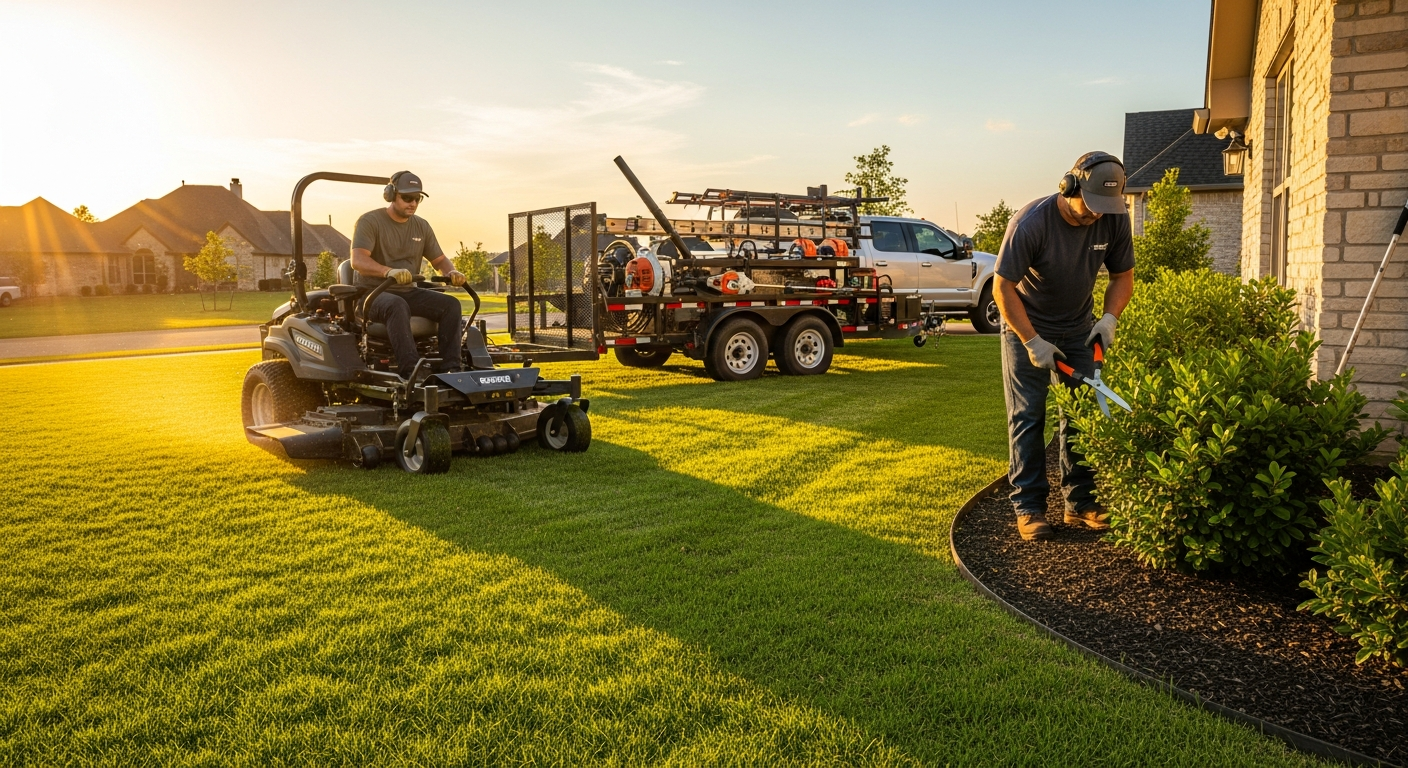

As the morning sun beats down on another Texas workday, your landscaping crew is already transforming properties across the Lone Star State. But while you're focused on creating beautiful outdoor spaces, are you equally attentive to protecting your business from unexpected disasters? From a liability claim when a tree branch damages a client's roof to an employee injury while operating heavy machinery, Texas landscaping companies face unique risks that require specialized insurance coverage. Operating without proper protection isn't just risky-it could mean financial ruin for your hard-earned business.
Essential Insurance Policies for Texas Landscapers
Every landscaping business in Texas needs core insurance protections regardless of size or specialization. These fundamental policies create a safety net that shields your company from the most common and devastating risks in the green industry. While specific needs vary depending on your services, certain coverages form the foundation of any sound landscaping insurance program in Texas.
General liability insurance stands as your first line of defense against third-party claims of bodily injury or property damage. Consider this scenario: your employee accidentally damages an irrigation system while installing new landscaping, or a client trips over equipment left on a pathway. Without general liability coverage, you would pay for these damages and any resulting lawsuits out of pocket. This policy typically covers medical expenses, legal defense costs, and settlements or judgments up to your policy limits.
Commercial auto insurance is equally critical for Texas landscaping businesses that use vehicles for work purposes. Personal auto policies generally exclude business use, leaving you vulnerable if an accident occurs while transporting equipment or traveling between job sites. Texas law requires minimum liability coverage for all registered vehicles, but landscaping companies should consider higher limits and additional protections like comprehensive and collision coverage for their work trucks and trailers.
Workers' compensation insurance becomes essential once you hire employees in Texas. While Texas is the only state where employers aren't mandated to carry workers' comp, operating without it exposes your business to potentially catastrophic lawsuits from injured employees. This coverage pays for medical treatment, rehabilitation costs, and partial lost wages when employees suffer work-related injuries or illnesses. For landscaping businesses where physical labor and equipment operation create significant injury risks, this protection is practically indispensable.
Texas-Specific Insurance Considerations
Operating a landscaping business in Texas presents distinct challenges that influence your insurance needs. The state's unique climate, legal environment, and economic landscape create specific exposures that require tailored coverage solutions. Understanding these Texas-specific factors helps you build an insurance portfolio that truly protects your business where it's most vulnerable.
Texas weather patterns demand special attention in your insurance planning. From hailstorms that can damage client property during landscaping projects to drought conditions that increase fire risks when using equipment, your policies need to account for weather-related perils. Additionally, Texas' expansive territory means your business might operate in regions with different risk profiles-coastal areas face hurricane threats while northern regions deal with occasional freezing temperatures that can affect operations.
The Texas legal environment also shapes your insurance requirements. Texas follows modified comparative fault rules, meaning if you're found more than 50% responsible for an incident, you cannot recover damages. This makes robust liability coverage particularly important. Furthermore, Texas courts have historically awarded significant damages in personal injury cases, making adequate liability limits crucial for financial protection.
When selecting coverage, Texas landscaping businesses should consider these key factors:
- Seasonal variations: Adjust coverage for peak seasons when you have more employees and equipment in use
- Geographic service area: Account for regional risks across Texas' diverse climate zones
- Client requirements: Many commercial clients in Texas mandate specific insurance limits and coverages
- Equipment valuation: Ensure your tools and machinery are properly insured at current replacement costs
Additional Coverage Options for Comprehensive Protection
Beyond the essential policies, several specialized coverages can provide more complete protection for your Texas landscaping operation. These additional policies address gaps in standard business insurance and protect against risks specific to landscaping work. Evaluating these options helps you build a customized insurance program that matches your company's unique exposure profile.
Commercial property insurance protects your business assets including office space, storage facilities, nursery stock, and landscaping supplies. If a fire destroys your equipment shed or a storm damages your greenhouse, this coverage helps you recover and resume operations. Many Texas landscaping businesses opt for business interruption coverage as an addition to their property policy, providing income replacement if covered events force temporary closure.
Equipment and inland marine insurance covers your valuable tools and machinery whether they're at your business location, in transit, or on job sites. Landscaping equipment represents a significant investment, and this specialized coverage protects against theft, damage, or destruction. From riding mowers and skid steers to specialized tree care equipment, ensuring proper valuation and coverage limits is essential for financial stability.
Pollution liability coverage addresses environmental risks inherent in landscaping work. Fertilizer application, pesticide use, and chemical runoff can potentially cause environmental damage that standard liability policies may exclude. Given Texas' regulations on environmental protection and water quality, this coverage provides crucial protection against claims related to your landscaping practices.
Understanding Texas Workers' Compensation Requirements
Texas stands alone as the only state that doesn't require private employers to carry workers' compensation insurance. This unique situation creates both flexibility and significant responsibility for landscaping business owners. Understanding the implications of this system helps you make informed decisions about protecting your employees and your company.
Choosing to opt out of workers' compensation in Texas means your business becomes a "non-subscriber" to the state system. While this eliminates premium costs, it removes protection against employee injury lawsuits. Without workers' comp coverage, injured employees can sue your business for negligence, and you lose important legal defenses normally available to subscribers. These lawsuits can include claims for pain and suffering, punitive damages, and full lost wages-exposures that standard workers' comp coverage typically addresses.
Many Texas landscaping businesses choose alternative protection strategies when opting out of workers' comp:
- Occupational accident insurance: Provides similar benefits to workers' comp but with different legal structure
- Employer liability coverage: Often included in business owner policies as limited protection
- Enhanced health and disability benefits: Voluntary programs that help injured employees
- Robust safety programs: Comprehensive protocols to prevent workplace injuries
Regardless of your approach, clearly communicating your injury benefit program to employees is both ethical and legally required in Texas. You must formally notify employees about whether you provide workers' compensation coverage and outline any alternative injury benefit plans. Many landscaping businesses find that carrying workers' compensation, despite not being required, ultimately provides better financial predictability and employee relations.
Navigating Commercial Auto Insurance in Texas
Texas landscaping businesses rely heavily on vehicles to transport crews, equipment, and materials between job sites. Understanding commercial auto insurance requirements and options ensures your mobile operations stay protected and compliant. The distinction between personal and commercial auto coverage is particularly important for landscaping companies that might initially use personal vehicles for business purposes.
Texas law mandates minimum liability coverage of $30,000 for each injured person, up to $60,000 per accident, and $25,000 for property damage. However, these minimums often prove inadequate for landscaping businesses involved in serious accidents. Given the valuable equipment typically transported and potential for multi-vehicle incidents, most landscaping companies carry significantly higher liability limits-often $1 million or more-particularly when serving commercial clients who frequently require such coverage.
Beyond liability coverage, several additional auto insurance components benefit Texas landscaping operations. Physical damage coverage protects your owned vehicles against collision and comprehensive risks, while hired and non-owned auto liability extends protection to rented vehicles or employee-owned vehicles used for business purposes. Uninsured/underinsured motorist coverage provides important protection in Texas, which has one of the highest rates of uninsured drivers nationwide.
Proper vehicle classification directly impacts your premiums and coverage. Be specific with insurers about how each vehicle is used-whether for transporting equipment, carrying crews, or towing trailers. Documenting safety programs, driver training, and vehicle maintenance practices can help secure better rates. Additionally, implementing telematics or GPS tracking can sometimes earn discounts while improving operational efficiency.
Cost Management and Policy Optimization
Managing insurance costs while maintaining adequate protection requires strategic planning and regular review. Texas landscaping businesses can employ several techniques to optimize their insurance spending without compromising coverage quality. Understanding what factors influence your premiums helps you make cost-effective decisions while protecting your business assets.
Insurance carriers evaluate landscaping businesses based on multiple risk factors when determining premiums. Your claims history, services provided, safety record, employee experience, and even financial stability all influence your insurance costs. Businesses specializing in higher-risk services like tree removal or chemical application typically face higher premiums than those focused on basic maintenance. Similarly, companies with documented safety programs and trained employees often qualify for better rates.
Implement these strategies to manage your landscaping insurance costs effectively:
- Bundle coverages: Purchase multiple policies from the same insurer for package discounts
- Increase deductibles: Opt for higher deductibles on property and equipment coverage to lower premiums
- Review coverage annually: Ensure you're not over-insured on depreciated equipment or under-insured on new acquisitions
- Maintain safety documentation: Detailed records of safety training and procedures can demonstrate reduced risk
- Compare specialized carriers: Insurers focusing on landscaping understand industry risks and may offer better terms
Regular policy review represents one of the most valuable yet overlooked cost management strategies. As your landscaping business evolves-adding services, expanding territory, purchasing new equipment, or hiring additional staff-your insurance needs change accordingly. An annual insurance checkup ensures your coverage aligns with current operations and identifies potential gaps or unnecessary duplications.
Certificate of Insurance Management
For Texas landscaping businesses, properly managing certificates of insurance represents both a contractual requirement and a business development tool. Many commercial clients, property management companies, and municipal contracts require specific insurance documentation before allowing work to commence. Understanding how to generate, manage, and verify these documents streamlines your business operations and prevents potential contract disputes.
A certificate of insurance (COI) serves as proof that your landscaping business carries the required insurance coverages. When clients request certificates, they're typically verifying that you maintain adequate general liability, auto liability, and workers' compensation coverage. Most commercial clients specify minimum coverage limits and may require being named as additional insured on your policies for specific projects. This provides them protection if your operations cause property damage or injuries.
Efficient COI management involves maintaining organized records of all certificate requests and renewals. Develop a system to track expiration dates and client requirements to avoid lapses in compliance. Many insurers offer online portals where you can generate certificates instantly, saving administrative time. When receiving certificates from subcontractors, verify their validity and coverage limits to ensure your own protection isn't compromised by their inadequate insurance.
Creating a standardized process for insurance verification with new clients prevents misunderstandings and delays. Include insurance requirements in your initial contracts and quotations, and address any coverage questions before beginning work. For larger projects or ongoing commercial accounts, consider working with your insurance agent to create blanket additional insured endorsements that automatically cover multiple clients, simplifying administration while maintaining protection.
Protecting your Texas landscaping business with appropriate insurance isn't just about checking compliance boxes-it's about building a foundation that allows your company to grow confidently in the competitive Texas market. The right coverage portfolio addresses your unique risks while supporting your business objectives, from daily maintenance operations to large-scale installation projects. By understanding Texas-specific requirements and industry best practices, you create an insurance strategy that protects both your current assets and future ambitions.