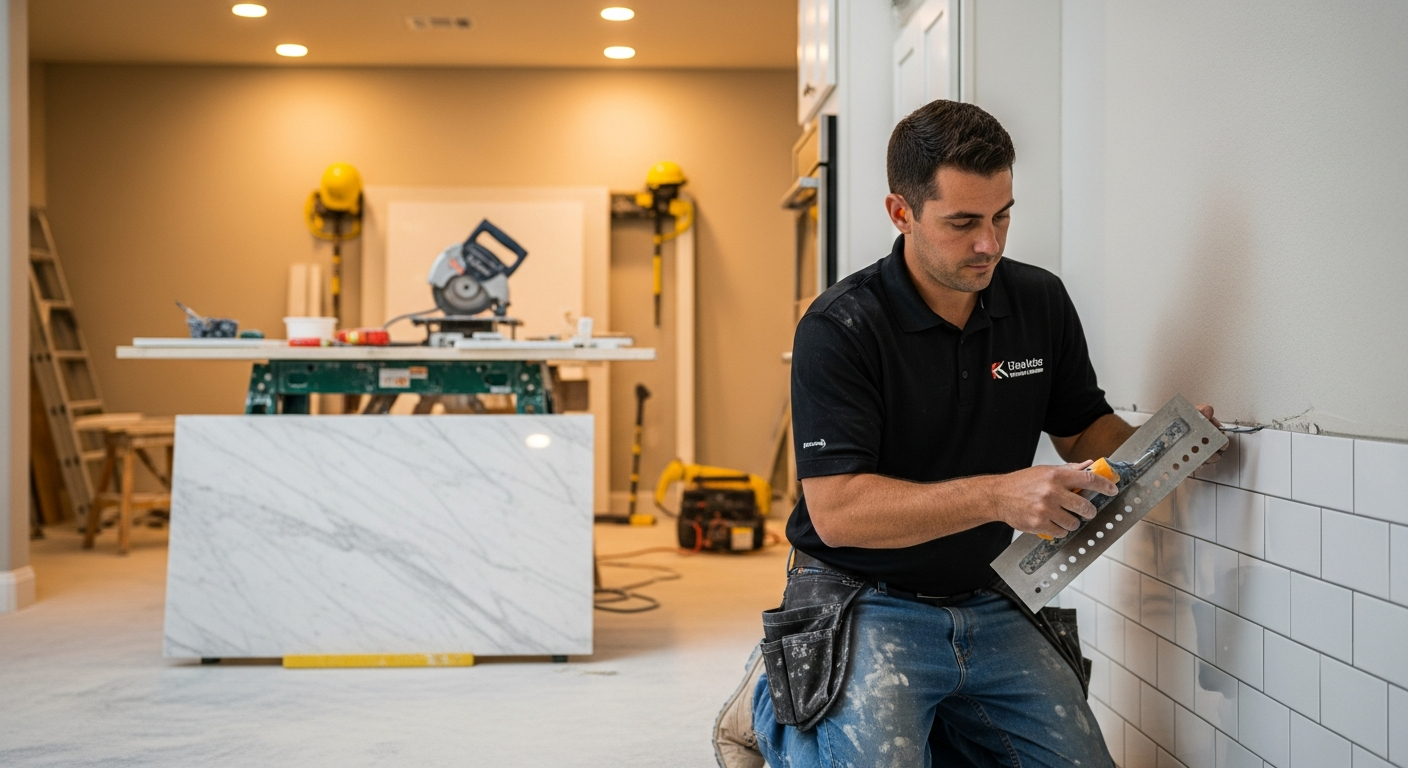

Every beautiful backsplash, every perfectly laid patio, and every durable commercial floor in Texas rests on the skill of a tile and stone contractor. But what your business is built on is just as important as the materials you install. From a chipped tile causing a slip-and-fall in a Dallas high-rise to a misplaced wet saw damaging a client's Houston home, a single unexpected event can threaten your livelihood and financial stability. Texas law adds another layer of complexity, with specific requirements for contractors working on projects of certain sizes. Having the right contractor liability insurance isn't just a smart business practice; it's a fundamental part of protecting the company you've worked so hard to build from the unique risks you face every day.
Why Tile and Stone Contractors in Texas Need Insurance
The physical nature of your work inherently involves risk. You handle heavy materials, operate powerful tools, and work on other people's property. A simple accident, even with the most experienced crew, can lead to significant third-party bodily injury or property damage. For instance, if a pallet of marble slabs is accidentally dropped, it could damage a client's driveway, their vehicle, or even cause injury. Without insurance, you would be personally responsible for all associated medical bills, repair costs, and potential legal fees. This financial burden could be devastating for a small business.
Beyond these obvious physical risks, there are professional liabilities to consider. A client may allege that your installation was faulty, leading to cracked grout, improper drainage, or tiles that come loose. Even if the allegation is unfounded, defending yourself against a lawsuit is expensive. Furthermore, many general contractors, property management companies, and commercial clients in cities like Austin and San Antonio will not hire you without proof of adequate insurance coverage. It serves as a credential that validates your professionalism and financial responsibility, opening doors to higher-value projects.
Key Insurance Policies for Your Business
A comprehensive insurance portfolio for a tile and stone contractor is built on several core policies, each designed to address a different category of risk. Combining these coverages creates a safety net that protects your assets, your employees, and your business's future.
Commercial General Liability (CGL) Insurance
This is the cornerstone of any contractor's insurance plan. A Commercial General Liability policy covers claims of third-party bodily injury, property damage, and personal and advertising injury (like slander or copyright infringement). For a tile contractor, this could mean a client's guest tripping over tools and getting hurt, or accidental damage to kitchen cabinets while installing a new countertop. Since Texas is a comparative fault state, you could be held partially responsible for an incident even if the client was also negligent, making CGL coverage essential.
Commercial Auto Insurance
If your business owns vehicles-whether it's a pickup truck for hauling materials or a van for your crew-personal auto insurance will not cover accidents that occur while you're working. Commercial auto insurance is legally required in Texas and covers liability, collision, and comprehensive damage for vehicles used for business purposes. If your work vehicle is involved in an accident while transporting expensive tile to a job site, this policy would handle the costs.
Workers' Compensation Insurance
While not always legally mandated for very small crews in Texas, Workers' Compensation is critically important. This policy covers medical expenses and a portion of lost wages for an employee who gets injured on the job. Given the physical demands of cutting stone, lifting heavy loads, and working with sharp tools, the risk of strains, cuts, or more serious injuries is ever-present. Having this coverage protects your employees and shields your business from a potentially ruinous lawsuit filed by an injured worker.
Tools and Equipment Coverage (Inland Marine)
Your specialized tools-from tile saws and wet saws to mixers and lasers-are the lifeblood of your operation. Inland Marine insurance, often called contractors' equipment insurance, covers these tools if they are stolen from your jobsite or vehicle or damaged by a covered event like a fire. This is crucial for mobile contractors who transport expensive equipment across Texas. Replacing these items out-of-pocket could cause major project delays and financial strain.
Surety Bonds
While not a type of insurance, surety bonds are a key financial guarantee. Many public works projects and larger private contracts in Texas require a bid, performance, and payment bond. This bond is a three-party agreement that guarantees you will fulfill the terms of your contract. If you fail to complete the project or pay your suppliers or subcontractors, the bond provides compensation to the project owner. Having bonding capacity signals that a surety company has vetted your business and finds it trustworthy.
Understanding the Cost of Insurance in Texas
The cost of tile and stone contractor insurance in Texas is not a one-size-fits-all figure. Premiums are calculated based on a careful assessment of your business's specific risk profile. Insurers evaluate a range of factors to determine how likely you are to file a claim, which directly influences your annual premium.
Key factors that influence your insurance costs include:
- Annual Revenue and Payroll: Higher revenue and larger payrolls generally lead to higher premiums for liability and workers' comp, as they indicate a larger scale of operation.
- Project Types and Size: A contractor specializing in high-end custom homes or large commercial projects will typically pay more than one focusing on small residential bathroom remodels due to the increased financial exposure.
- Claims History: A business with a history of frequent or severe insurance claims is considered high-risk and will face significantly higher premiums.
- Coverage Limits and Deductibles: Opting for higher coverage limits will increase your premium, while choosing a higher deductible (the amount you pay out-of-pocket before insurance kicks in) can lower it.
- Business Location: Operating in a major metropolitan area like Houston or Dallas may carry different risk assessments and costs than operating in a rural area.
As a general benchmark, a small to mid-sized tile and stone contracting business in Texas might expect to pay anywhere from a few thousand dollars to over ten thousand dollars annually for a robust package of insurance, depending on the combination of these factors. The most accurate way to determine your cost is to request quotes from multiple providers specializing in contractor insurance.
Texas-Specific Legal and Contractual Requirements
Operating a contracting business in Texas comes with a unique set of legal obligations that directly impact your insurance needs. While the state does not universally require contractors to carry general liability insurance, several powerful mandates make it a practical necessity.
One of the most significant rules is the "30-Day Rule" for residential construction. Under Texas law, a contractor who enters into a contract for more than $10,000 must provide proof of liability insurance to the homeowner within 30 days of a written request. Failure to do so can result in the homeowner withholding payments. Furthermore, if you have employees, you must either carry workers' compensation insurance or formally notify the Texas Department of Insurance and your employees that you are a "non-subscriber." However, choosing to be a non-subscriber exposes you to significantly greater legal liability if an employee is injured.
Beyond state law, contractual requirements are often the primary driver for insurance. Virtually every commercial project and many high-end residential projects will include a clause in the contract requiring you to carry specific types and amounts of insurance, often naming the general contractor or property owner as an "additional insured" on your policy. This is non-negotiable for securing the job. You must also be aware of the Texas statute of limitations for filing a lawsuit related to construction defects, which can be up to ten years for certain claims, underscoring the need for long-term protection.
How to Get insured: A Step-by-Step Guide
Securing the right insurance for your tile and stone business is a straightforward process when you're prepared. Following a structured approach will help you find the best coverage at a competitive price.
- Assess Your Risks: Begin by taking a thorough inventory of your business operations. List your vehicles, all tools and equipment, your number of employees, and the typical value and type of projects you undertake. This will clarify exactly what you need to insure.
- Gather Your Documents: Before contacting an agent, have key information ready. This includes your Texas business license or registration, estimates of your annual revenue and payroll, a list of tools and their values, and vehicle information for commercial auto quotes.
- Find a Specialized Agent or Broker: Look for an insurance provider in Texas that specializes in construction or contractor insurance. They will have a deeper understanding of the specific risks faced by tile and stone contractors and access to insurers that cater to this niche.
- Compare Multiple Quotes: Do not settle for the first quote you receive. Request quotes from at least three different providers. When comparing, look closely at the coverage limits, exclusions, and deductibles, not just the final premium price.
- Review and Purchase Your Policy: Once you select a policy, carefully review the certificate of insurance to ensure all the details are correct. Make sure the policy types, limits, and named insured match your business's legal name. Keep your insurance documents easily accessible for job bids and client requests.
Remember, your insurance needs will evolve as your business grows. It's a best practice to review your policies annually with your agent, especially after landing a larger project, hiring new employees, or purchasing significant new equipment.
Common Claims and How Proper Insurance Protects You
Understanding real-world scenarios where insurance intervenes can powerfully illustrate its value. In the tile and stone industry, certain types of claims are more prevalent than others.
A common claim involves water damage. Imagine you've just completed a beautiful shower installation in a Fort Worth home. A week later, a faulty sealant application you made leads to a leak that damages the bathroom subfloor and the ceiling of the room below. The homeowner files a claim against you for the cost of repairs. Your Commercial General Liability policy would cover the cost of fixing the water damage to the client's property, as well as your legal defense if needed.
Another frequent issue is damage to existing structures. While carrying a large slab of granite through a client's doorway, your employee accidentally chips the doorframe and scratches the hardwood floor. The client demands it be repaired or replaced. This is a clear case of third-party property damage, which would be covered under your CGL policy, saving you from a costly out-of-pocket expense. These examples highlight how insurance acts as a financial backstop, allowing you to resolve legitimate issues without jeopardizing your business's cash flow or reputation.
Protecting your tile and stone contracting business with a tailored insurance program is one of the most strategic decisions you can make. It provides the financial security to handle accidents and allegations confidently, ensures you meet Texas legal and contractual obligations, and positions your company as a professional, reliable choice for clients. By investing in the right coverage, you're not just paying for a policy-you're building a resilient foundation that allows your craftsmanship and your business to thrive for years to come.