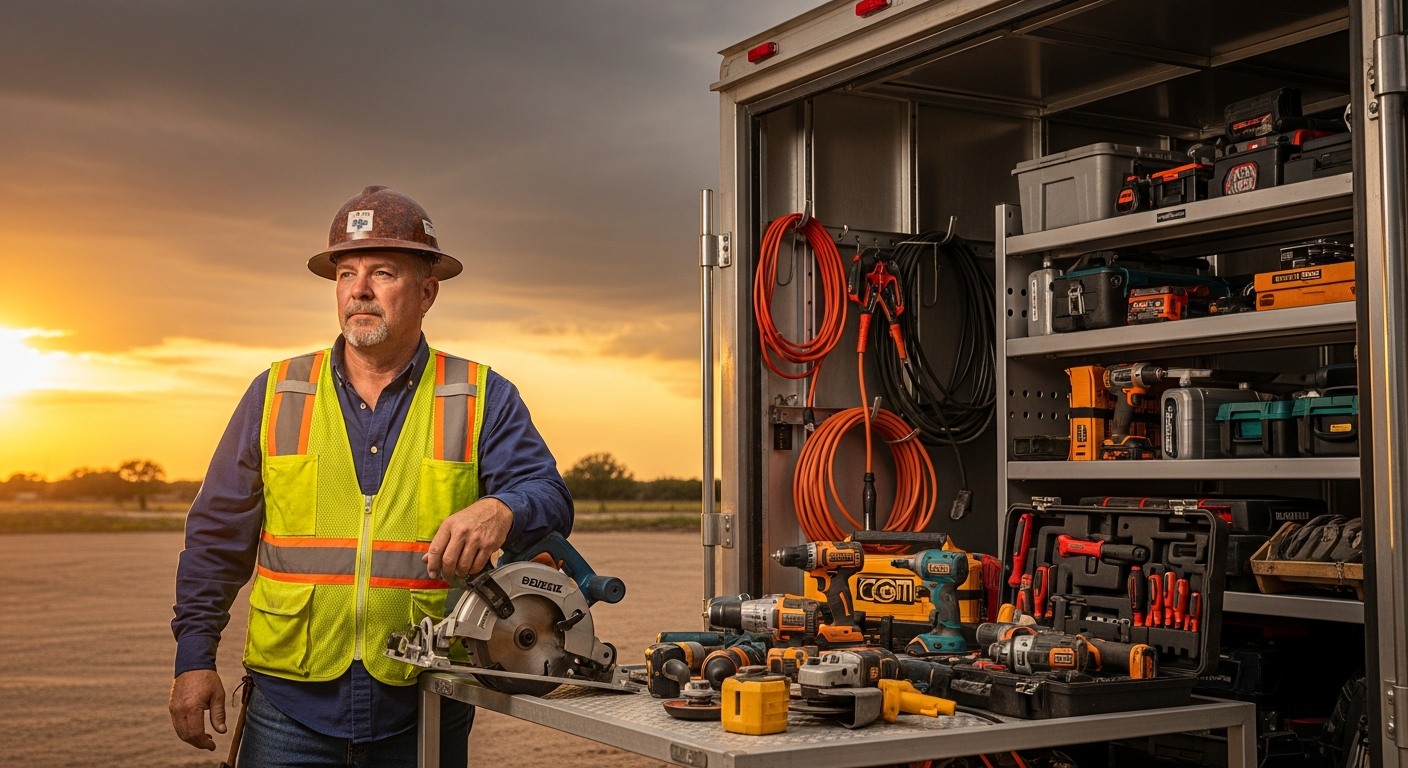

Imagine arriving at a Texas construction site to discover your $15,000 trailer of tools has vanished overnight, or watching your most critical power tools get soaked in an unexpected Houston downpour. For contractors, tools are not just equipment; they are the lifeblood of the business, representing a massive financial investment and the very means to generate income. In a state known for its vast landscapes and volatile weather, from Panhandle hailstorms to Gulf Coast humidity, protecting these assets isn't just a good idea it is a business necessity. Understanding the nuances of Texas-specific tool insurance options can mean the difference between a minor inconvenience and a catastrophic business interruption. This guide cuts through the confusion to compare the primary insurance avenues available, helping you secure the right coverage to keep your business building, no matter what comes your way.
Why Texas Contractors Cannot Afford to Skip Tool Insurance
Many small contractors and independent tradespeople operate under the risky assumption that their tools are covered by a general business policy or even a homeowners policy. This is a dangerous misconception. General liability insurance, which is essential for protecting against third-party bodily injury or property damage, almost never covers your own business tools and equipment against theft, loss, or damage. Relying on a homeowners policy is equally fraught with peril, as these policies typically contain strict exclusions for property used for business purposes, and coverage limits are far too low to replace a professional-grade tool collection.
The financial impact of being uninsured extends far beyond the replacement cost of the tools themselves. Consider the domino effect: without tools, work grinds to a halt. You cannot complete current projects, leading to missed deadlines, contractual penalties, and strained client relationships. You are forced to turn down new work, resulting in immediate lost income. Meanwhile, fixed expenses like truck payments, insurance premiums, and marketing costs continue unabated. For a small contracting business, a single major theft or accident could cause irreparable financial damage. Tool insurance is not an extra expense; it is a fundamental component of your business's operational resilience and financial stability.
Understanding the Three Main Types of Tool Coverage
When exploring how to insure your tools, you will primarily encounter three distinct types of coverage. Each serves a different purpose and offers a different level of protection. It is crucial to understand their definitions, differences, and how they can work together to form a complete risk management strategy for your contracting business in Texas.
Inland Marine Insurance (Contractor's Equipment Insurance)
Despite its confusing name, Inland Marine insurance is the cornerstone of tool protection for contractors. It is specifically designed to cover high-value, mobile business property, like your tools and equipment, while they are in transit or being used at a job site. Think of it as a policy that travels with your tools, providing coverage whether they are in your work truck, on a client's property, or in a storage unit. This is the most comprehensive and appropriate form of coverage for active contractors who regularly move their equipment from place to place. A typical Inland Marine policy for contractors will cover perils like theft, fire, vandalism, and even accidental damage, such as dropping a generator or flooding a saw.
Scheduled Tool Coverage
Scheduled tool coverage is a method of insuring your most valuable individual pieces of equipment. Instead of a blanket coverage amount for your entire tool collection, you "schedule" specific high-value items individually on your policy. For each scheduled item, you declare a specific description and value. This approach is ideal for expensive, essential tools like a welder, a commercial-grade air compressor, or a specialized diagnostic device. The primary benefit of scheduling is that it eliminates any ambiguity about the item's value and identity in the event of a claim. There is no deductible applied to scheduled items in most cases, and coverage is often broader. The key is that if a tool is not explicitly listed on the schedule, it is not covered under that specific provision.
Business Personal Property Coverage
Business Personal Property (BPP) coverage is a component of a standard business owners policy (BOP). It is designed to protect property that is primarily located at and used within your main business premises, such as office furniture, computers, and inventory. For a contractor, this might cover tools that are permanently stored in a locked workshop or garage at your business address. The critical limitation of BPP is its location restriction. If you take a tool covered only under BPP to a job site and it is stolen from your truck, you will likely have no coverage. Therefore, while BPP can be part of your overall plan for stationary assets, it is entirely insufficient for the mobile nature of a contractor's primary tools.
Comparing Coverage: Inland Marine vs. Scheduled vs. BPP
Choosing the right type of coverage depends heavily on your business's operational model, the value of your tools, and where they are located. Most contractors will find that a combination of Inland Marine and Scheduled coverage provides the most robust protection. To make an informed decision, it is helpful to directly compare the key attributes of each option.
Here is a breakdown of how these coverages stack up for a typical Texas contractor:
- Coverage Scope: Inland Marine offers the broadest scope, covering tools on-site, in transit, and in temporary storage. Scheduled coverage applies to specifically listed items, regardless of location, but only to those items. BPP is the most limited, covering tools only at your primary business location.
- Best For: Inland Marine is best for the entire, frequently moved tool collection. Scheduled coverage is best for high-value, critical individual tools. BPP is best for office-based assets and tools that never leave your workshop.
- Claims Process: With Scheduled coverage, the claims process is often straightforward as the item and its value are pre-agreed. Inland Marine claims may require a detailed inventory and proof of ownership for unscheduled items. BPP claims for tools are rare due to location restrictions.
- Cost Consideration: Inland Marine provides the most cost-effective blanket coverage for a large collection. Scheduled coverage adds premium cost but provides superior protection for your most expensive equipment. BPP is usually included in a BOP and is inexpensive, but its utility for tools is low.
For the vast majority of contractors, an Inland Marine policy forms the essential base of tool insurance. You can then add scheduled coverage for your most critical and expensive pieces of equipment to ensure they are protected with zero deductible and agreed-upon value. This hybrid approach ensures comprehensive protection across your entire inventory.
Key Factors to Evaluate in a Tool Insurance Policy
Once you understand the type of coverage you need, the next step is to scrutinize the specific terms of any policy you are considering. Not all Inland Marine or scheduled tool policies are created equal. Paying close attention to a few critical details will prevent unpleasant surprises when you need to file a claim.
The first and most important factor is the policy's basis of settlement. This defines how the insurance company will calculate your payout after a loss. There are two main types: Replacement Cost Value (RCV) and Actual Cash Value (ACV). An RCV policy will pay the cost to replace the lost, stolen, or damaged tool with a new one of like kind and quality, without deducting for depreciation. An ACV policy, however, will only pay the tool's current market value, which factors in age, wear, and tear. For contractors, an RCV policy is vastly superior because the cost to buy a new tool is what truly matters for getting back to work, not the depreciated value of the old one.
Another vital factor is the deductible structure. This is the amount you must pay out-of-pocket before the insurance coverage kicks in. Policies can have a per-occurrence deductible or, more commonly for tools, a per-item deductible. Be very clear on how the deductible is applied. Furthermore, review the policy's coverage limits carefully. There may be a single-item limit on an unscheduled Inland Marine policy, meaning it will only pay up to a certain amount for any one tool, even if the total loss is below your overall policy limit. This is precisely why scheduling high-value items is so important, as it overrides these sub-limits. Finally, be hyper-aware of any exclusions. Some policies may exclude certain types of tools, specific causes of loss (like mechanical breakdown), or have restrictions based on how tools are stored (e.g., requiring a locked storage trailer).
Building Your Texas Tool Insurance Strategy
Crafting a bulletproof tool insurance plan is a step-by-step process. Rushing this process can lead to critical gaps in your coverage. By following a logical framework, you can ensure that your policy is tailored to the unique risks and requirements of your Texas-based contracting business.
The first and most critical step is to create a comprehensive tool inventory. You cannot insure what you have not documented. Go through your workshop, truck, and storage units and list every single tool you own. For each item, record a detailed description, including the brand, model, and serial number. Take clear photographs or a video walkthrough of your entire collection. Crucially, note the replacement cost for each item, which means checking current prices for a new equivalent. This inventory is not only essential for determining the correct amount of coverage to buy but is also your most valuable asset when filing a claim, serving as undeniable proof of ownership and value.
With your inventory in hand, you can now assess your risk profile and determine the right coverage mix. Start by calculating the total replacement cost of all your tools that travel to job sites this is the minimum amount of Inland Marine coverage you need. Next, identify any individual tools that exceed your policy's per-item limit or are simply too critical and expensive to risk. These are your candidates for scheduled coverage. Finally, consider any specialty tools or new equipment you plan to purchase in the near future and ensure your policy can be easily updated. Following this strategic approach ensures you are not underinsured while also avoiding paying for unnecessary coverage.
Your tools are the engine of your contracting business, and in Texas, they face a unique set of threats from extreme weather to job site theft. Viewing tool insurance as a mandatory business investment, rather than an optional cost, is the mark of a savvy and sustainable business owner. By thoroughly understanding the differences between Inland Marine, Scheduled, and BPP coverage, meticulously reviewing policy details like RCV versus ACV, and building your coverage on a foundation of a detailed inventory, you can secure your assets with confidence. The right policy does not just protect your tools; it protects your ability to earn a living, fulfill your contracts, and continue building your reputation as a reliable Texas contractor.