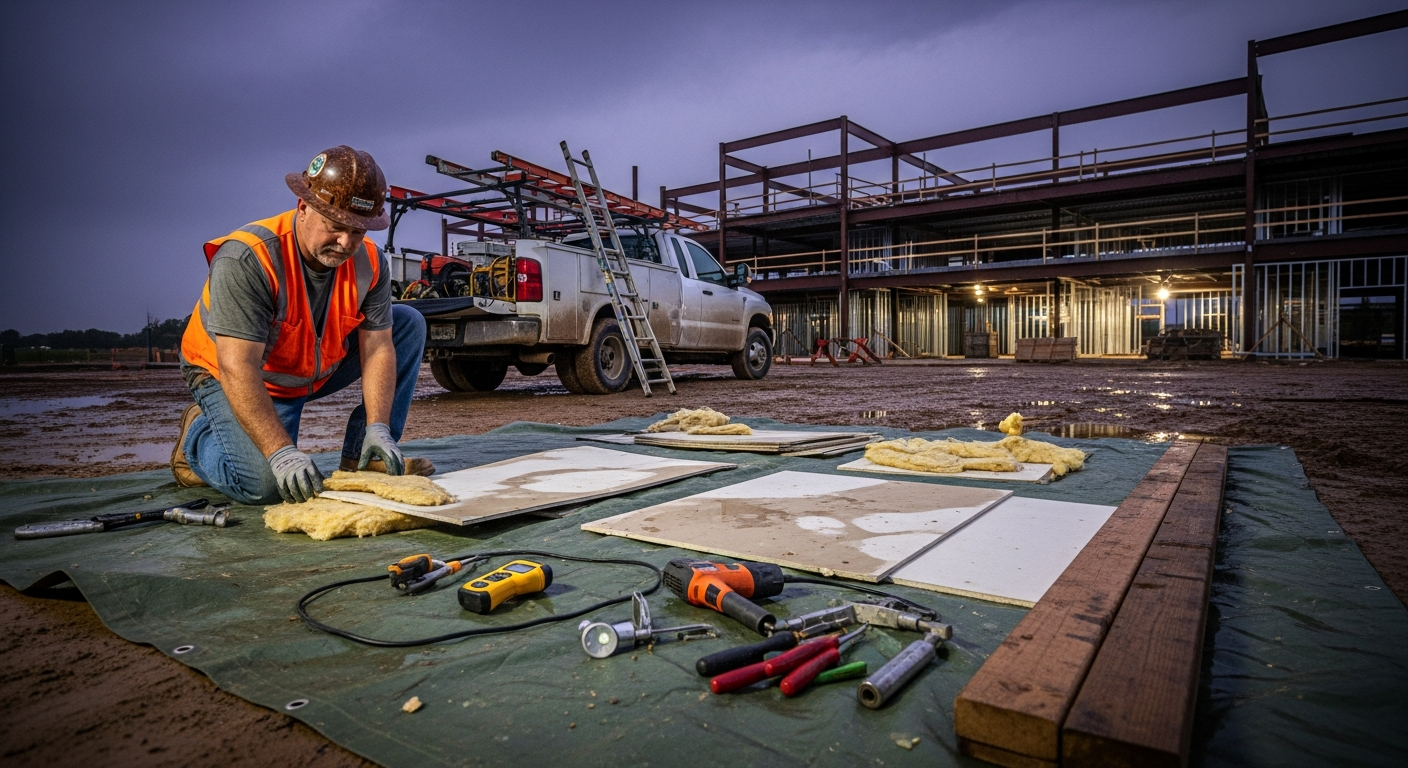

Imagine this: you're a contractor in Dallas halfway through a major commercial build-out when a storm damages $50,000 worth of custom-ordered materials staged on-site. Or, you're an Austin-based electrician, and the truck carrying all your specialized tools and testing equipment is stolen. In both scenarios, your standard commercial property or commercial auto policy would likely leave critical gaps in your coverage, creating a significant financial setback. This is where inland marine insurance, a specialized and often misunderstood type of business insurance, becomes a contractor's most vital asset. For Texas contractors navigating projects from the Gulf Coast to the Panhandle, understanding inland marine coverage isn't just a recommendation-it's a fundamental component of a robust risk management strategy that protects your tools, materials, and equipment wherever your work takes you.
Understanding Inland Marine Insurance for Contractors
Many contractors hear "marine" and assume the policy is for boats or ocean-related risks. However, inland marine insurance is a form of property insurance designed for property that is "in transit" or movable. Its origins are in covering goods shipped over land (hence "inland"), and it has evolved to protect high-value business property that is frequently transported between job sites. For a contractor in Texas, this means your livelihood is often on the move, and a standard commercial property policy typically only covers assets located at your primary business address. Inland marine fills this gap, providing what is often called "floater" coverage because it follows the covered property, whether it's in your truck, on a jobsite, in a storage yard, or at a client's location.
This distinction is critical in the vast and varied landscape of Texas. A roofing contractor in Lubbock needs coverage for shingles and equipment as they are driven to a new development. An audio-visual installer in Houston needs protection for fragile, expensive components during transport and installation. Without inland marine insurance, these contractors would be bearing the full financial risk for losses occurring outside their primary premises. This policy is not a replacement for your general liability or commercial auto insurance; rather, it's a complementary layer that specifically safeguards the physical assets you depend on to generate revenue.
Key Coverages Provided by an Inland Marine Policy
An inland marine policy for contractors is not a one-size-fits-all product. It is highly customizable, but it generally consists of several core coverage areas that address the most common risks faced by construction and trade professionals. These coverages are designed to function on an "all-risk" or "causes of loss" basis, meaning they protect against a wide range of perils like theft, fire, vandalism, and collision unless specifically excluded.
Tools and Equipment Coverage
This is the cornerstone of most contractors' inland marine policies. It covers your portable tools, machinery, and equipment from loss or damage. Whether you're a plumber with a van full of wrenches and pipe-threaders or a heavy equipment operator with a fleet of skid steers and excavators, this coverage is essential. A standard commercial property policy would not respond if your tools were stolen from a locked box at a San Antonio apartment complex you're renovating. Inland marine insurance would. Coverage typically applies to owned, rented, or leased equipment, and you can often schedule high-value individual items for specific coverage limits.
Consider a framer working on a new residential project in Fort Worth. His pneumatic nail guns, saws, and laser levels are crucial for his daily work. If his trailer is broken into overnight and these items are stolen, his inland marine policy would cover the cost to replace them, minus his deductible. This allows him to get back to work quickly without a devastating out-of-pocket expense. It's important to maintain a detailed, updated inventory of your tools and equipment, including serial numbers and purchase receipts, to streamline the claims process.
Installation Floater Coverage
This component protects materials and equipment while they are being installed or assembled at a job site. For example, it would cover custom cabinets that are damaged by water from a burst pipe before they are permanently fixed in place, or a delicate HVAC unit that is dropped during the hoisting process. Once the item is installed and becomes part of the real property, coverage typically transitions to the building owner's insurance or your installation-specific liability coverage.
Imagine a glass company installing a large, custom-made storefront window in a downtown Austin high-rise. During the installation, a rigging failure causes the $15,000 pane of glass to shatter. The installation floater within the company's inland marine policy would cover the cost of the material and the labor to re-order and re-install it. This prevents a single accident from erasing the project's profit margin and damaging the contractor's relationship with the client.
Contractors' Equipment Floater
While similar to tools and equipment coverage, a contractors' equipment floater often applies to larger, more expensive mobile equipment. This includes items like bulldozers, backhoes, scissor lifts, and large generators. These assets are not only costly to replace but are also frequent targets for theft, especially when left on remote or poorly secured job sites. This coverage protects against physical damage and theft, ensuring a major loss doesn't halt your operations indefinitely.
A civil engineering firm working on a road project in West Texas might leave a motor grader at the site over the weekend. If it is vandalized or stolen, the contractors' equipment floater would provide the funds for repair or replacement. Given the high value of such equipment, this coverage is a non-negotiable for many general contractors and civil firms working across Texas.
Common Gaps in Standard Policies Filled by Inland Marine
Relying solely on a Business Owner's Policy (BOP) or commercial package policy can leave Texas contractors dangerously exposed. These policies are excellent for foundational coverage but have inherent limitations that inland marine insurance is specifically designed to address. Understanding these gaps is the first step in building a truly comprehensive insurance portfolio.
One of the most significant gaps is the lack of off-premises coverage for business personal property. Your BOP's property coverage is typically confined to your listed business location. The moment you load your tools into a truck and drive to a job in El Paso, that coverage may cease to apply. Similarly, materials stored at a client's location or in a temporary storage container are often excluded. Inland marine insurance erases this geographical boundary, providing seamless coverage no matter where in Texas your work takes you.
Another critical gap involves coverage limits and sub-limits for certain types of property. A standard policy might have a low sub-limit for theft of tools, which could be completely inadequate for a contractor with $80,000 worth of equipment. Inland marine policies allow you to schedule your equipment and set specific, agreed-upon values, ensuring you have the full amount of coverage you need. Furthermore, some policies may not cover property in the care, custody, or control of the contractor-a common exclusion in liability policies that is directly addressed by inland marine installation floaters.
Why Texas Contractors Specifically Need This Coverage
The unique economic and environmental conditions in Texas make inland marine insurance particularly vital. The state's construction industry is booming, with rapid development in metropolitan areas and significant infrastructure projects statewide. This high volume of work means more equipment and materials are constantly on the move, increasing exposure to risks. Furthermore, Texas's geographic size means contractors often travel long distances between jobs, passing through varied terrain and weather conditions, from the humid Gulf Coast to the dusty plains.
Texas also presents specific environmental perils. The Gulf Coast is susceptible to hurricanes and severe thunderstorms, which can cause wind and flood damage to materials stored on-site. Hailstorms in North Texas can devastate equipment left outdoors. Inland marine policies can be tailored to cover these perils, whereas a standard property policy might have exclusions for wind or flood in certain designated zones. The prevalence of theft from construction sites in major Texas cities is another driving factor. An unprotected jobsite is a target, and replacing stolen tools and materials without insurance can cripple a small to mid-sized contracting business.
Finally, many project owners and general contractors in Texas now require proof of inland marine insurance before a subcontractor can even set foot on a job site. It has become a standard part of risk transfer in construction contracts. Having this coverage in place not only protects your assets but also makes your business more competitive and compliant with contractual obligations.
How to Choose the Right Inland Marine Policy
Selecting an inland marine policy requires a careful assessment of your business's specific needs. A policy for a landscaper will look different from one for an IT infrastructure installer. The goal is to secure broad, all-risk coverage with as few exclusions as possible, ensuring your most critical assets are protected.
Start by creating a comprehensive inventory of all your business personal property that leaves your primary premises. Categorize these items to determine what type of floater coverage you need. Be meticulous and include purchase dates, costs, and serial numbers. This inventory will be the foundation for determining your coverage limits and ensuring you are neither over-insured nor, more dangerously, under-insured.
When reviewing policy options, pay close attention to these key elements:
- Valuation Method: Is coverage based on Actual Cash Value (ACV - depreciated value) or Replacement Cost Value (RCV)? RCV is almost always preferable for contractors, as it pays to replace the item with a new one of like kind and quality.
- Deductibles: Choose a deductible that represents a manageable out-of-pocket cost for your business in the event of a claim.
- Coverage Territory: Confirm the policy provides coverage throughout Texas and, if you do work in other states, across the entire U.S.
- Specific Exclusions: Scrutinize the exclusions. Look for gaps related to mechanical breakdown, wear and tear, and mysterious disappearance. Some policies may offer endorsements to buy back certain coverages.
Working with an independent insurance agent who specializes in commercial lines and has experience with Texas contractors is highly advisable. They can help you navigate the nuances of different policies, explain Texas-specific endorsements, and shop your coverage among multiple carriers to find the best combination of price and protection for your unique trade.
For contractors across Texas, from the oil fields to the urban centers, inland marine insurance is the strategic safeguard that turns potential catastrophe into a manageable incident. It is the policy that ensures a stolen trailer or a damaged delivery doesn't derail your business's momentum or financial stability. By protecting your tools, equipment, and materials wherever your work takes you, this coverage isn't just an insurance line item-it's a direct investment in the resilience and longevity of your contracting business, allowing you to bid on projects with confidence and build Texas's future without unnecessary risk.