
Why Your Personal Auto Policy Won't Cover a Work Accident in Texas
A personal auto policy excludes business use, so a Texas work accident can leave you with denied claims and personal liability. Here is how to close the gap.

By Brandon Rodriguez
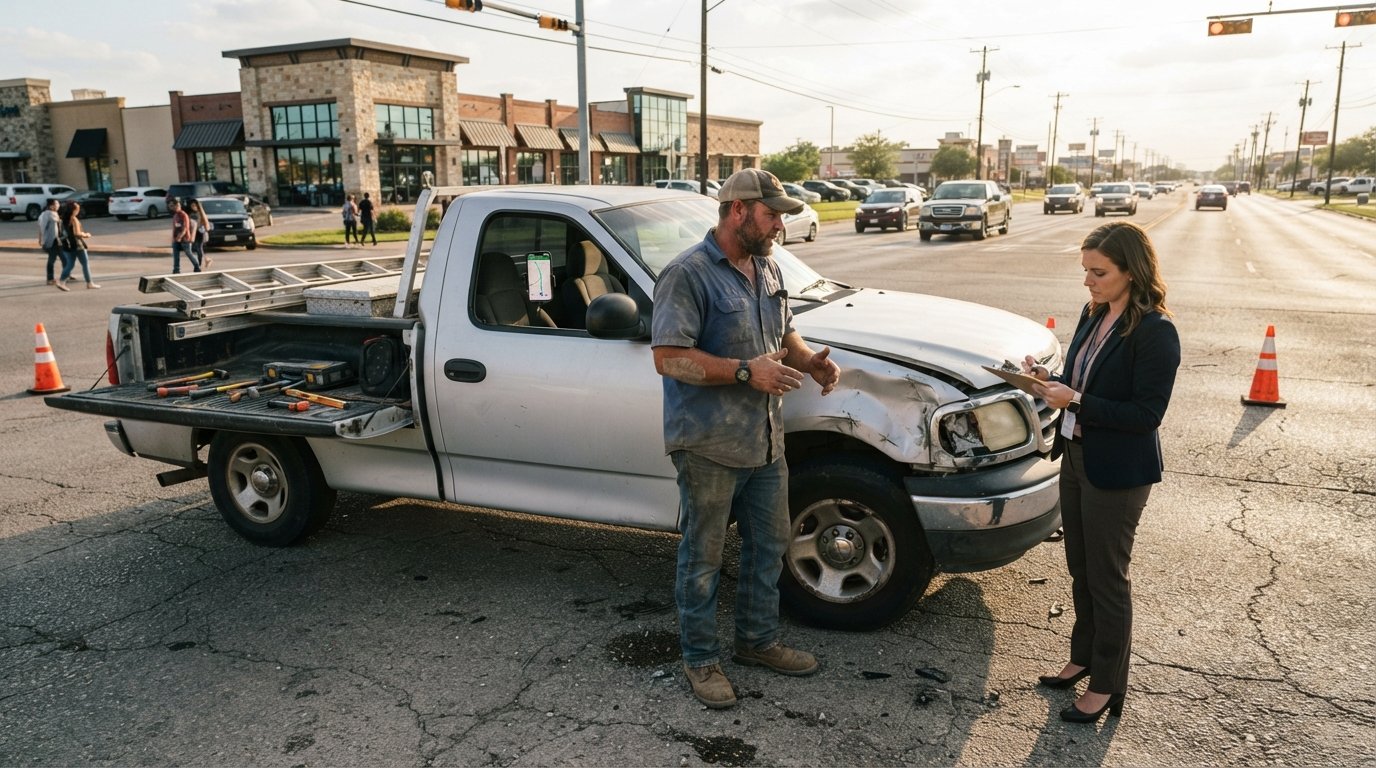
You are driving between job sites in your pickup, a ladder in the bed and a client address queued up on your phone. A distracted driver runs a red light and sends you to the hospital. You reach for your personal auto policy, assuming it will handle the medical bills, the lost wages, and the damaged truck. Then the adjuster asks one simple question: were you driving for work? That question can unravel your entire claim, and in Texas it happens more often than most business owners realize. Understanding the line between personal driving and business use is one of the most important risk management steps a Texas company can take, and it starts with recognizing why a personal auto policy is simply not built for work-related losses.
The Core Problem: Personal Policies Exclude Business Use
A personal auto policy is priced and underwritten for the risk of everyday life: commuting, errands, school pickup, and the occasional road trip. Insurers calculate premiums based on how often you drive, where you park, and how many miles you log for personal reasons. When you use that same vehicle to haul materials, visit customers, or run deliveries, you change the risk profile entirely. The carrier never agreed to cover that exposure, and the policy language reflects it.
Most personal auto policies contain a business use exclusion that removes coverage when a vehicle is used for employment or business purposes. Some policies carve out narrow exceptions, such as driving to and from a single workplace, but those exceptions rarely extend to the actual work being performed. If you are transporting tools, making service calls, or carrying passengers as part of your job, you are likely outside the scope of coverage. In Texas, where a large share of businesses operate with trucks, vans, and owner-operated vehicles, this gap catches contractors, shop owners, and service professionals off guard every year.
There is also a practical claims problem that goes beyond the written exclusion. Even when coverage is arguable, the adjuster will investigate how the vehicle was being used at the time of the accident. Phone records, work orders, time sheets, and even social media posts can be used to establish business use. Once that determination is made, the carrier may deny the claim outright or rescind the policy for material misrepresentation if the business use was never disclosed at inception. That is a far worse outcome than simply paying more for the right coverage from the start.
Common Work Scenarios That Void Personal Coverage
The scenarios that trigger a denial are not exotic. They are the ordinary activities of running a Texas business. A general contractor drives to a supply yard to pick up lumber. A mobile mechanic travels to a customer's driveway. A real estate agent shuttles clients between listings. A restaurant owner picks up produce before opening. In each case, the vehicle is being used to generate revenue or perform job duties, and that is precisely what a personal policy is not designed to protect.
Delivery and rideshare work deserve special attention because the exclusions are especially strict. If you use your personal vehicle for DoorDash, Uber, or similar platforms, your personal policy will almost certainly not respond while you are logged into the app or actively transporting goods or passengers. Some carriers offer a rideshare endorsement, but it typically applies only during the narrow window when you are matched with a passenger, leaving gaps before and after. For a Texas business that relies on its vehicles to serve customers, these gaps can be catastrophic.
Consider how quickly a single accident can escalate. If you are at fault in a work-related crash, the other driver's injuries and property damage could exceed your personal policy limits by hundreds of thousands of dollars. Without commercial auto coverage, that excess judgment can reach your business assets, your personal savings, and even your home. The financial exposure is not just the vehicle repair; it is the liability that follows the accident for years.
Here are the most common work-related uses that fall outside a personal auto policy in Texas:
- Transporting tools, equipment, or materials to job sites
- Making service calls or sales visits in your own vehicle
- Delivering food, packages, or goods for a business
- Carrying passengers for a fee through rideshare or delivery apps
- Allowing employees to drive your personal vehicle for company errands
Each of these activities signals to an insurer that the vehicle is being used in a commercial capacity. The more consistent the business use, the stronger the carrier's argument for denial. Even occasional work use can create problems if the policy application asked about business purposes and the answer was no. That is why disclosure and the right policy form matter so much in Texas, where personal and commercial driving often overlap.
What Texas Law Says About Work Accidents and Coverage
Texas is a fault-based state for auto accidents, which means the driver who caused the crash is generally responsible for the resulting damages. That principle applies whether the driver was on personal or business time, but the insurance that responds depends entirely on how the vehicle was being used. If the at-fault driver was acting within the scope of employment, the employer may share liability under respondeat superior, a legal doctrine that holds a business responsible for the negligent acts of employees performed within their job duties. That is one reason commercial auto coverage is essential for any Texas company with employees who drive.
Texas also has specific rules about workers' compensation that intersect with auto accidents. If an employee is injured in a work-related crash, the injury may be covered by workers' compensation rather than auto insurance, depending on whether the employer carries coverage. Texas is one of the few states where workers' compensation is optional for most private employers, but opting out does not eliminate liability. It simply shifts the risk to the employer, who can be sued directly by an injured worker. For a deeper look at how this plays out with public contracts, our guide on whether your government contract requires workers' comp in Texas explains the compliance triggers that can force coverage even when state law does not.
The interaction between auto liability and workers' compensation is where many Texas businesses get into trouble. An employee injured in a company vehicle may file a workers' compensation claim and a third-party liability claim against the other driver. If the employer's auto coverage is inadequate or nonexistent, the business may be left defending a lawsuit with its own assets. Personal auto policies are not designed to step into that role, and they routinely deny claims when the injury arises out of and in the course of employment.
There is another layer worth understanding: data and privacy obligations. When a work accident occurs, the business may collect sensitive personal information about the injured employee, witnesses, and other parties. Texas law imposes duties on how that information is handled and protected. Our article on sensitive personal information under Texas law outlines the standards businesses must follow, and it is a reminder that risk management after an accident involves more than just repairing a vehicle.
The Right Coverage for Texas Businesses: Commercial Auto and More
The solution to the personal policy gap is commercial auto insurance, a policy designed specifically for vehicles used in business operations. Commercial auto coverage can protect owned vehicles, leased vehicles, rented vehicles, and, in many cases, employee-owned vehicles used for company business. It typically includes liability coverage for bodily injury and property damage, physical damage coverage for the vehicle itself, and medical payments or personal injury protection depending on the policy form. For Texas contractors and service businesses, commercial auto is often the backbone of a complete insurance program.
Commercial auto is not a standalone fix for every risk. A work accident can trigger general liability claims, workers' compensation claims, and even professional liability claims if the employee was providing advice or a service at the time. A well-structured program coordinates these policies so there are no gaps between them. For example, inland marine or contractors equipment coverage protects the tools and equipment in the truck bed, while general liability responds to third-party injuries or property damage at a job site. Workers' compensation handles employee injuries, and commercial auto handles the vehicle and the liability that comes with driving it.
Many Texas businesses benefit from a business owners policy (BOP) that bundles general liability and commercial property at a competitive rate, then add commercial auto as a separate policy. Others, especially those with fleets or high-risk operations, need excess liability or a commercial umbrella to sit above the primary limits. The right combination depends on the number of vehicles, the types of jobs, the contracts you sign, and the certificates of insurance your clients require. Working with an independent agency that understands Texas commercial risk makes it far easier to build that structure correctly.
Here is a simple framework for choosing coverage when your vehicles do double duty:
- List every vehicle used for business, including personal vehicles driven by owners and employees.
- Document how each vehicle is used: commuting, service calls, hauling, deliveries, or passenger transport.
- Match each use to the right policy: commercial auto for business driving, inland marine for equipment, workers' compensation for employee injuries.
- Review limits against your contracts and the value of your business assets.
- Update your policy whenever you add a vehicle, hire a driver, or take on a new type of work.
This process is not complicated, but it does require a conversation with an agent who understands how Texas carriers evaluate business auto risk. It also requires honesty on the application. If you disclose that a personal vehicle is used for work, the carrier can rate the policy correctly or place it with a commercial form. If you do not disclose it, you are gambling with your entire claim.
How to Protect Your Business After a Work Accident
If a work accident happens, the steps you take in the first hours and days can shape the outcome of your claim. Start by making sure everyone is safe and emergency services are called if needed. Then document everything: photos of the vehicles, the scene, and any injuries; contact information for witnesses; and a written account of what happened. Notify your commercial auto carrier as soon as possible, and notify your workers' compensation carrier if an employee was injured. Keep the personal auto policy out of the conversation unless it is genuinely relevant, because raising it can confuse the claim and invite a denial.
Cooperate with the investigation but avoid giving recorded statements to the other driver's insurer without guidance. If the accident involves a serious injury or a fatality, contact an attorney who handles commercial litigation in Texas. Preserve the vehicle and any electronic data that might show speed, braking, or driver behavior. These details matter when liability is disputed, and they can make the difference between a covered claim and a lawsuit that threatens the business.
After the immediate response, review your insurance program with a licensed agent. Ask whether your commercial auto limits are adequate, whether you need hired and non-owned auto coverage for employees who drive rental cars or their own vehicles on company business, and whether your workers' compensation coverage is in place. If you operate in multiple states or haul specialized equipment, ask about endorsements and filings that may be required. The goal is to close every gap that a personal policy cannot fill.
Texas Policies is an independent insurance agency that works with Texas businesses every day on exactly these issues. From commercial auto and general liability to workers' compensation and inland marine, the agency helps contractors, shop owners, and professional services firms compare coverage from multiple carriers and get free quotes without the corporate runaround. If you are not sure whether your vehicles are properly covered, that conversation is the fastest way to find out. Requesting a quote costs nothing and can prevent a denied claim from becoming a financial crisis.
The bottom line is simple: a personal auto policy is built for personal driving, and a work accident in Texas almost always falls outside that definition. The cost of commercial auto coverage is small compared to the cost of an uncovered liability claim. Review your policy today, talk to an agent who understands Texas business risk, and make sure the vehicle that drives your business is insured for the way you actually use it.