
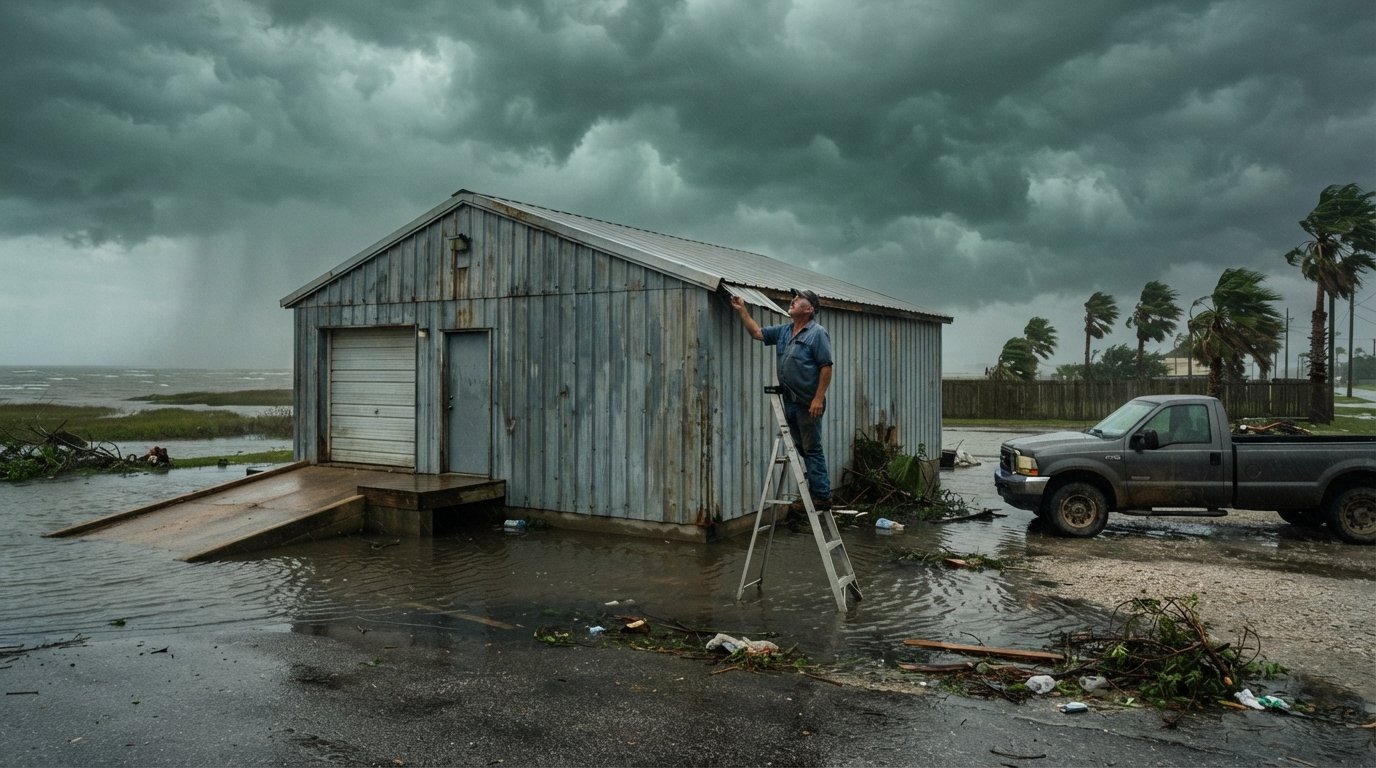
Coastal Business Property Insurance Gaps in Texas
Coastal business property insurance gaps in Texas can leave storm damage unpaid. See the common exclusions and how to close them before the next season.

By Brandon Rodriguez
If your business sits anywhere along the Texas Gulf Coast, from Brownsville to Beaumont, your commercial property policy may not cover what you think it does. Windstorms, storm surge, and flooding have reshaped how carriers underwrite coastal risk, and the result is a patchwork of exclusions, sublimits, and separate deductibles that catch many owners off guard after a loss. Understanding where these coastal business property insurance gaps in Texas actually hide is the difference between a claim that rebuilds your operation and one that leaves you funding repairs out of pocket.
Texas Policies works with contractors, shop owners, restaurants, and professional firms across the coast, and the same coverage questions come up again and again. This guide walks through the most common gaps, why they exist, and what you can do about them before the next storm season.
Why Coastal Texas Property Policies Look Different
Insurers treat the Texas coast as a catastrophe-exposed region. That classification changes nearly everything about how a commercial property policy is built. Instead of one broad form covering fire, wind, hail, and water damage under a single deductible, coastal policies often split wind and flood into separate structures with their own limits and their own deductibles.
The Texas Windstorm Insurance Association (TWIA) exists precisely because private carriers pulled back from wind coverage in certain coastal counties. TWIA provides wind and hail coverage for properties in designated catastrophe areas, but it is not a full property policy. It does not cover flood, and it does not cover the contents, business income, or liability needs that most businesses assume are bundled in. Many owners buy a TWIA wind policy alongside a separate commercial property policy and believe they are fully covered, only to find a gap between the two when a storm pushes water inland.
Private carriers that do write coastal property coverage frequently apply percentage deductibles for wind instead of flat dollar amounts. A 2 percent wind deductible on a $1.5 million building means $30,000 out of pocket before coverage responds, and 5 percent deductibles are common closer to the water. Those deductibles apply per storm, not per year, which matters in a season with multiple named events. If your building is older, carriers may also require roof condition reports, wind mitigation features, or full replacement cost documentation before they will offer terms at all. In our guide on Texas commercial property insurance for older buildings, we explain how age and construction type affect eligibility and pricing along the coast.
The Most Common Coverage Gaps Coastal Businesses Face
Most coastal coverage problems fall into a handful of categories. The tricky part is that they rarely announce themselves. A policy can look comprehensive on the declarations page while quietly excluding the exact peril that damages your building.
Here are the gaps that show up most often in claims disputes and post-storm reviews:
- Flood exclusion on the main property policy: Standard commercial property forms exclude flood, and flood insurance must be purchased separately, often through the National Flood Insurance Program or a private flood market.
- Storm surge treated as flood, not wind: Carriers may classify surge-driven water damage as flood, pushing the claim to a policy the business never bought.
- Separate wind deductibles: Percentage deductibles that reset with each named storm can leave a business responsible for tens of thousands of dollars per event.
- Business income limits tied to a short restoration period: Coastal rebuilds take longer, and a 60-day or 90-day period of restoration may not cover the real downtime.
- Equipment and contents left off the schedule: Tools, inventory, and specialty equipment stored near the coast are frequently underinsured or omitted entirely.
Each of these gaps compounds the others. A restaurant with a flood exclusion, a 5 percent wind deductible, and a 90-day business income limit could face six figures in uncovered costs after a single hurricane, even though it paid premiums for years. The coverage was real, but it was narrower than the owner assumed.
Contractors face an additional layer of complexity. Equipment that moves between job sites, storage yards, and coastal projects often needs inland marine coverage rather than a fixed property schedule. If your tools and machinery are only listed on a commercial property policy tied to one address, they may not be covered when they are sitting on a job site three counties away. Reviewing how your equipment is scheduled is one of the fastest ways to close a gap that many coastal contractors do not discover until after a theft or storm loss.
How Wind, Flood, and Surge Get Sorted After a Storm
After a hurricane, the fight over causation begins almost immediately. Adjusters, engineers, and carriers all try to determine what caused the damage: wind, water, or a combination of both. That determination decides which policy pays, and coastal Texas is a battleground for these disputes because wind and flood are covered by different policies with different limits and different deductibles.
The practical result is that a business can have both a wind policy and a flood policy and still end up with a gap. Wind may open the roof, and rain may enter through that opening, but if the carrier attributes the interior damage to flooding rather than the wind-created opening, the flood policy responds, and its limits may be far lower than the property damage. Conversely, storm surge that arrives before the wind damage may be classified as flood even though the owner only bought wind coverage through TWIA.
Documentation before the storm is what protects you during this process. Photograph and video the interior and exterior of your building, keep an updated inventory of equipment and contents, and store those records somewhere that will survive the storm, such as cloud storage. If you operate in a coastal county, ask your agent directly how your policies handle the wind-versus-flood question and whether your limits are adequate for a total loss scenario. A licensed agent who writes coastal commercial property regularly can walk through the sequencing and show you where the gaps sit.
Business Income and Extra Expense: The Quiet Gap
Property damage is visible. Lost income is not, until the bills keep arriving while the doors stay closed. Business income coverage replaces lost profits and continuing expenses during a period of restoration, and extra expense coverage pays for things like temporary relocation, equipment rental, or expedited shipping to keep operating. On the coast, both coverages are frequently undersized.
Two problems drive this. First, the period of restoration on a coastal policy is often shorter than the actual rebuild timeline. Labor shortages, permitting delays, and material backlogs after a major storm can stretch a six-month rebuild into eighteen months. If your policy caps business income at six months, you absorb the rest. Second, many policies tie business income to the same flood exclusion as the property coverage, which means a flood-driven closure produces no income recovery at all unless a separate flood policy includes it.
There is also a civil authority trigger to consider. If a government order closes access to your area after a storm, some policies will pay business income for a limited period even without direct physical damage to your building. The trigger varies by form and by carrier, and the time period is usually short. Knowing whether your policy includes it, and for how long, helps you plan for the weeks after a storm when customers cannot reach you.
Steps to Close Coastal Coverage Gaps Before Storm Season
Closing gaps is not about buying every endorsement available. It is about matching coverage to the specific ways your business can lose money on the coast. A practical review follows a sequence, and it works best when you revisit it annually rather than once and forget it.
- Map your exposures by location: list every building, storage yard, and job site where you have property or equipment.
- Read the exclusions and deductible sections of each policy, not just the declarations page.
- Confirm whether flood coverage exists, what it covers, and whether the limits match your rebuild cost.
- Check the wind deductible percentage and calculate the dollar amount on your current property values.
- Review business income limits against a realistic restoration timeline, not a best-case one.
After the review, prioritize the gaps that would be catastrophic rather than merely inconvenient. For most coastal businesses, flood coverage, adequate wind deductibles, and realistic business income limits sit at the top of the list. Equipment scheduling and inland marine coverage often come next for contractors and trades. If you find that your current carrier will not offer the terms you need, an independent agency can compare options from multiple markets, including carriers that specialize in coastal commercial property. If your building is older or has had prior claims, our article on commercial property coverage for older Texas buildings covers the documentation and mitigation steps that improve your chances of getting quoted.
Working With an Independent Agency on the Coast
Coastal property coverage is not a commodity. Two policies with similar premiums can have very different deductibles, exclusions, and business income terms, and the difference only becomes clear when you file a claim. That is why working with an agency that writes coastal commercial property regularly matters. Texas Policies is an independent, licensed agency serving businesses across Texas, and the team can pull quotes from multiple carriers, explain how each one treats wind, flood, and surge, and help you build a coverage stack that actually responds when you need it.
The process is straightforward. You share the basics of your operation, your locations, and your current policies. The agency compares markets, walks you through the trade-offs, and helps you decide where to spend premium dollars and where the risk is acceptable. Certificates of insurance, additional insured requests, and mid-term changes are handled by the same team, so you are not bounced between departments when a general contractor needs proof of coverage or a lender needs updated evidence of insurance.
For coastal businesses, the goal is simple: no surprises after a storm. That means knowing exactly what your policy covers, what it excludes, and what you would pay out of pocket before a claim is paid. If you have not reviewed your coastal property coverage recently, or if you are not sure whether your flood and wind policies work together, a free quote and coverage review is a low-cost way to find out. Requesting a quote takes a few minutes, and the conversation alone often surfaces gaps that have been sitting in the policy for years.